By Jonathan D. Ostry
September 3, 2026
In the modern globalized economy, the primary enemy of prosperity is not necessarily the existence of trade barriers themselves, but the erratic, unpredictable nature of their implementation. When nations pivot toward protectionism to shield domestic industries, the long-term damage is often amplified not by the tariffs themselves, but by the atmosphere of perpetual uncertainty they cultivate.
As recent economic research highlights, the "wait-and-see" approach forced upon multinational corporations by volatile trade policies acts as a severe deterrent to Foreign Direct Investment (FDI). For policymakers, the message is clear: if you must restrict trade, do so with consistency and transparency. A predictable policy—even one that is restrictive—is far superior to a volatile one that leaves boardrooms guessing.
The Davos Doctrine: A Case Study in Instability
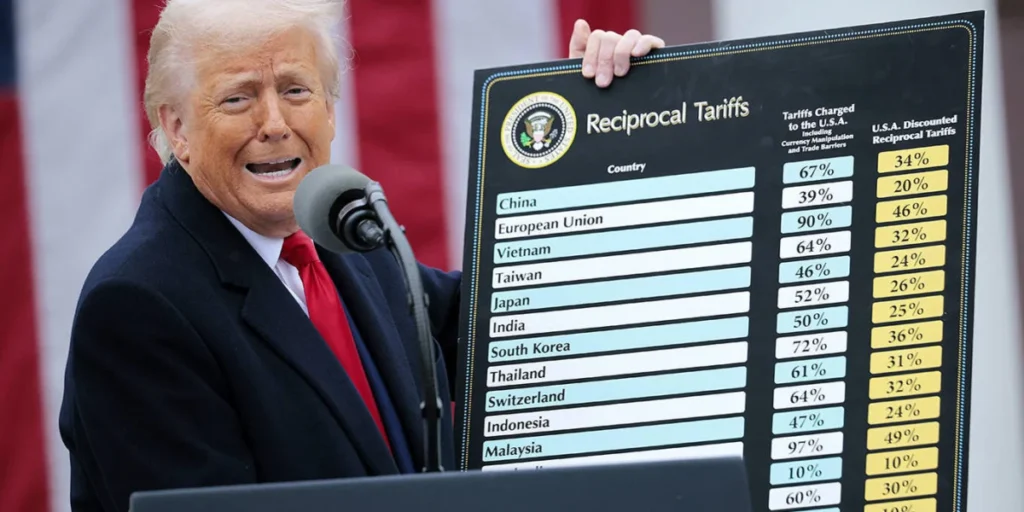
The genesis of the current era of trade anxiety can be traced back to the rhetoric emerging from the World Economic Forum in Davos. When US President Donald Trump addressed global business leaders, his message was ostensibly one of invitation: "Come make your product in America," he urged, framing the looming threat of tariffs as a strategic incentive for domestic manufacturing.
However, the reality that followed was far more chaotic. The "America First" trade agenda did not manifest as a singular, cohesive legislative shift. Instead, it devolved into a series of stop-start maneuvers. Tariffs were announced with great fanfare, only to be paused in delicate diplomatic negotiations, then restored, challenged in federal courts, deemed unconstitutional, and subsequently rebranded under entirely different legislative justifications.
For the global supply chain, this created a "policy fog." Multinational corporations, which plan capital expenditures on five-to-ten-year horizons, found themselves unable to calculate the fundamental costs of production. When the rules of the game are rewritten every quarter, the rational response is not to invest, but to freeze.
Chronology of a Trade Tug-of-War
The volatility of the mid-2020s trade landscape can be mapped through a timeline of reactive policy adjustments:
- Q1 2025: The initial "Davos Warning" sets the stage for a shift toward protectionist rhetoric, signaling a move away from multilateralism.
- Q2 2025: The first wave of sector-specific tariffs is announced, targeting raw materials. Markets react with volatility as companies scramble to reorganize supply chains.
- Q3 2025: Legal challenges emerge. A landmark court ruling questions the constitutionality of the executive branch’s application of trade duties, creating a period of legislative limbo.
- Q4 2025: The administration pivots, replacing original duties with a new framework based on national security clauses, effectively resetting the regulatory clock.
- Q1 2026: Global FDI flows show a marked contraction as firms adopt a "wait-and-see" posture, stalling expansion projects in key manufacturing hubs.
- Q3 2026: Economic analysis confirms that the cost of this policy uncertainty—in terms of foregone capital expenditure—now exceeds the intended revenue gains from the tariffs themselves.
Supporting Data: The FDI Chilling Effect
New economic modeling confirms that uncertainty acts as a "tax" on investment that is often higher than the tariffs themselves. When a firm considers an FDI project, it calculates the net present value (NPV) of the investment. High volatility increases the discount rate applied to that investment, as the risk premium rises significantly.
Data from the past 18 months indicates a distinct correlation:
- Investment Stagnation: In sectors heavily targeted by fluctuating duties, FDI inflows have declined by an average of 14% compared to pre-2025 levels.
- Asset Reallocation: Corporations have begun shifting capital toward regions with lower trade friction, even if those regions offer less infrastructure or labor efficiency than the original target markets.
- The "Hedging" Cost: Firms have diverted significant liquid capital away from R&D and expansion toward legal and consulting fees aimed at navigating the shifting tariff landscape.
The evidence suggests that while protectionism may aim to "bring jobs back," the byproduct of a volatile tariff regime is the stagnation of the very capital investment required to sustain those jobs.
Official Responses and Diplomatic Friction
The international reaction to this cycle of instability has been one of mounting frustration. Trade ministers from major economies, including the European Union, Japan, and members of the ASEAN bloc, have characterized the erratic policy shifts as a destabilizing force for the global recovery.
In Brussels, the European Commission issued a statement earlier this year emphasizing that "rules-based trade is the bedrock of global growth." Their critique focused specifically on the lack of predictability, noting that while nations have the sovereign right to determine their trade relations, the abruptness of the policy changes undermines the "predictable environment" required for international business.
Domestically, the administration’s defenders argue that the volatility is a tactical necessity—a form of "strategic ambiguity" designed to keep trade partners off-balance and force concessions. However, Treasury officials have privately expressed concern that the prolonged uncertainty is beginning to dampen consumer confidence, as higher costs are eventually passed down the supply chain, contributing to inflationary pressures.
Implications: The Long-Term Cost of Chaos
What are the long-term consequences of this "protectionist-on-the-fly" approach?
The Erosion of Global Supply Chains
The efficiency of the modern global economy relies on "just-in-time" manufacturing. This model requires a high degree of certainty regarding the landed cost of components. When tariff rates fluctuate, the logistics of global manufacturing become untenable. Companies are forced to hold larger inventories (moving toward "just-in-case" manufacturing), which ties up capital and lowers productivity.
The Rise of Regional Blocs
As major powers continue to pursue volatile trade policies, we are seeing a "balkanization" of trade. Nations are increasingly looking to sign bilateral or regional trade agreements that offer at least some guarantee of stability, bypassing the broader multilateral organizations like the WTO, which many now view as ineffective in the face of such rapid policy shifts.
The "Wait-and-See" Recession
We are witnessing a slow-motion erosion of investment. This is not necessarily a sudden market crash, but a gradual decline in the rate of capital formation. When companies hesitate to build factories, upgrade technology, or enter new markets, the global potential for growth is permanently lowered. The "lost" investment during this period of volatility will result in a lower productive capacity for the global economy in the decade to come.
Conclusion: A Call for Consistency
The fundamental lesson for policymakers is that trade policy is not merely a tool for political posturing; it is a critical component of the macroeconomic environment. If a country decides that protectionism is its preferred path—whether to protect domestic labor, ensure supply chain resilience, or achieve geopolitical objectives—it must at least provide a clear, long-term roadmap.
Markets can price in a high tariff. They can adjust to a protectionist trade regime. What they cannot price in—and what inevitably leads to the destruction of economic value—is the perpetual threat of change.
To restore the flow of FDI and encourage long-term economic growth, governments must prioritize stability over spectacle. The goal of trade policy should be to create an environment where businesses can calculate, plan, and execute. In the absence of such clarity, the "America First" agenda—and others like it—risks achieving the exact opposite of its intent: an economy that is less competitive, less efficient, and ultimately, less prosperous.
As we look toward the remainder of 2026, the question for the global leadership is no longer just "What are your tariffs?" but "How long will they last?" Until that question can be answered with certainty, the global economy will remain in a state of suspended animation, waiting for the fog of policy volatility to clear.