

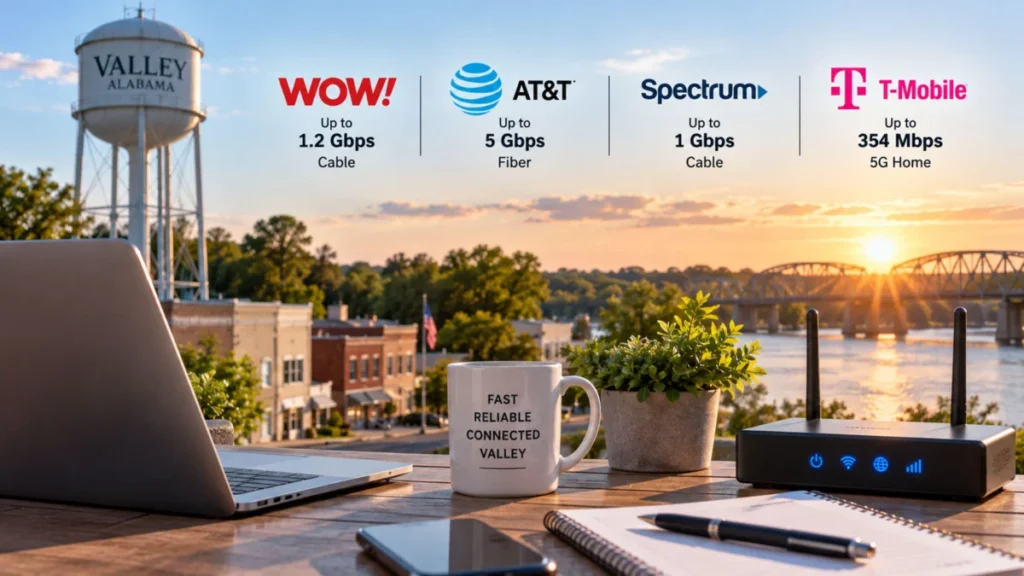
In the modern era, high-speed internet is no longer a luxury; it is the essential utility for education, remote work, commerce, and social connectivity. For residents of Valley, Alabama, however, the digital landscape is remarkably fragmented. Internet speeds in the city can swing drastically from one block to the next, turning the search for a reliable connection into a hyperlocal investigation.
While telecommunications giants like AT&T and Spectrum tout impressive nationwide metrics, the reality for a Valley homeowner often comes down to the specific infrastructure serving their street. This guide breaks down the current state of connectivity in Valley, analyzing the fastest providers, the limitations of existing networks, and how residents can maximize their home network performance in an evolving digital market.
Main Facts: The Four Pillars of Valley Connectivity
The Valley internet market is defined by four primary players, each occupying a distinct niche based on technology, footprint, and target demographic.
1. WOW! (WideOpenWest)
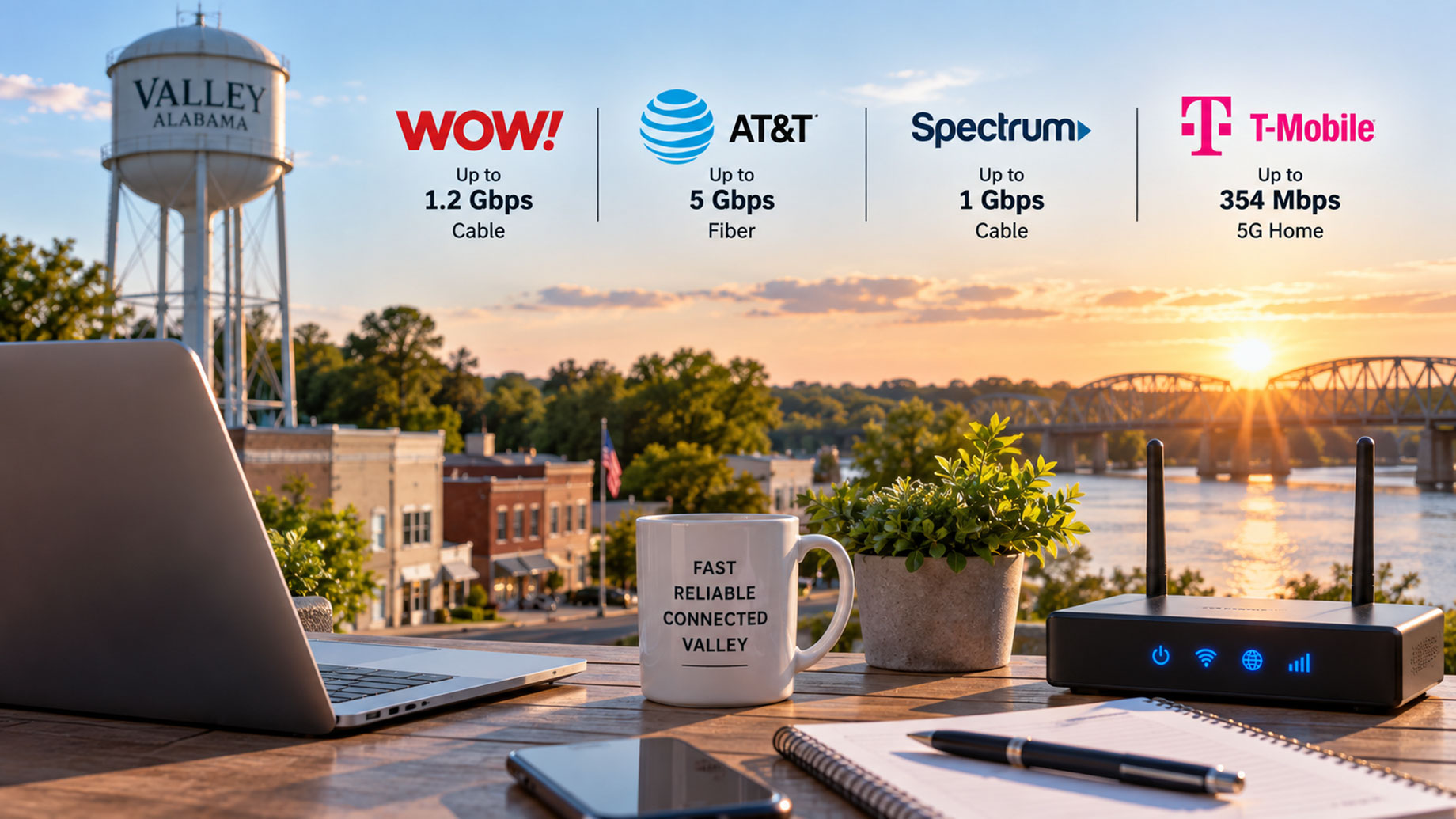
WOW! stands out as the premier choice for many Valley residents who desire high-bandwidth cable internet without the contractual headaches associated with traditional service providers. By offering a 1.2-gigabit residential tier, they provide the fastest widely available wired connection for the majority of the city. Their commitment to "Price Lock for Life" and the absence of annual contracts makes them a compelling option for households seeking budget stability alongside high-performance streaming and gaming capabilities.
2. AT&T Fiber
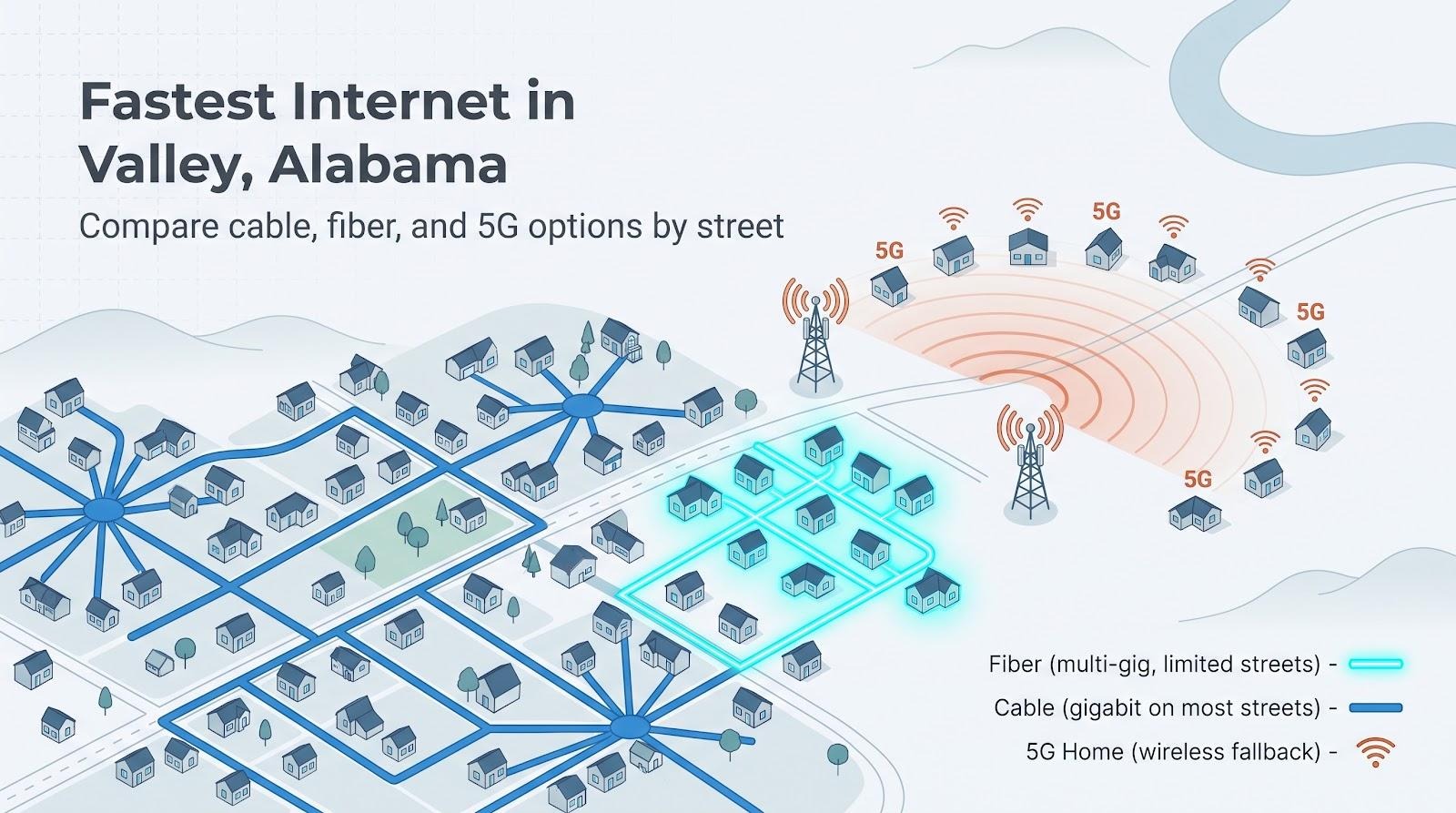
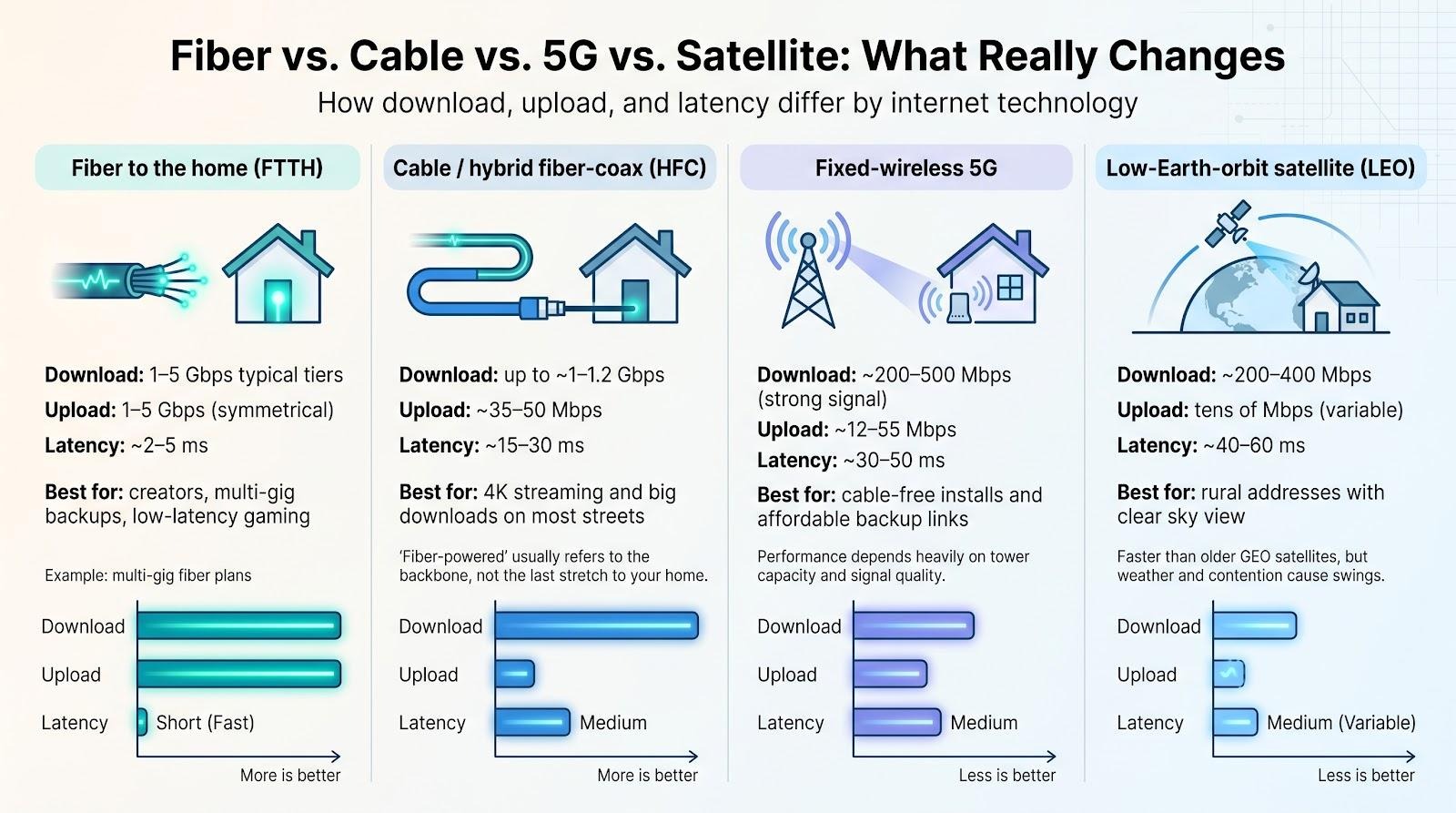
AT&T represents the "gold standard" for raw performance in Valley. With symmetrical 5-gigabit plans, their fiber-optic infrastructure offers unparalleled speeds and latency, making it the ideal choice for content creators, software engineers, and power users. However, the accessibility of this service is its greatest hurdle: as of September 2026, AT&T’s fiber network is estimated to reach only 1.6% of Valley households. For the lucky few who live on a fiber-lit street, the performance is unmatched.
3. Spectrum
Spectrum remains the most ubiquitous provider in the region. With a hybrid-fiber-coax (HFC) network that covers roughly 92% of the city, Spectrum is the default option for many renters and homeowners alike. While its upload speeds are significantly lower than its fiber competitors, its sheer availability and simplified service tiers (ranging from 100 Mbps to 1 Gbps) make it the most reliable choice for those who prioritize immediate, widespread access over bleeding-edge bandwidth.
4. T-Mobile 5G Home Internet
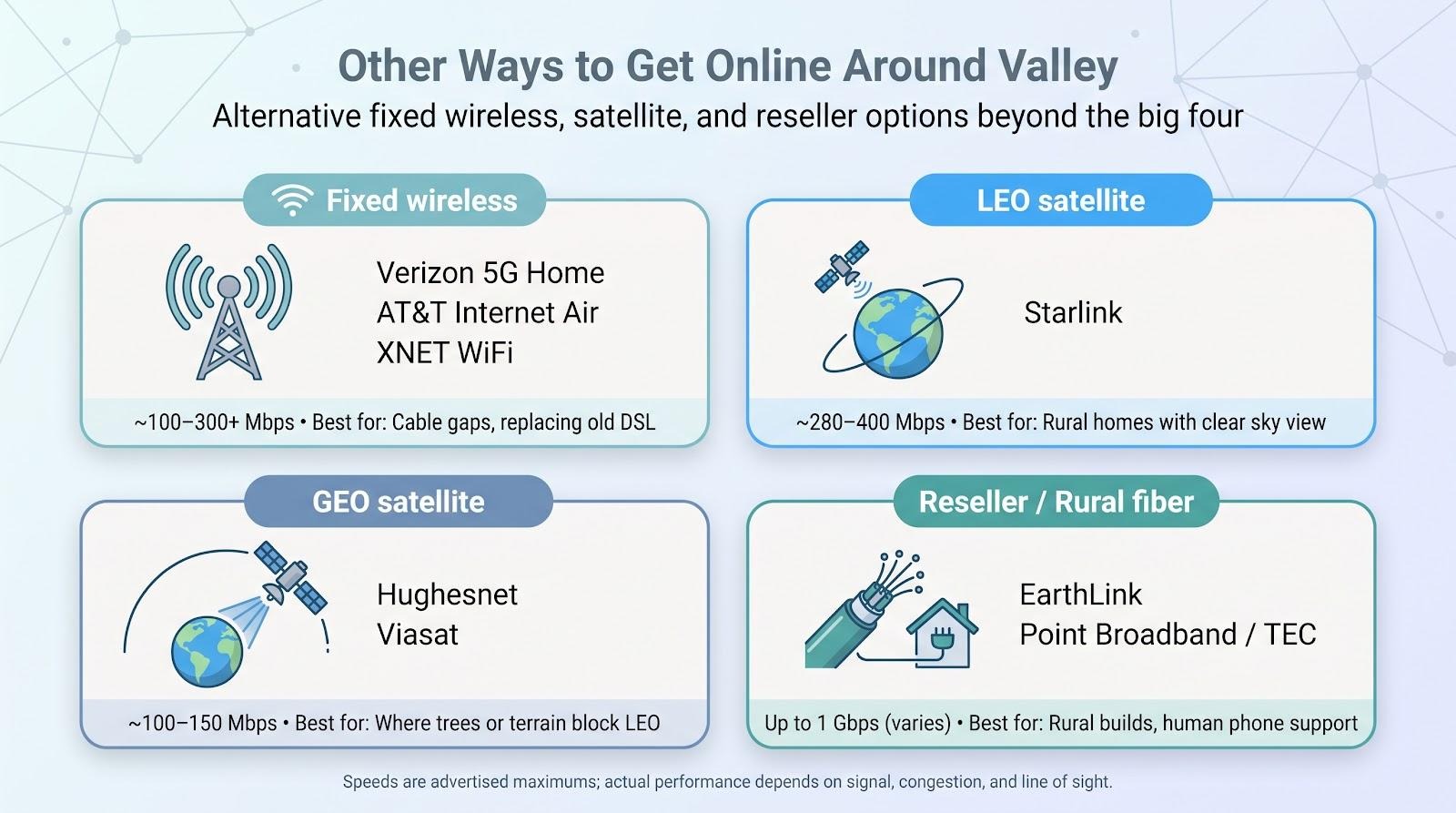
When wired infrastructure fails or is unavailable, T-Mobile’s fixed wireless service acts as a vital bridge. By leveraging 5G cellular towers, T-Mobile provides a plug-and-play solution that bypasses the need for trenching cables. With typical download speeds ranging from 170 to 498 Mbps depending on the plan, it is a robust alternative for rural fringes or underserved neighborhoods where traditional ISPs have yet to modernize.
Chronology: The Evolution of Local Infrastructure
The current state of internet in Valley is the result of years of incremental infrastructure upgrades. Unlike metropolitan centers that saw rapid fiber deployments in the early 2020s, Valley’s connectivity has evolved through a "layered" approach.
- 2020–2023: The "Cable-First" Era. During this period, the reliance on existing coaxial networks (DOCSIS 3.0/3.1) solidified, with providers like Spectrum and WOW! upgrading existing nodes to handle increased demand during the pandemic shift toward remote work.
- 2024–2025: The Emergence of 5G. Fixed wireless providers gained significant traction in Valley, filling the gaps left by traditional ISPs. This period saw a shift in consumer behavior, as households realized that "good enough" wireless speeds were often more reliable than aging copper DSL lines.
- Late 2026 (Present Day): The "Address-Specific" Market. Today, Valley is a highly localized market. The presence of a fiber line on one side of a street does not guarantee connectivity for the neighbor across the road. As we look toward 2027 and beyond, the focus has shifted from expanding raw coverage to improving the reliability and symmetry of existing lines through public-private partnerships.
Supporting Data: Performance Metrics and Reality
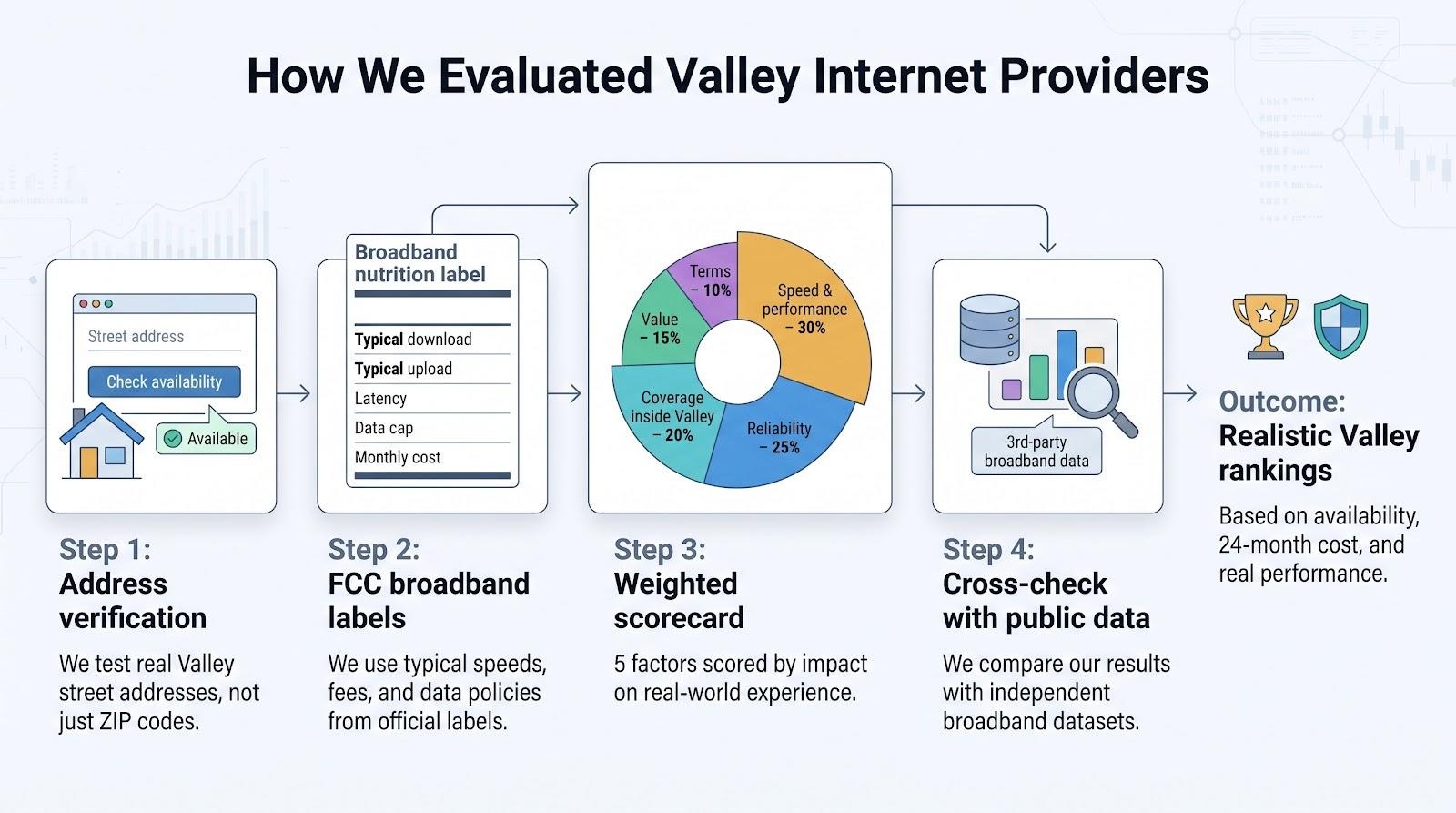
To understand the difference between marketing claims and real-world experience, one must look at the FCC Broadband Labels and third-party data.
Typical Performance Comparison
| Provider | Technology | Typical Down | Typical Up | Latency |
|---|---|---|---|---|
| AT&T Fiber | FTTH | 4.7 Gbps | 4.7 Gbps | <10ms |
| WOW! | Cable | 1.0 Gbps | 50 Mbps | 12ms |
| Spectrum | HFC | 1.0 Gbps | 35 Mbps | 25ms |
| T-Mobile | 5G | 250 Mbps | 30 Mbps | 35ms |
Data based on typical performance disclosures (September 2026). Note: Individual results vary based on hardware and signal quality.
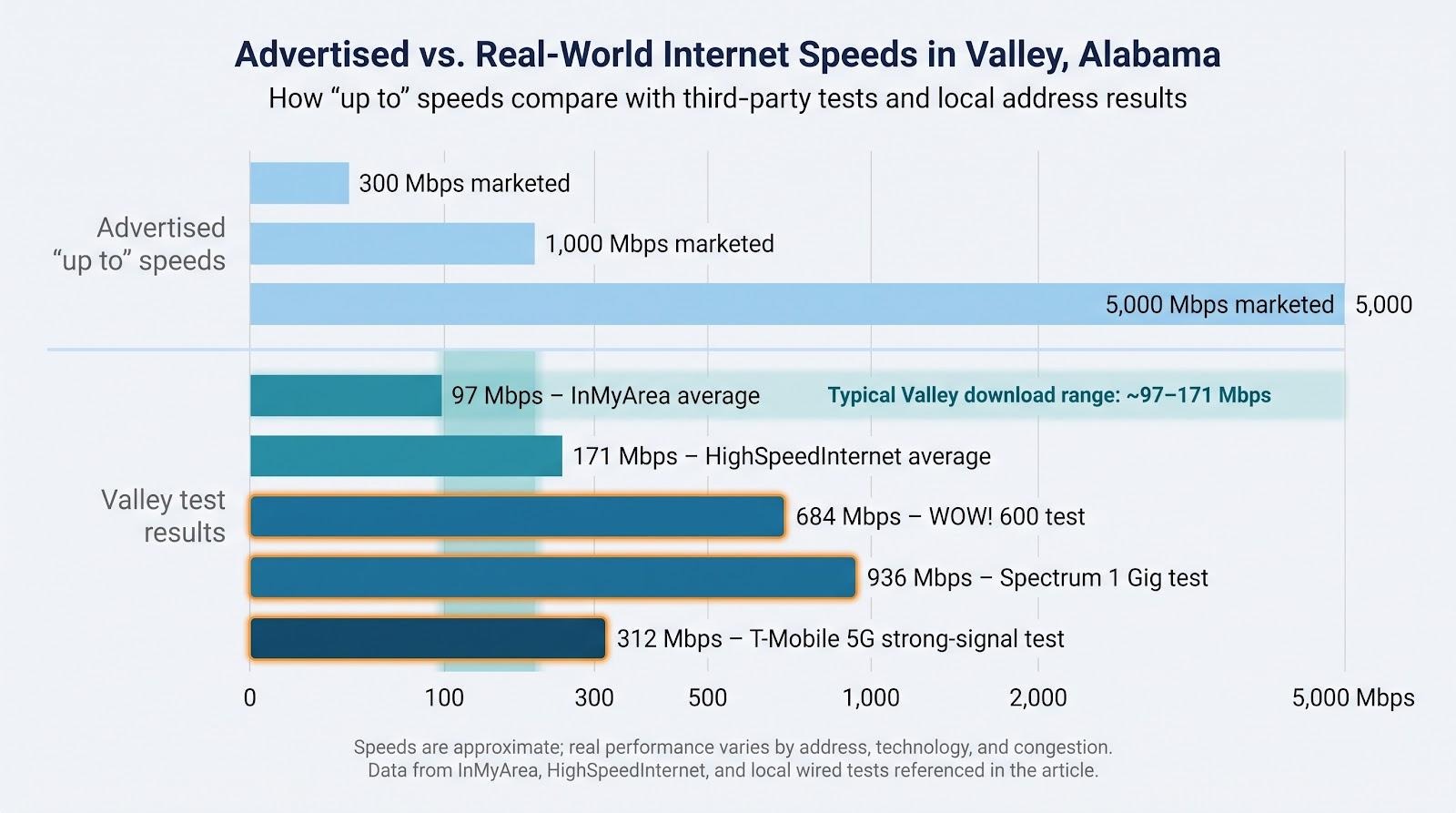
The average download speed in Valley, as reported by third-party speed tests, hovers around 97 Mbps. This figure is lower than the top-tier plans mentioned above because it accounts for the entire city, including legacy connections and rural zones where high-speed cable or fiber has yet to reach. This data underscores a fundamental truth: The speed you get is determined by the "last mile" infrastructure serving your specific porch.
Official Responses and Regulatory Outlook
Government oversight has become a critical factor in the future of Valley’s internet. The Alabama Department of Economic and Community Affairs (ADECA) has become the central authority for infrastructure funding.
According to official updates from the state’s BEAD (Broadband Equity, Access, and Deployment) program, Alabama is currently in the "final proposal" stage of allocating federal funds. These funds are specifically earmarked for "unserved" and "underserved" locations. While specific street-level lists for Valley are not yet public, officials have indicated that construction obligations for these projects span the next four years.
Furthermore, Spectrum has publicly committed to expanding its footprint in parts of Chambers County as part of the state’s Capital Projects Fund grants. While these expansions are slower than private-sector investments, they represent the only definitive path for rural areas to achieve high-speed parity with the city center.
Implications: What This Means for You
The fragmented nature of Valley’s internet market has three major implications for residents:
1. The "Address Check" is Mandatory
Never rely on a provider’s general service map. Always enter your exact address into the provider’s portal. Due to the way cable nodes and fiber hubs are distributed, a house two blocks away might have access to 5-gig fiber while your home is limited to 300-megabit cable.
2. The Rise of "Hybrid" Connectivity
For households with mission-critical internet needs (such as remote surgeons, stock traders, or content creators), relying on a single provider is becoming risky. The most sophisticated Valley households are now implementing "dual-wan" routers. By combining a primary high-speed connection (like WOW! or AT&T) with a secondary backup (like T-Mobile 5G Home), they ensure 99.9% uptime.
3. Hardware Matters More Than Bandwidth
Many residents blame their ISP for "slow internet" when the culprit is actually an outdated Wi-Fi router or poor signal placement within the home. Before paying for an expensive gigabit upgrade, ensure your internal network is capable of handling the speed. A Wi-Fi 6 or 7 router is often the most cost-effective way to "increase" your internet speed without changing your monthly subscription.
Expert Optimization Tips: Squeezing Every Megabit
Before you commit to a long-term contract or pay for a higher tier, try these optimization steps:
- Hardwire Your Hubs: Any device that stays in one place (a smart TV, a gaming console, or a home office PC) should be connected via an Ethernet cable. Wi-Fi, no matter how fast, is subject to interference.
- Optimize Channel Selection: In densely populated neighborhoods, Wi-Fi signals can overlap. Use a network analyzer app to find the least congested channel in your area and force your router to use it.
- Upgrade Your Modem/Router: If you are using an ISP-provided modem that is more than three years old, it may not support the latest DOCSIS standards. Contact your provider to see if a hardware upgrade is available.
- Placement is Key: Keep your router in an open, central area. Avoid placing it inside cabinets or near large metal objects, which can act as a Faraday cage for your Wi-Fi signal.
Conclusion
Valley, Alabama, finds itself at a digital crossroads. While the city is not yet a fiber-blanketed metropolis, the options available—from the sheer speed of AT&T to the widespread reliability of Spectrum and the flexibility of T-Mobile—provide residents with more choices than ever before.
The path to the best internet service in Valley is not paved with marketing slogans, but with careful investigation of your specific address. By understanding the technologies at play, keeping a close eye on ADECA’s upcoming infrastructure grants, and optimizing your home network, you can ensure that you are getting the most out of your digital life, regardless of where in the valley you call home.