

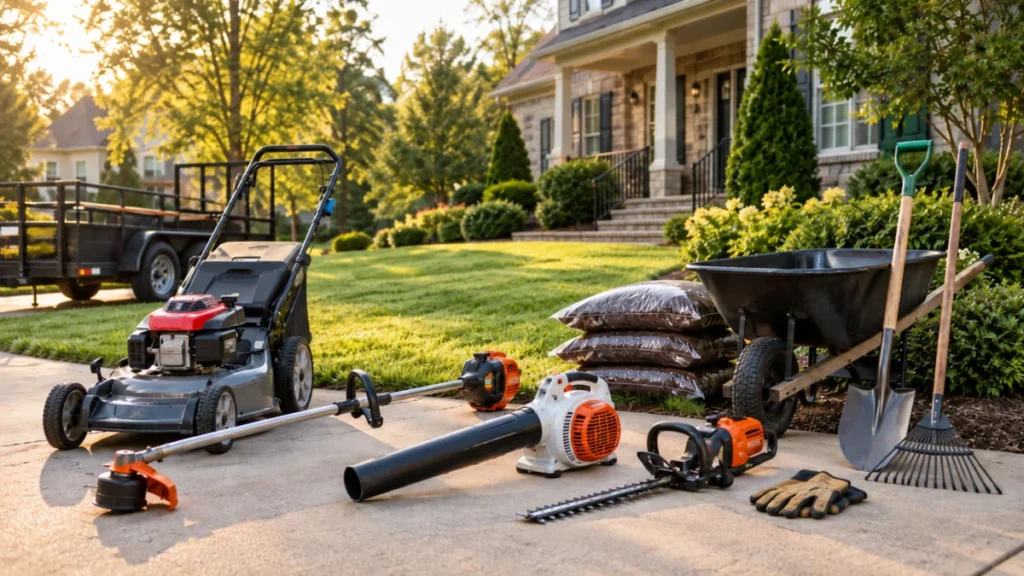
Landscaping in Raleigh, North Carolina, is more than a simple matter of curb appeal; it is a complex exercise in managing the unique environmental variables of the Piedmont region. With a climate defined by long, humid growing seasons, intense summer heat, and unpredictable rainfall, maintaining a pristine outdoor space requires a strategic approach to equipment selection. Whether you are a dedicated homeowner looking to elevate your DIY game or a contractor managing high-stakes commercial accounts, the difference between a thriving landscape and a maintenance nightmare often comes down to the machinery in your shed.
The Foundation: Understanding Raleigh’s Unique Environmental Demands
The Raleigh area presents a distinct set of challenges for horticultural management. The region’s clay-heavy soil, while nutrient-rich, is prone to compaction, which can impede root growth and drainage. Furthermore, the transition from mild winters to rapid spring growth necessitates a robust maintenance schedule.
To achieve professional-grade results, one must move beyond the "one-size-fits-all" mindset. The equipment you choose must align with the specific scale of your property, the frequency of your maintenance cycles, and the long-term vision for your outdoor living area. By investing in the right tools, you not only reduce physical strain but also significantly increase the longevity and health of your lawn and hardscape features.
Chronology of a Landscaping Project: From Planning to Execution
Successful landscaping is rarely an impulsive act; it is a logical progression of phases. Understanding this chronology is vital for both cost management and project efficiency.
- Site Assessment and Planning: Before a single tool is purchased, the property must be evaluated for drainage patterns, soil composition, and existing vegetation.
- Soil Preparation: This is the most overlooked phase. Whether installing a new lawn or a perennial garden, the soil must be amended and graded.
- Hardscape Installation: Before any plant life is introduced, structural elements like patios, walkways, and retaining walls must be set, requiring significant compaction and excavation work.
- Softscape Installation: The final phase involves planting, seeding, and mulching, where precision tools take precedence over heavy machinery.
- Routine Maintenance: The ongoing cycle of mowing, trimming, and blowing that preserves the investment.
Strategic Equipment Categories
1. The Core of Lawn Maintenance
In Raleigh, the growing season can extend well into the late fall. A reliable mower is the undisputed workhorse of any property. For residential owners, the market has shifted toward high-performance electric and battery-powered units. These machines offer near-silent operation and eliminate the need for fuel storage and complex engine maintenance, making them ideal for dense suburban neighborhoods.
However, for larger acreages, commercial-grade zero-turn mowers remain the gold standard. When selecting these, consider the maneuverability of the deck size relative to your property’s trees and garden beds. Complementing the mower, a high-quality string trimmer is essential for the "finishing touches"—cleaning up the edges around fences, mailbox posts, and hardscape borders where a mower deck simply cannot reach.
2. Soil Preparation and Drainage Solutions
Because Raleigh’s soil can become compacted under the weight of heavy rainfall, proper aeration and soil conditioning are paramount. For those installing new beds or renovating lawns, specialized equipment such as broadcast spreaders ensures that lime, fertilizers, and seed are distributed with clinical precision. Avoiding the "clumping" effect of manual distribution is key to achieving a uniform, lush carpet of grass.
If your property suffers from pooling water, simple surface tools won’t suffice. You may need to look into small-scale excavating equipment or trenchers to install French drains or subsurface drainage systems. Addressing drainage at the start of a project prevents the costly erosion that ruins landscaping over time.
3. Compaction: The Secret to Long-Term Hardscapes
A patio is only as strong as its foundation. Many homeowners experience "settling"—where pavers sink or shift after a few seasons—simply because they skipped the mechanical compaction phase. Using a plate compactor to create a solid, vibration-stabilized base of gravel and sand is non-negotiable. Whether you rent a unit for a weekend project or purchase one for a business, ensuring that the base is firm before a single paver is laid is the hallmark of a professional-grade installation.
The Rise of Robotic Automation
The integration of robotics into residential landscaping represents a major shift in the industry. Robotic mowers, which operate on a set perimeter wire or GPS-guided system, are becoming increasingly sophisticated. For homeowners with consistent, open lawns, these systems offer a "set it and forget it" solution that reduces the time commitment of yard work to near zero.
From an efficiency standpoint, they also provide a "micro-mulching" benefit. By trimming tiny bits of grass clippings daily rather than a large amount once a week, these mowers return vital nutrients to the soil, promoting a healthier lawn through natural fertilization.
Professional Insights: What Contractors Prioritize
For the professional landscaper, equipment is an extension of their bottom line. Downtime is the enemy. When selecting tools, professionals prioritize:
- Serviceability: Can parts be sourced locally? If a mower belt snaps mid-season, is there a dealer in Wake County who can fix it within 24 hours?
- Ergonomics: Equipment used for eight to ten hours a day must be designed to reduce operator fatigue and vibration-related injuries.
- Versatility: Modular systems—where one power head can operate a hedge trimmer, edger, or blower—are highly favored for their efficiency in transport and storage.
The Importance of Localized Expertise
A common pitfall is purchasing equipment based on broad online reviews that do not account for regional climate or soil types. Working with a local supplier, such as BOSS Supply, allows customers to tap into a wealth of knowledge specific to Raleigh, Wake Forest, and the broader Wake County area.
Local suppliers offer more than just hardware; they provide the "context" for the purchase. They understand that the humidity in Raleigh can affect engine air filters more rapidly than in drier climates, or that certain soil amendments are more effective for the local clay composition. Building a relationship with a local provider ensures that when you need a specific accessory or technical advice, you aren’t waiting on a shipment from across the country.
Implications for Property Value and Sustainability
The strategic selection of landscaping equipment has far-reaching implications for property value. A well-maintained outdoor space can increase a home’s appraisal value by as much as 10% to 15%. However, the long-term value is also found in sustainability. By choosing modern, efficient equipment—particularly electric models—homeowners and contractors reduce their carbon footprint and noise pollution.
Furthermore, proper equipment usage leads to better water management. By using the right tools to create proper grading and healthy soil structures, you reduce the need for excessive irrigation, conserving water during the hot, dry months of a North Carolina summer.
Conclusion: Investing in Your Outdoor Future
The journey to a perfect landscape is a marathon, not a sprint. It begins with an honest assessment of your property’s needs and a commitment to using the right tool for every task. By balancing the demands of Raleigh’s climate with high-quality, reliable equipment, both homeowners and professionals can transform their outdoor spaces into functional, beautiful environments that stand the test of time.
Whether you are laying a stone patio, aerating a lawn, or simply looking to make your weekly maintenance more efficient, remember that the most successful projects are built on a foundation of proper planning, local expertise, and the right machinery. Invest wisely, plan thoroughly, and enjoy the lasting rewards of a well-tended landscape.



