In a high-stakes clash of property rights, environmental stewardship, and contemporary art patronage, prominent dealer Adam Lindemann finds himself at the center of a federal lawsuit that has pitted his expansive Montauk estate against the protected lands of the Andy Warhol Visual Arts Preserve. Filed on August 20 in the U.S. District Court for the Eastern District of New York, the litigation brings to light a prolonged, multi-year dispute involving allegations of trespassing, unauthorized landscaping, and the controversial installation of a monumental sculpture by art-world heavyweight Julian Schnabel.
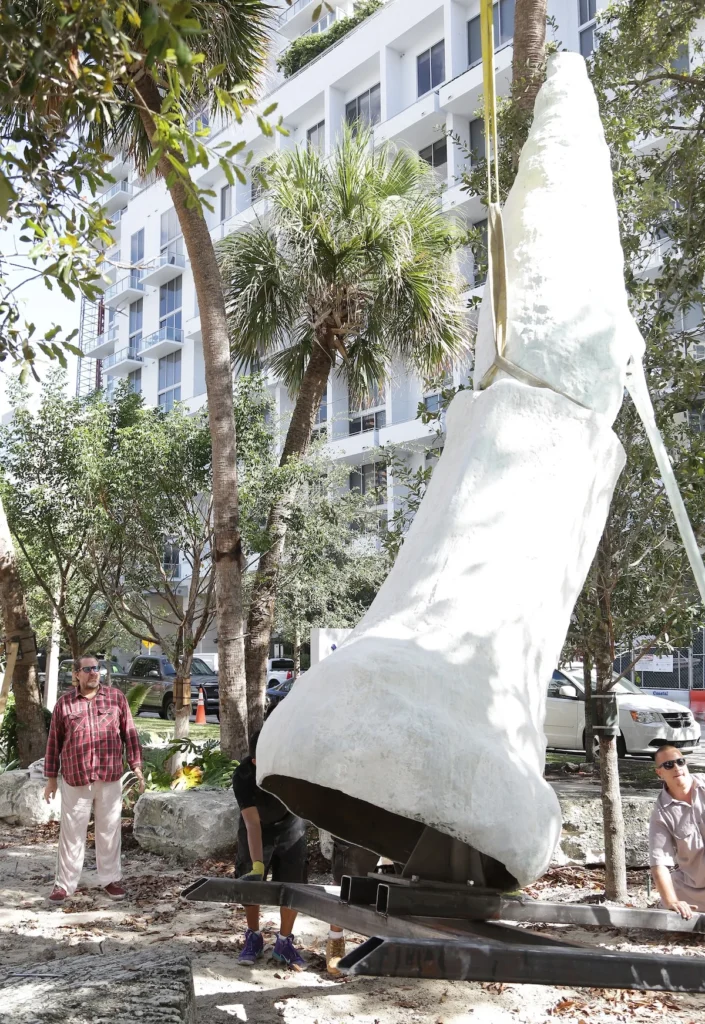
The Nature Conservancy (TNC), the nonprofit entity tasked with managing the preserve, asserts that Lindemann has repeatedly disregarded the boundaries of his six-acre property, "Eothen," effectively encroaching upon land formerly owned by the legendary Pop artist Andy Warhol. At the heart of the conflict is a 25-foot-tall sculpture titled Ahab, which remains standing on the preserve despite repeated demands for its removal.
A Chronology of Contention
The dispute, which has unfolded over the course of several years, reflects a breakdown in private communications and a failure of informal mediation.
The Initial Discovery and Early Warnings
The friction began when the Nature Conservancy discovered that Lindemann—who famously founded the now-defunct Venus Over Manhattan gallery—had installed the towering Schnabel work on land the nonprofit owns. The preserve, a ecologically sensitive tract of the Montauk Moorlands, is a site of significant historical and biological importance.
In December 2024, the Conservancy issued its first formal correspondence to Lindemann. The letter requested the immediate removal of the sculpture, setting a 90-day deadline. This initial request also flagged broader concerns regarding the dealer’s use of the preserve, noting that Lindemann had been regularly parking personal vehicles in the preserve’s lot, mowing sections of the nonprofit’s lawn, and planting shrubs as if the land were an extension of his own private estate.
The Broken Promises of 2025
Following a meeting between Lindemann and Conservancy officials in May 2025, a tentative resolution appeared to be in sight. Lindemann reportedly committed to removing the sculpture by August 31, 2025.
Optimism, however, proved premature. On September 7, 2025, Lindemann sent an email to the Conservancy, stating, "as promised I’m moving the sculpture!" He further remarked on the financial and logistical burden of the task, noting, "Sure hope that makes you happy as it’s expensive and disruptive but it’s happening as you wished and I agreed. All the best to you and I’ll send pics as soon as the move is completed, we are currently organizing this with the local artist, the famous local artist Julian Schnabel’s team."
Despite these assurances, the deadline passed with the Ahab sculpture still firmly rooted in the landscape.
The Cease-and-Desist and Escalation
By early 2026, the patience of the Conservancy had clearly worn thin. On February 6, 2026, the organization issued a formal cease-and-desist order. The document demanded that Lindemann cease all unauthorized entry, stop parking his vehicles on the preserve, and desist from performing any maintenance or landscaping on the property. Crucially, the demand for the removal of the sculpture was reissued with a strict 30-day window.
As of the current filing, those demands remain unfulfilled. The sculpture stands, and the Conservancy alleges that the unauthorized maintenance of the land by Lindemann continues unabated.
The Geography of the Dispute: Eothen and the Preserve
The conflict is situated in the prestigious and environmentally delicate landscape of Montauk. Lindemann’s property, Eothen—a Greek term meaning "from the East"—is a six-acre parcel featuring a main house and six cottages. The estate has a storied history; it was purchased by Lindemann from J.Crew CEO Millard Drexler in 2015 for $50 million. While the purchase was a massive transaction in the luxury real estate market, it excluded a 24-acre horse farm that remained separate from Lindemann’s acquisition.

Adjacent to this property is the Andy Warhol Visual Arts Preserve. The site was donated to the Nature Conservancy by the Andy Warhol Foundation for the Visual Arts in 1992. Under the terms of that donation, the Conservancy accepted the responsibility to protect a section of the Montauk Moorlands—an area of immense ecological significance—and to foster the visual arts. The proximity of the two properties, while physically seamless, is legally distinct, a boundary that the Conservancy claims Lindemann has treated with habitual indifference.
Official Responses and Legal Demands
William H. Taft V, legal counsel for the Nature Conservancy, has framed the lawsuit as a last resort in a situation where "amicable resolution" was repeatedly sought but ultimately rejected. In the legal filing, Taft emphasized that the Conservancy had gone to great lengths to provide the defendant with the benefit of the doubt, even offering to walk the shared boundary lines with Lindemann to ensure there was no confusion regarding the property markers.
"Despite TNC’s repeated demands and efforts towards amicable resolution, Defendant has refused to remove the Sculpture and continues to enter the property without permission," Taft stated. The Conservancy’s legal strategy is multifaceted, seeking:
- A jury trial to address the trespass claims.
- A permanent injunction preventing Lindemann from entering the preserve.
- Legal declarations confirming the Conservancy’s exclusive control over the land and its authority to remove the sculpture.
- Restitution for legal and attorney fees.
The Conservancy also seeks a court declaration that Lindemann does not hold ownership of the sculpture in a way that confers rights to the land it occupies, effectively neutralizing any argument that the sculpture’s installation was a legitimate use of the space.
Environmental and Cultural Implications
Beyond the immediate dispute over private property rights, the lawsuit highlights the tension between the "art-world elite" and the preservation of public and ecological spaces. The Nature Conservancy’s filing underscores the biological value of the site, noting that its location along the Atlantic Flyway makes it a critical habitat for migratory birds. The unauthorized landscaping and human traffic, the Conservancy argues, are not merely nuisances but threats to "rare species and other wildlife."
Furthermore, the case raises questions about the intersection of art and public land. While the Conservancy is mandated to promote the arts, it does so within the framework of its environmental mission. The installation of a 25-foot sculpture, while perhaps an aesthetic statement for the owner, is entirely outside the programmatic scope of the preserve.
The presence of the sculpture—and the ongoing occupation of the land—creates a challenging precedent for land trusts and nonprofits that hold sensitive ecological areas in trust for the public. If property owners can unilaterally redefine the boundaries of their estates to accommodate private art installations, the long-term integrity of protected lands becomes increasingly difficult to maintain.
What Lies Ahead
As of the time of this publication, Adam Lindemann has not responded to requests for comment regarding the lawsuit. The silence from the defendant stands in sharp contrast to the aggressive posture of the litigation.
For the art world, the case serves as a reminder that the influence of high-profile dealers and collectors does not supersede the legal obligations of property ownership. For the Nature Conservancy, the legal battle is a necessary step in fulfilling its 1992 mandate to protect the Montauk Moorlands.
The case is now pending before the court, and with the demand for a jury trial, the dispute is poised to enter a public phase that will likely scrutinize not only the boundary lines of a Montauk estate but also the responsibilities that come with owning, managing, and creating art in a space shared with the natural world. Whether the sculpture Ahab will be forcibly removed by the Conservancy or voluntarily dismantled by the artist’s team remains to be seen, but the outcome will undoubtedly set a significant tone for how land trusts handle encroachment by high-net-worth individuals in the future.