

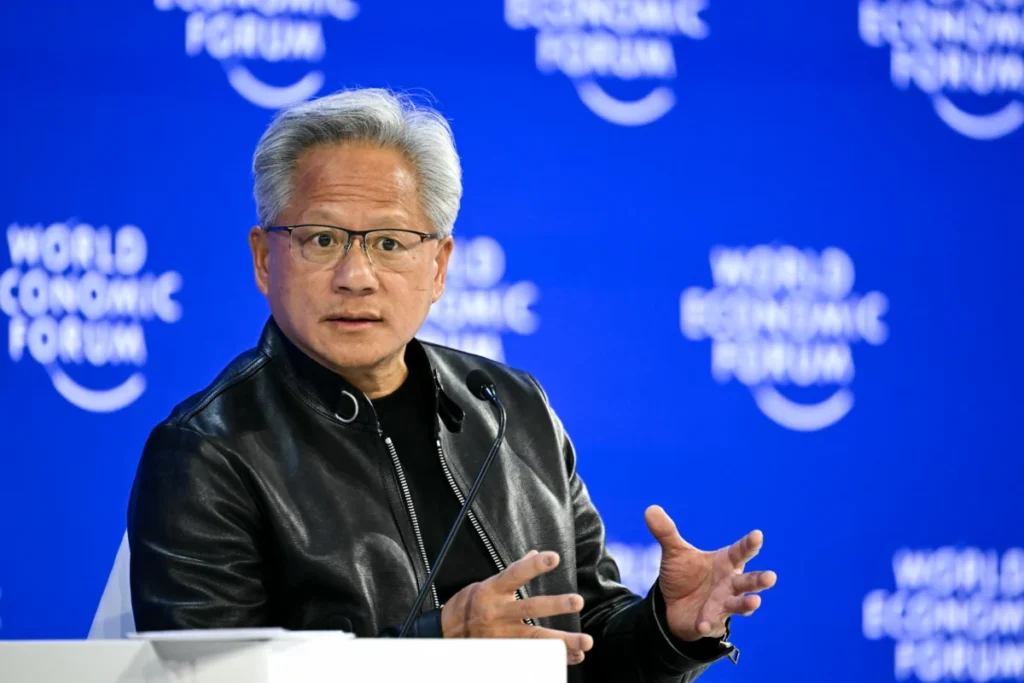
In a moment that blurred the lines between corporate strategy, celebrity culture, and executive governance, Nvidia CEO Jensen Huang found himself at the center of a geopolitical firestorm during Monday morning’s All-In Summit in Los Angeles. While engaging in a high-level discussion with some of Silicon Valley’s most influential investors, Huang received a call that commanded immediate attention: it was President Donald Trump.
The incident, which saw Huang bypass standard corporate PR protocols to broadcast the President’s voice to a live audience, offered a rare, unscripted window into the burgeoning alliance between the White House and the leaders of the global semiconductor industry. As the artificial intelligence arms race accelerates, the call served as both a rhetorical rallying cry and a stark declaration of intent: the United States government, under the current administration, is fully committed to the rapid, unfettered expansion of AI infrastructure, regardless of mounting public and industry dissent.
The Chronology: A Morning of High-Stakes Theater
The atmosphere at the All-In Summit—a conference synonymous with the “besties” of the venture capital world—was already charged. Huang was onstage with hosts Chamath Palihapitiya, Jason Calacanis, and White House advisers David Friedberg and David Sacks, discussing the future of compute and the global AI landscape.
The conversation had been focused on a contentious debate: whether the industry should hit the brakes. Anthropic CEO Dario Amodei recently published a manifesto calling for a deceleration in AI development, an approach that has garnered vocal support from industry heavyweights like Elon Musk and OpenAI’s Sam Altman. Huang, representing the hardware backbone of the entire AI ecosystem, has consistently maintained a more aggressive stance on development.
Mid-discussion, Huang’s phone rang. In an act that surely sent shivers down the spines of corporate communications teams, Huang opted not to silence the call. Instead, he signaled for a microphone, turning the stage into an impromptu broadcast booth.
“I’m onstage with the besties,” Huang told the President, acknowledging the influential panel of venture capitalists and advisers surrounding him.
The interaction that followed was a masterclass in political optics. Trump, ever the showman, teased Huang over his struggle to amplify the audio, quipping, “The great thing about life is Jensen can develop the most complex computer chip in the world… but he can’t figure out how to put you on speaker.” Once the audio was stabilized, the conversation shifted rapidly from pleasantries to the core ideological battle of the moment: the slowing of AI development.
The Core Conflict: AI Development vs. "The Hoax"
The President’s message during the call was unequivocal. Addressing the growing chorus of tech leaders calling for a “pause” or a “slower pace” in AI capabilities, Trump framed these concerns as a form of sabotage.
“They’re just playing right in the hands of a lot of people that don’t want to see it happen,” Trump declared. “That could be political people. It could also be China. And we’re not going to let that happen. It’s a hoax.”
Huang, whose company is the primary beneficiary of the current AI gold rush, responded with immediate, public alignment: “You’re right. We’re not going to let that happen, sir.” The audience erupted in applause, signaling a powerful consensus among the room’s elite that the “slow-down” movement is, in their view, an existential threat to American technological supremacy.
Trump doubled down on his support for the industry, specifically addressing the infrastructure requirements that have become a lightning rod for public opposition. “We have to do things and we have to do them prudently, but that doesn’t mean we’re going to stop an industry,” he said. “So I’m with you all the way. I didn’t even know how you felt about it. I just hoped you felt the same way as me. We’re going to lead.”
Supporting Data: The Growing Divide on Data Centers
While the President and the tech elite at the All-In Summit characterize the resistance to AI infrastructure as a “hoax” or a coordinated international “psyop”—a sentiment echoed by Y Combinator CEO Garry Tan—the reality of public sentiment is significantly more complex.
Recent data paints a picture of a population increasingly wary of the physical footprint of the AI revolution. According to Gallup polling, seven in 10 Americans now oppose the construction of data centers in their local areas. This opposition is not necessarily born of a Luddite fear of AI, but rather grounded in tangible, local concerns:
- Environmental Resources: More than 50% of respondents cited the environmental impact of data centers—specifically the massive water consumption required for cooling and the intense strain on local power grids—as their primary concern.
- Quality of Life: Approximately 20% of respondents pointed to cost-of-living increases and general disruptions to their quality of life as reasons for their opposition.
- Infrastructure Stress: In regions like Loudoun County, Virginia, which serves as a global hub for data centers, local communities have pushed back against the rapid conversion of land and resources, citing noise pollution, tax implications, and the visual blight of massive industrial server farms.
The disconnect between the political-corporate consensus and the public’s ground-level experience is widening. By labeling these concerns as part of a “psyop,” the administration and its allies in Silicon Valley may be effectively dismissing legitimate democratic feedback, potentially fueling a deeper populist backlash in the future.
Official Responses and Political Implications
The involvement of White House advisers like David Friedberg and David Sacks in the All-In Summit underscores the degree to which this administration views the AI sector as a pillar of national security. By aligning so closely with Nvidia, the government is essentially endorsing a “compute-first” strategy that prioritizes speed and scale over the precautionary principles championed by the “slow-down” camp.
This shift has profound implications for global trade and domestic policy. If the administration views any move to slow AI as a potential benefit to China, it suggests that future regulatory frameworks will likely favor deregulation and massive federal subsidies for energy and hardware infrastructure.
For Nvidia, the endorsement from the highest office is a massive tailwind. The company has navigated a precarious geopolitical landscape, particularly regarding export controls on high-end chips to China. Having the President state that he is “with them all the way” provides a degree of political insulation that few corporations could ever hope to attain.
However, the strategy is not without its risks. By dismissing the environmental and social concerns of the electorate as a “hoax,” the administration risks alienating segments of the voting population that are already feeling the secondary effects of the tech boom—such as rising electricity costs and the displacement of local businesses by large-scale infrastructure projects.
Conclusion: The New Frontier of Corporate Governance
The phone call at the All-In Summit was more than just a viral moment; it was a snapshot of a new era in American governance where the boundaries between the executive branch and the captains of the tech industry have become increasingly porous.
Jensen Huang’s decision to broadcast the President’s voice was a bold, albeit unorthodox, move that signaled a total convergence of interests. With the White House promising to lead the world in AI and Nvidia providing the engines to do so, the stage is set for a period of rapid, aggressive development.
Yet, as the administration prepares to push through a massive expansion of data center infrastructure, it faces a significant hurdle: a public that is increasingly unconvinced that the benefits of the AI revolution outweigh the costs to their local communities. Whether this top-down approach to innovation can overcome the grassroots skepticism remains the defining question of the next decade.
For now, the message from the All-In Summit is clear: in the race to define the future of artificial intelligence, the current administration has decided that the only way to win is to run as fast as possible—and they expect the rest of the country to keep pace.