

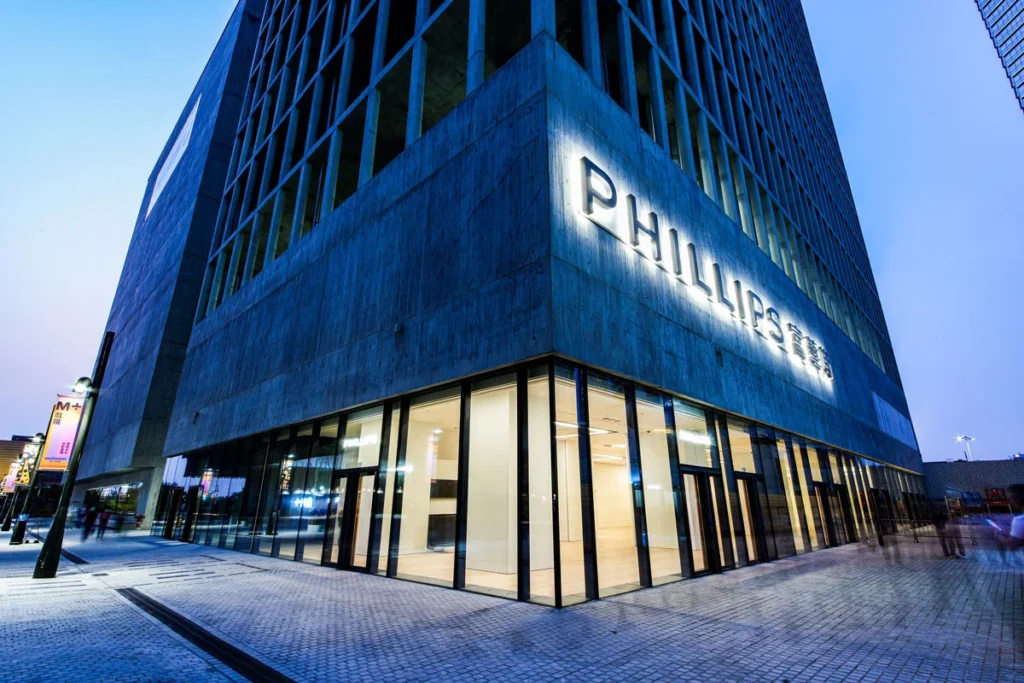
The global art market is witnessing a fundamental transformation at Phillips, the perennial "third player" in the high-stakes world of fine art auctions. For over a decade, Phillips pursued an aggressive expansionist strategy, aiming to break the duopoly held by Christie’s and Sotheby’s. However, a recent wave of high-profile departures and a pivot toward "luxury" categories suggest that the house is undergoing a radical identity shift—one that favors cost-cutting and niche dominance over the pursuit of trophy masterpieces.
Main Facts: The Brain Drain at the Top
The internal landscape at Phillips has been rocked by the departure of several key executives who were instrumental in the house’s rise over the last decade. Following earlier reports by ARTnews regarding the exits of Miety Heiden, Chairman of Private Sales, and Jonathan Crockett, Chairman for Asia, new information confirms that the "brain drain" extends into the company’s operational and strategic core.
Joseph Prindle, the Chief Technology Officer, and Katherine Thorpe Kerr, Global Director of Client Strategy, have also vacated their positions. These departures are not isolated incidents but appear to be part of a broader exodus of the leadership tier that defined Phillips’ "Golden Era" of expansion.
According to sources with intimate knowledge of the firm’s internal dynamics, the house is currently grappling with a lack of strategic continuity. The loss of Crockett and Meiling Lee has created a significant vacuum in the Asian market, particularly in Hong Kong, where Phillips recently opened a lavish new headquarters in the West Kowloon Cultural District. While the house has promoted Cherry Lam to General Manager of Asia to stem the tide, the loss of "rainmakers" who hold decades of personal client relationships poses a significant risk to the firm’s bottom line.
Chronology: From Aggressive Expansion to Austerity
To understand the current state of Phillips, one must look at the trajectory set under the leadership of Ed Dolman, who served as CEO from 2014 until 2021 (remaining as Executive Chairman until early 2025).
The Dolman Era (2014–2021): The Pursuit of the Big Three
Under Dolman, a former Christie’s veteran, Phillips sought to become a genuine peer to the two major houses. The strategy was clear:
- Talent Poaching: Hiring expensive specialists and "business getters" from rival firms.
- Guarantees: Using aggressive financial guarantees to secure high-value 20th-century and contemporary consignments.
- Infrastructure: Expanding the global footprint, particularly in London and Hong Kong.
This era was defined by "trophy hunting"—chasing $30 million to $100 million paintings to prove that Phillips could play in the same league as Sotheby’s and Christie’s. While this successfully elevated the brand’s prestige, it was an incredibly capital-intensive endeavor with razor-thin margins.
The Transition (2022–2024): Sanctions and Shifts
The landscape changed dramatically with the onset of the Russia-Ukraine war. Phillips is owned by the Mercury Group, a Russian luxury retail giant. While Phillips itself was not sanctioned, the association created a branding challenge and complicated the house’s international operations. During this period, Stephen Wilson, formerly the Chief General Counsel, took over as CEO. His tenure has been characterized by observers as a period of "extreme cost-cutting" as the house grappled with declining sales volumes and the geopolitical baggage of its ownership.
The Current Reset (2025–Present): The Return of Runge
In February 2025, Bernd Runge returned to Phillips as Chief Operating Officer and a primary advisor to the shareholders. Runge, who previously served as CEO from 2009 to 2013, represents a return to a different era of management. Insiders suggest that Runge’s return signaled a move away from the "specialist-led" model championed by Dolman. Reports indicate that Runge places less value on high-priced specialists, a sentiment that has allegedly contributed to the recent mass exodus of senior staff.
Supporting Data: The Shift in Market Focus
The "new" Phillips appears to be pivoting away from the high-risk, low-margin business of evening-sale trophy paintings toward "luxury" and "lifestyle" categories where it already possesses a competitive edge.
Category Performance
While the pursuit of major paintings is being scaled back, other departments are thriving:
- Watches: Phillips remains a market leader in high-end horology, frequently setting world records for vintage Patek Philippe and Rolex pieces.
- Prints & Multiples: This department has shown consistent strength, appealing to a broader, more liquid segment of the market.
- E-commerce (Dropshop): The house’s digital-first platform, Dropshop, recently saw success with a collaboration with artist Cj Hendry. This model allows for primary-market sales with lower overhead than traditional auctions.
- Photography: An established pillar for Phillips that requires significantly less financial "guarantee" capital than 20th-century masterpieces.
Auction Volume and Revenue
The data reflects a narrowing of scope. In 2025, Phillips hosted nine live auctions in Hong Kong. For 2026, that number has dropped to eight. In the coming four months, Phillips has only three live auctions scheduled in Hong Kong, compared to 11 at Sotheby’s and 12 at Christie’s.
However, there are signs of resilience in the core business. The May marquee sales in New York totaled $145.6 million, representing a 90% increase year-over-year by lot. The Modern and Contemporary evening sale alone brought in $115.2 million, achieving a "white-glove" result (100% of lots sold). This suggests that while Phillips is shrinking its calendar, it is focusing on high-sell-through efficiency.
Official Responses and Internal Sentiment
A Phillips spokesperson declined to comment on specific allegations regarding Bernd Runge’s management style or the "devaluing" of specialists. However, the house has publicly emphasized its commitment to its new leadership in Asia and its digital initiatives.
The sentiment among current and former employees, speaking on the condition of anonymity, is one of uncertainty. "Phillips now operates how it did 20 years ago," one source noted, suggesting a regression from a global powerhouse back to a boutique operation. Another source pointed to a "temporary lack of leadership as far as strategy goes," noting that the departure of "Ed [Dolman] left a void of someone who truly understood what an auction house needed to survive at the top level."
Industry advisors, such as Nazy Vassegh, founder of Eye of the Collector, suggest that this churn is a natural part of a corporate lifecycle. "Businesses should combine fresh perspectives with seasoned leadership," Vassegh told ARTnews. "It’s that balance of innovation and experience that ultimately inspires confidence amongst clients."
Implications: The Boutique Future of Phillips
The strategic retreat at Phillips has profound implications for the global art market, particularly in the "Wealth Management" model of art collecting.
The De-Institutionalization of Relationships
Mia Miseong Jung, a director at MARKT in Seoul, argues that Phillips must move away from the "star executive" model. "For Phillips to fill the void left by key rainmakers, it must swiftly institutionalize client relationships rather than relying on a few star executives," she said. Jung suggests that the house should decentralize authority, giving more autonomy to local directors in Seoul, Tokyo, and Hong Kong to maintain trust.
The Holistic Lifestyle Collector
The pivot toward watches and jewelry is not just a cost-cutting measure; it reflects a shift in how the modern "VIP" collects. Tarun Sharma, director of Tarun Art Gallery in New Delhi, observes that "modern Asian buyers… do not collect in strict silos. They buy contemporary art, luxury watches, and modern masters simultaneously."
If Phillips can successfully position itself as a "cultural club" or a "wealth management" advisory rather than just a salesroom, it may find a more sustainable—and profitable—niche than it had as a direct competitor to the duopoly.
The Risk of Continuity
The immediate risk for Phillips is the upcoming October sales during Frieze Week in London. In a relationship-driven business, the loss of trusted advisors like Heiden and Crockett could lead to "consignment drift," where long-term clients follow their preferred specialists to boutique advisories or rival houses.
Lucy-Anne Garnett, director of Garnett Art Advisory, notes that the departing leaders "contributed significantly to the company’s success over many years." Their absence will be felt most acutely in the private sales division, which requires year-round engagement rather than the seasonal bursts of activity associated with auctions.
Conclusion: A Reset or a Retreat?
Phillips is at a crossroads. The aggressive, capital-heavy strategy of the 2010s has been abandoned in favor of a leaner, more focused model. While the "high-level shakeups look dramatic from the outside," as Tarun Sharma puts it, they also "clear space for an auction house to redefine its identity."
If Phillips can leverage its dominance in watches and prints while utilizing data to cross-sell to a younger generation of "lifestyle" collectors, it may emerge as a more stable, albeit smaller, entity. However, the challenge remains: in the art world, trust is the primary currency. With so many of its most trusted faces leaving the building, Phillips must work quickly to prove that its corporate logo carries as much weight as the individuals who helped build it. The coming months will determine whether this is a strategic reset or a permanent retreat from the top tier of the art market.