

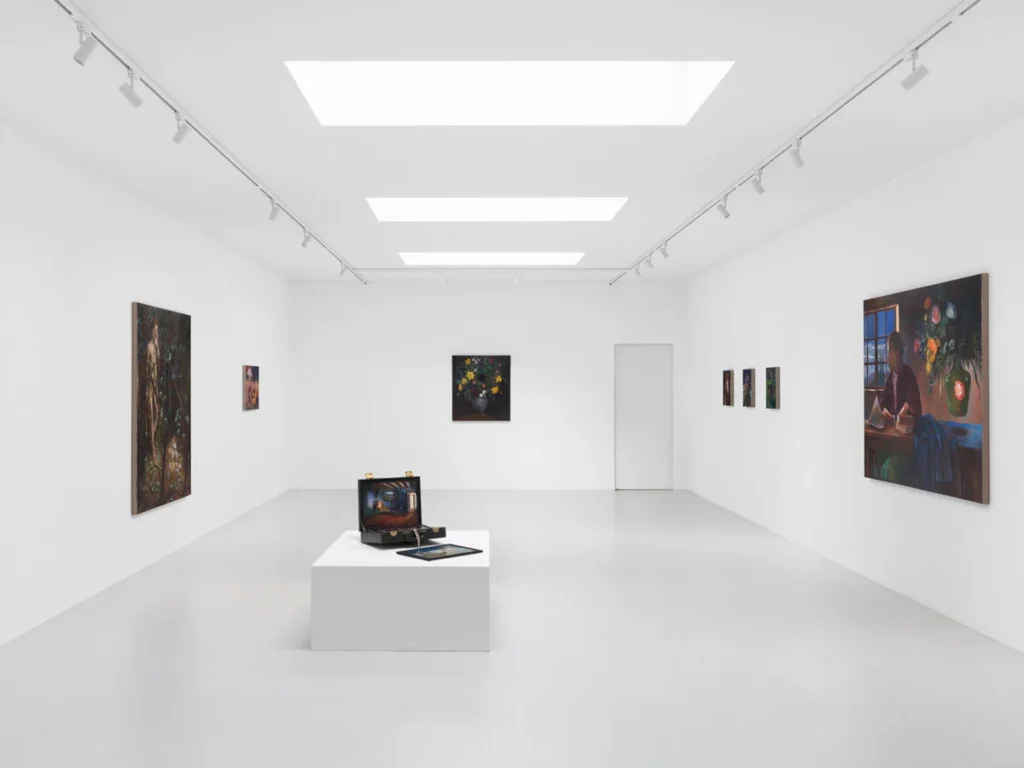
The landscape of the international contemporary art market is undergoing a significant transformation, marked by a wave of consolidation and re-evaluation of the traditional commercial gallery model. In a move that has sent ripples through the European art scene, the Brussels-based gallery Super Dakota has announced that it will shutter its physical operations at the end of October. The news marks the conclusion of a 15-year tenure that established the gallery as a bridge between historical rigor and cutting-edge contemporary practice.
The gallery’s final exhibition, a solo presentation of works by Adrian Geller, is currently on view and will conclude on October 16, marking the formal end of an era for the space that has long been a fixture of the Belgian capital’s vibrant art ecosystem.
The Evolution of an Artistic Vision: A Chronology
Super Dakota’s journey began in September 2013, founded by Damien Bertelle-Rogier, known professionally as Damèen Dakota. From its inception, the gallery was defined by an ambitious, intellectual mandate: to present cutting-edge, engaging exhibitions that rooted contemporary practice firmly within the broader lineage of art history.
The Formative Years (2013–2015)
The gallery’s inaugural exhibition, "Void," set the tone for its future programming. It featured a diverse group of ten artists, including Joachim Bandau, Baptiste Caccia, and the late American photographer Jan Groover. The gallery’s commitment to historical dialogue was evidenced early on when it dedicated its third exhibition to a solo show for Groover, an influential photographer whose work had shaped the medium since the 1970s. This early focus on bridging the gap between established, historically significant figures and the contemporary avant-garde became a recurring hallmark of the gallery’s identity.
Establishing a Global Footprint (2016–2022)
As the gallery matured, its influence expanded well beyond Brussels. Super Dakota became a familiar presence on the international fair circuit, participating in prestigious platforms such as Independent (New York), NADA Miami, Liste Basel, Frieze London, and Art Basel Miami Beach. During this period, the gallery curated increasingly complex group shows that placed high-profile names in conversation with emerging talents.
Notable among these was "Masha" (2016), which juxtaposed legends like John Cage, Yvonne Rainer, Lawrence Weiner, and Jan Groover alongside younger practitioners such as Lydia Gifford and GL Rogier. This spirit of dialogue continued in 2018 with the exhibition "The Scales of Persona and Possibility," which featured heavyweights like Fischli & Weiss, Douglas Gordon, Wade Guyton, Adam Pendleton, Raymond Pettibon, and Robert Rauschenberg in conversation with a new generation of artists, including Alex Clarke and Sarah Derat.
The Final Chapter (2023–2024)
At the time of its closing, the gallery represented a roster of 16 artists, including Adrian Geller, !Mediengruppe Bitnik, Alex Clarke, John Divola, Chris Dorland, Tabor Robak, LaRissa Rogers, and Julia Wachtel. The success of these artists—notably Wachtel’s inclusion in the 2026 edition of Greater New York and the inaugural Aldrich Decennial—underscores the quality of the gallery’s long-term nurturing of talent.
Challenging the Status Quo: The Shift in Business Models
In a candid email to the gallery’s listserv, Damien Dakota articulated the motivations behind the closure, citing a fundamental misalignment between the traditional commercial gallery model and his evolving professional ambitions.
"This has been a great journey, but after 15 years, the model of a commercial art gallery doesn’t match my ambitions anymore," Dakota wrote. "I want to continue supporting artists through other platforms and models."
This decision reflects a growing trend among gallery owners who are increasingly wary of the overhead costs, logistical demands, and market volatility inherent in maintaining a permanent brick-and-mortar space. Rather than disappearing from the art world, Dakota plans to pivot toward a more agile, research-driven practice.
A Pivot to Curatorial Research
Moving forward, Super Dakota will transition into a consultancy and curatorial research space. Dakota, who has spent the last decade advising collectors on building their private holdings, intends to work closely with artists, institutions, and private collectors to facilitate projects that emphasize "historical relevance and theoretical aesthetics." This move signals a shift from the retail-heavy nature of art dealing toward a more academic and advisory approach.
The MeatSpace Institute of Arts
Perhaps the most ambitious aspect of this transition is the forthcoming launch of the MeatSpace Institute of Arts. Described by Dakota as an institution operating at the intersection of art and gaming, the initiative aims to leverage technology to "make culture radically accessible to anyone, anywhere." The institute is designed to rethink the institutional role of the museum, moving away from the exclusionary nature of the traditional "white cube" toward a more distributed, digital-first model of engagement.
Market Implications: A Broader Trend of Contraction
Super Dakota’s closure occurs against a backdrop of widespread volatility in the international art market. Over the past 18 months, the industry has seen a series of high-profile closures and contractions, both in the United States and across Europe.
The Belgian capital, in particular, has seen a shifting guard; in June, the influential Brussels gallery Dépendance announced it would cease operations after 23 years. Similarly, the Swiss market has seen major players scale back, with Eva Presenhuber recently announcing the closure of her Vienna outpost, and dealer Emmanuel Layr deciding to reduce his business operations.
These closures suggest that the "middle-market" gallery model—which requires high-traffic, high-cost real estate and a constant cycle of international fairs—is becoming increasingly unsustainable. The economic pressures of inflation, rising shipping costs, and shifting collector behaviors have forced many dealers to adopt a "less is more" approach, prioritizing digital reach and advisory work over physical presence.
Gratitude and Legacy
In his farewell statement, Dakota struck a tone of profound appreciation. He acknowledged the essential support system that allowed the gallery to thrive for a decade and a half, specifically thanking his mother and his partner for their steadfast encouragement.
He also extended his gratitude to the broader ecosystem that sustained the gallery: "I also want to express my gratitude to the collectors who have been with us all these years supporting our vision and the practices of our artists, and of course, I want to thank all the artists who have shown their works in our gallery. To all, I’m forever grateful."
As Super Dakota prepares to close its doors, its legacy remains tied to its intellectual consistency. By championing the idea that contemporary art is not a vacuum but a continuation of historical discourse, the gallery provided a platform for artists to be seen not just as commodities, but as participants in a long-standing creative tradition.
While the physical space in Brussels will no longer host exhibitions, the shift in Damien Dakota’s focus toward the MeatSpace Institute of Arts suggests that the ethos of the gallery—accessibility, theoretical inquiry, and the disruption of traditional institutional norms—will continue in a new, modernized form. The art world will be watching closely to see if this transition from "gallery" to "institute" provides a viable blueprint for the next generation of art professionals navigating an increasingly digital, post-commercial landscape.



