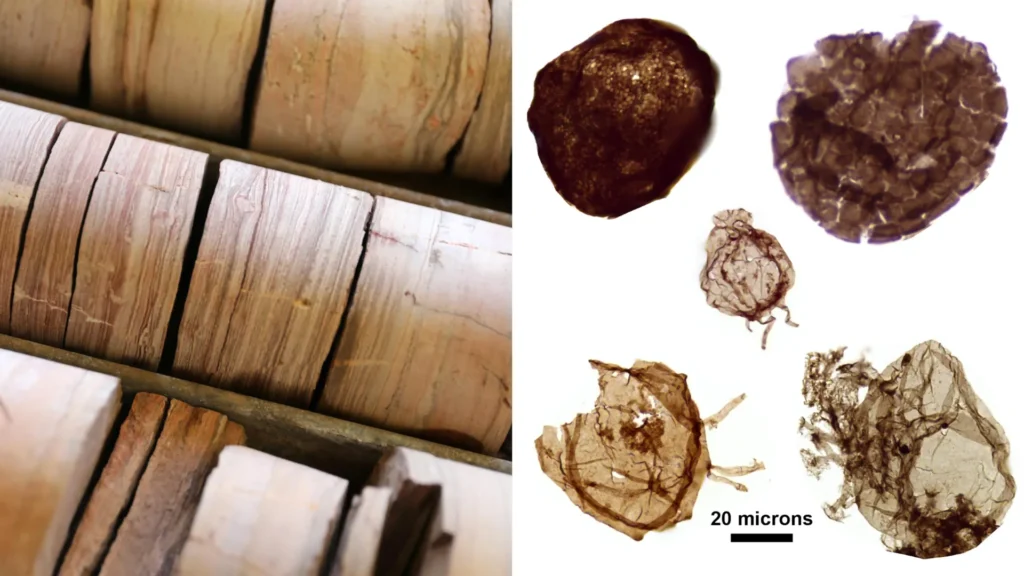
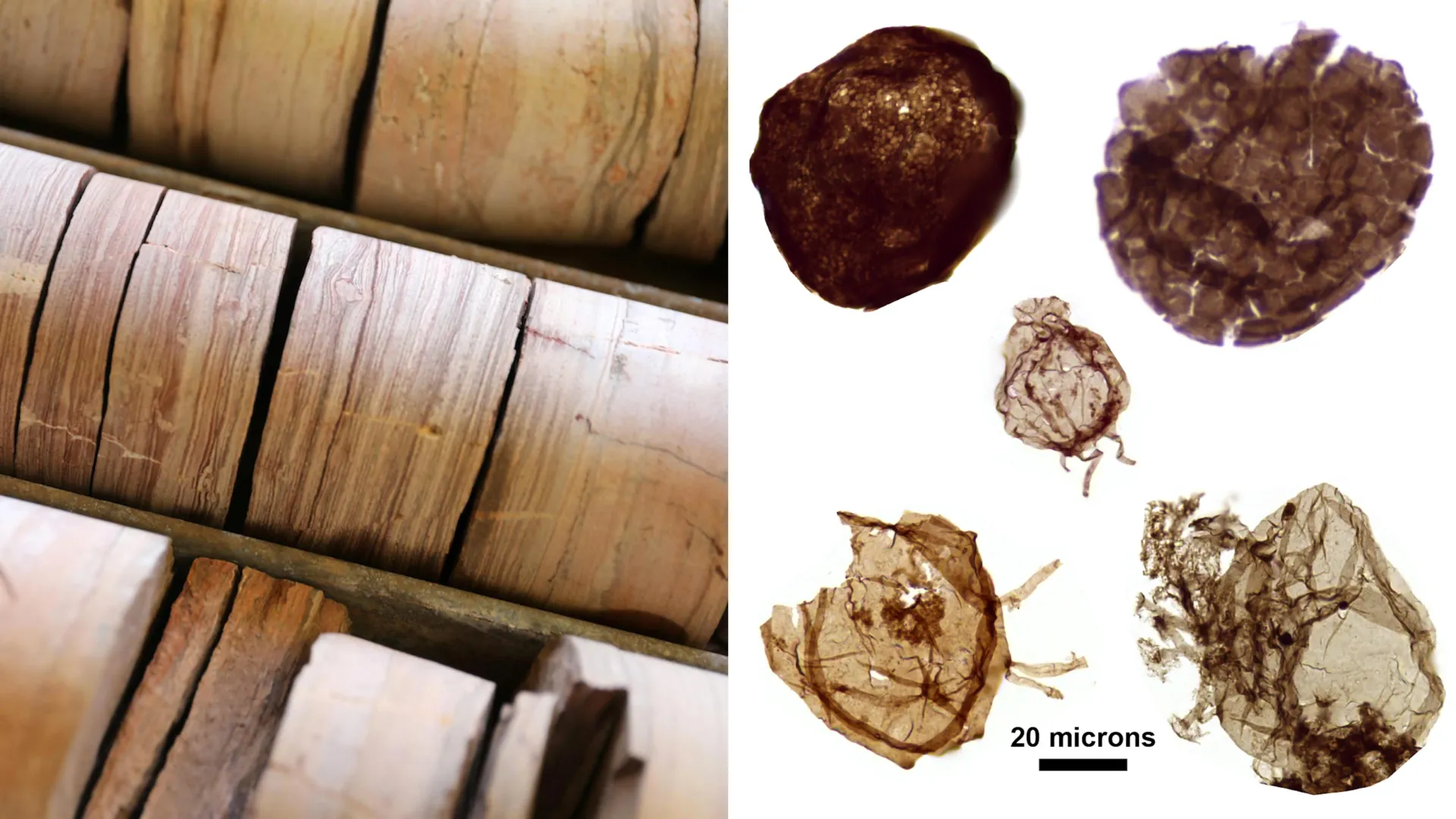
In a sprawling, open-air warehouse in the humid heat of Darwin, Australia, thousands of unassuming cylindrical rock cores rest on metal trays. To the casual observer, they are mere industrial debris—leftovers from mineral exploration companies that bored hundreds of meters into the Earth’s crust decades ago. To a team of evolutionary biologists and geologists, however, these dusty mudstones represent a treasure trove of biological history, holding the keys to one of the most profound mysteries in the story of life on Earth: the origin of eukaryotes.
A groundbreaking study recently published in the journal Nature has utilized these ancient samples to settle a long-standing scientific debate. By analyzing more than 12,000 microscopic fossils extracted from these cores, researchers have confirmed that the "eukaryotic revolution"—the leap from simple, single-celled life to the complex cells that eventually gave rise to plants, fungi, and animals—was inextricably linked to the presence of oxygen.
The Great Divide: Prokaryotes vs. Eukaryotes
To understand the magnitude of this discovery, one must first appreciate the fundamental divide in the biological world. All life on Earth exists in one of two cellular frameworks. The first, and more ancient, group consists of prokaryotes—bacteria and archaea. These are relatively simple, single-celled organisms that lack a centralized nucleus or complex internal machinery.
The second group, the eukaryotes, represents a radical departure from this simplicity. Eukaryotic cells are the building blocks of all complex life. They feature a defined nucleus that houses DNA, along with specialized organelles like mitochondria—the "power plants" of the cell—and other structures that perform specific, highly coordinated tasks.
For decades, the scientific consensus has held that this complexity arose through a monumental event: the symbiotic union of two prokaryotic microbes, an archaeon and a bacterium. This "first contact" provided the eukaryotic ancestor with the internal infrastructure necessary to support larger, more complex life forms. However, the timeline and environmental conditions surrounding this evolution have remained obscured by the vastness of deep time.
Chronology of an Evolutionary Leap
The fossils housed in the Northern Territory Geological Survey (NTGS) archives provide the oldest window into this transformation. Dating back 1.75 billion years, these microfossils are currently the oldest known evidence of eukaryotic life on the planet.
The timeline of this evolutionary transition can be broken down into three critical phases:
- The Pre-Eukaryotic Era (Pre-1.8 Billion Years Ago): A world dominated entirely by prokaryotic life. During this time, the Earth’s atmosphere and oceans were largely oxygen-poor, favoring organisms that thrived through anaerobic respiration.
- The Eukaryotic Genesis (1.75 Billion Years Ago): As evidenced by the Darwin cores, this period marks the emergence of the first recognizable eukaryotes. These organisms appear in the fossil record with a level of structural complexity—larger cell sizes and distinct morphological features—that prokaryotes simply could not achieve.
- The Oxygenation Expansion (1.4 Billion Years Ago and Beyond): As oxygen levels in the ancient seas began to rise, the fossil record shows an increase in the diversity and distribution of eukaryotic life, suggesting that the "oxygen-fueled" energy advantage was beginning to pay off on a global scale.
Supporting Data: Unlocking the Secret of the Mudstones
The research team’s methodology was as rigorous as it was ingenious. By crushing and chemically dissolving the mudstone cores, the scientists were able to isolate organic residue that had remained hidden for over a billion years. Under high-powered microscopy, they identified over 12,000 individual fossilized specimens.
The study did not just look at the fossils; it scrutinized the rock itself. By analyzing the geochemistry of the host mudstones, the researchers were able to reconstruct the environmental conditions of the ancient inland sea that covered northern Australia 1.5 billion years ago.
The data revealed a striking correlation: eukaryote fossils were discovered exclusively in sedimentary layers that showed clear chemical signatures of oxygenation. In contrast, samples taken from nearby environments that lacked oxygen contained only simple, primitive prokaryotic life. This spatial separation provides the strongest evidence to date that early eukaryotes were not merely "oxygen-tolerant," but were, in fact, dependent on oxygen for their survival and diversification.
Challenging the "Oxygen-Free" Hypothesis
In recent years, the assumption that oxygen was a prerequisite for eukaryotic life had been challenged. The discovery of certain "enigmatic" modern eukaryotes that survive in oxygen-depleted environments led some researchers to suggest that the first eukaryotes might have evolved in the absence of oxygen.
Furthermore, geological evidence suggests that oxygen levels in the Proterozoic era were significantly lower than they are today. Some scientists argued that because oxygen was scarce, early eukaryotes must have evolved in anoxic (oxygen-free) habitats.
However, the findings published in Nature effectively counter this. By showing that 1.7-billion-year-old eukaryotes were absent from anoxic deposits, the researchers have reinforced the "aerobic respiration hypothesis." It appears that while some eukaryotes evolved secondary adaptations to thrive in low-oxygen conditions much later in history, the original transition to complex life was fundamentally powered by the chemical energy provided by oxygen.
Official Perspectives and Expert Implications
The implications of this study extend far beyond the Northern Territory. Dr. [Lead Researcher Name, if applicable/generic reference], who spearheaded the project, noted that the discovery "bridges the gap between genetic theory and the physical reality of the Earth’s ancient environment."
By providing a concrete environmental context for the emergence of eukaryotes, the study addresses a major outstanding question in the life sciences. If oxygen is indeed the primary driver for the evolution of complexity, it suggests that the rise of complex life on any planet is likely dependent on a specific sequence of geological and atmospheric conditions.
Implications for Future Exploration
The study also highlights the invaluable nature of geological archives. The NTGS warehouse, which serves as a repository for the state’s mineral exploration history, has proven that industrial data can be re-purposed to answer fundamental questions about the history of the cosmos. As researchers look to the future, the integration of deep-time geological records with genomic data from modern organisms will continue to be the primary method for unraveling the origins of life.
Conclusion: A Window into Our Own Origins
The story of the eukaryotic revolution is, in many ways, the story of ourselves. Without that initial symbiotic union and the subsequent reliance on oxygen to power the resulting complex cellular machinery, the evolutionary trajectory that led to multicellular life, animals, and eventually humanity would never have occurred.
As scientists continue to analyze these 1.7-billion-year-old fossils, they are not just looking at rocks in a warehouse; they are examining the ancestral blueprint of every complex living thing on Earth. The dust-covered cores of Darwin serve as a poignant reminder that the answers to our most existential questions—where we came from and why we are here—are often buried just beneath our feet, waiting for the right technology and the right curiosity to bring them to light.
This discovery serves as a clarion call for continued investment in geological survey data. As we refine our understanding of the Earth’s history, we improve our ability to predict the conditions required for life to flourish elsewhere in the universe, placing our own evolution within a broader, cosmic context.