

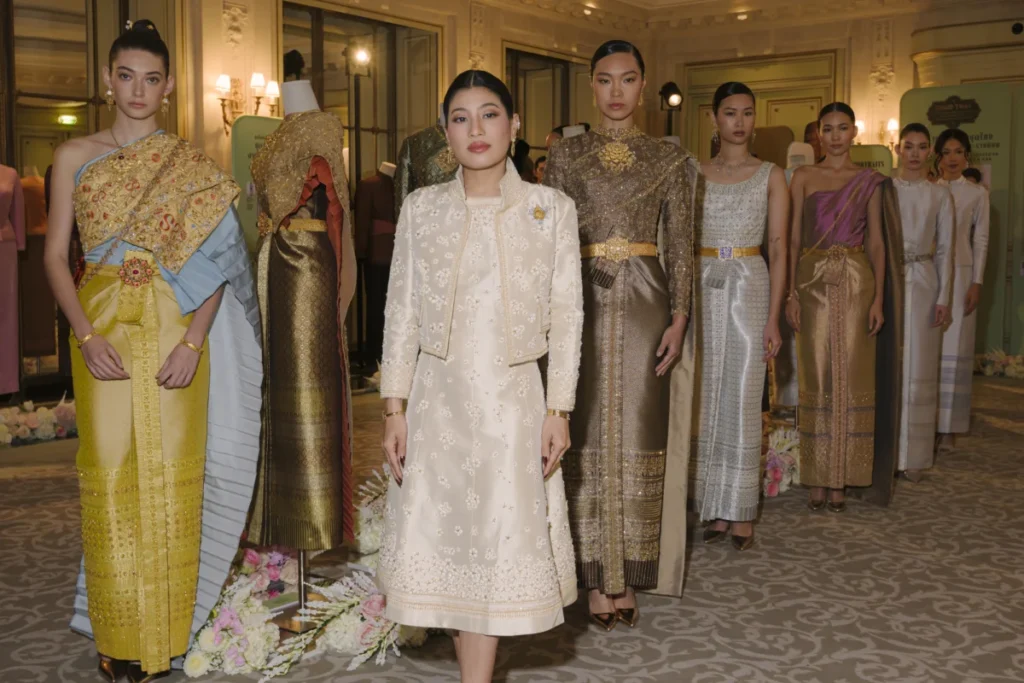
PARIS — The opulent halls of Le Meurice, a landmark of Parisian elegance, served as the backdrop for a significant cultural milestone this past Saturday. As the city of lights looked on, the spotlight fell not on a couture runway in the traditional sense, but on a meticulously curated showcase of Chud Thai—the national dress of Thailand. This event, a brief yet impactful "layover" in the French capital, represents the latest move in an ambitious, multiyear international campaign to secure the inclusion of Chud Thai on UNESCO’s Representative List of the Intangible Cultural Heritage of Humanity.
Spearheaded by the visionary Thai Princess Sirivannavari Nariratana Rajakanya, the campaign aims to elevate the status of these traditional ensembles from regional ceremonial attire to recognized global cultural treasures.
The Proposal: Safeguarding Craftsmanship and Knowledge
The formal proposal, titled "Chud Thai: knowledge, craftsmanship and practices of the Thai national dress," is currently awaiting a pivotal moment in its journey. The nomination is scheduled for deliberation at the 21st session of the Intergovernmental Committee for the Safeguarding of the Intangible Cultural Heritage. The event, which will serve as the final hurdle for the recognition, is set to be hosted in Xiamen, China, from November 30 to December 5.
For Princess Sirivannavari, who is not only a member of the Thai royal family but also a recognized fashion designer under the Sirivannavari brand, this project is the culmination of years of quiet, persistent diplomacy. The endeavor began as a deeply personal mission, initially inspired by the guidance and wishes of her aunt, Princess Maha Chakri Sirindhorn, the Princess Royal.
A Chronology of a Cultural Crusade
The journey to UNESCO recognition did not begin on the international stage. In its infancy, the campaign was characterized by intimacy and resourcefulness. Princess Sirivannavari recalls early events being held as modest gatherings within ambassadorial residences across the globe.
"In the beginning, we were borrowing pieces directly from my own wardrobe," the Princess shared with WWD ahead of the Paris event. "Members of the diplomatic entourage would act as our models. It was organic, personal, and driven by a genuine desire to share our heritage."
As the project gained momentum, it captured the attention of the Thai government. By 2024, the Ministry of Culture had fully embraced the nomination, providing the structural and political backing necessary to elevate the campaign. This institutional support allowed for a more robust global tour, with high-profile showcases taking place in cultural hubs including London, The Hague, and Tokyo. Each stop was designed not merely as a fashion display, but as an educational bridge, connecting the intricate history of Thai textiles with international audiences.
The Queen Mother: A Tribute to a Lasting Legacy
For Princess Sirivannavari, the campaign is inextricably linked to the memory of her grandmother, Queen Sirikit, the Queen Mother, who passed away in October 2025 at the age of 93.
"It’s something that I can do for my grandmother—a last gift," the Princess noted, referencing the upcoming mid-December ceremonies that will mark the conclusion of the one-year mourning period.
The Queen Mother was the primary architect of the Chud Thai Phra Rajaniyom, the formal classification of the dress. During her life, she worked closely with historians and master weavers to codify eight foundational styles for women and three for men. These styles were not merely aesthetic choices; they were designed to reflect the modernization of Thailand while honoring its deep-seated traditions.

The ongoing exhibition at the Musée des Arts Décoratifs, titled "Royal Thai dress, from tradition to modernity," which runs through November 1, illustrates this evolution. The exhibit highlights how, beginning with the 1960 state tours alongside King Bhumibol Adulyadej, Queen Sirikit transformed these ensembles into a symbol of Thailand’s diplomatic identity.
Supporting Data: A Renaissance in Thai Textiles
The push for UNESCO status has yielded tangible economic and social dividends. The movement to preserve Chud Thai has inadvertently catalyzed a renaissance within the Thai textile industry. Since the global pandemic, the sector has seen a staggering 200 percent surge in the trading of Thai silk.
Perhaps more significantly, the demographics of the industry are shifting. The average age of master weavers is declining as a younger generation of artisans enters the trade. According to Princess Sirivannavari, this new cohort is characterized by a bold, experimental spirit. "They are not scared to develop new color combinations or push the boundaries of traditional patterns," she observed.
This resurgence is vital for the sustainability of the craft. By integrating the history of Thai textiles—specifically the complex techniques of dyeing and the symbolic meanings behind specific motifs—into university curricula, the Princess hopes to formalize the education of the next generation of designers.
Implications: A Seat at the Global Fashion Table
When asked about the future of Chud Thai, the Princess was clear: the dress should never be a static artifact. "It’s not fixed in time," she asserted. Her vision is one where the craftsmanship of the past informs the innovation of the future, allowing Chud Thai to remain a living, breathing component of contemporary life.
The implications of this campaign extend beyond cultural preservation; they are about establishing Thailand as a powerhouse in the global fashion industry. "We have to come full circle," the Princess said. "It’s time for Thailand to be one of the central spots of the fashion world. I know many people love Thailand, but it’s time they know we have artisans, craftsmanship, and art. They should know how proud we are of that."
Official Perspectives and Future Outlook
As the world turns its attention toward the UNESCO decision in Xiamen this winter, the Thai delegation remains optimistic. The campaign has successfully framed Chud Thai as a "total work of art"—one that requires deep knowledge of silk weaving, complex tailoring, and a respect for historical practice.
The success of the Paris showcase at Le Meurice underscores the global appetite for this narrative. By bridging the gap between historical court dress and modern luxury, the campaign has managed to capture the attention of the fashion elite while staying true to the spirit of the Queen Mother’s original vision.
As the formal recognition process approaches its conclusion, the broader goal remains: to ensure that the craftsmanship behind the Thai national dress is not just admired, but actively protected for generations to come. Whether in a rural weaving village in Isan or a luxury hotel in Paris, the message remains the same: Chud Thai is more than a garment—it is the fabric of a nation, woven with history and looking firmly toward a modern future.



