

The promise of a "frictionless future" has long been the siren song of Silicon Valley. From bio-integrated sensors to wearable payment technology, investors are perpetually hunting for the next disruptive hardware. However, for Michelle Bisnoff, the founder of the California-based startup Esos Rings Inc., that promise served as a veneer for a sophisticated and destructive financial deception.
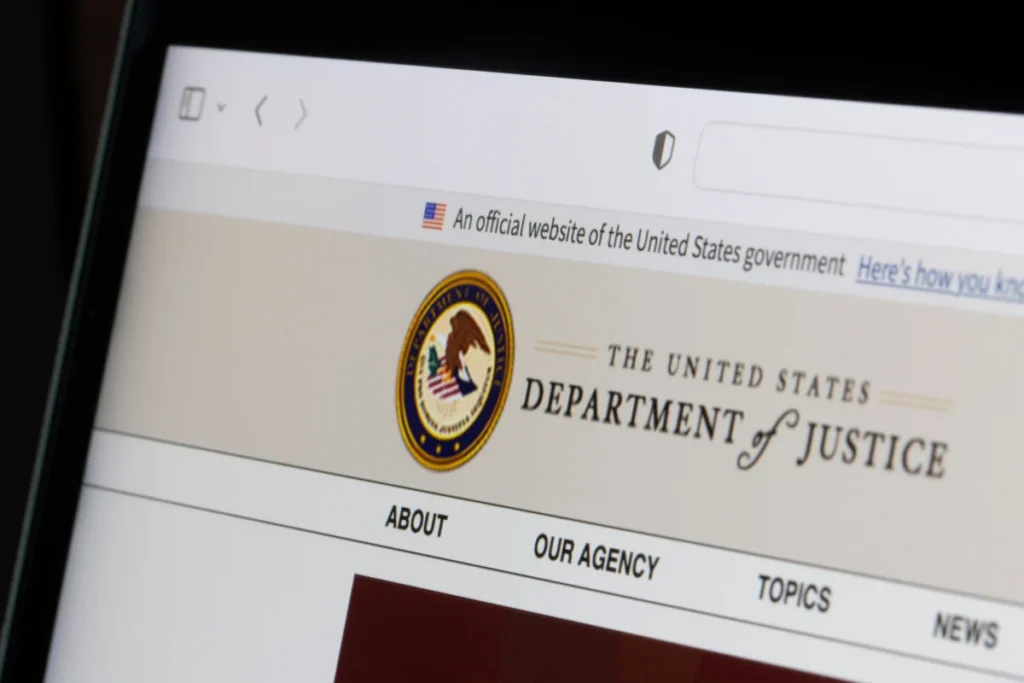
On September 25, the United States Department of Justice (DOJ) announced that a federal jury had found Bisnoff guilty of operating a nearly $2 million Ponzi scheme, shattering the facade of a company that once claimed it would revolutionize how consumers interact with their finances. The conviction marks the end of a multi-year investigation into a startup that existed more on paper—and in the imagination of misled investors—than in the reality of the wearable technology market.
The Core Deception: A Patent That Never Was
At the heart of the Esos Rings saga was a singular, brazen lie. Founded by Bisnoff in February 2017, Esos Rings Inc. purported to be a pioneering hardware company. The central value proposition presented to prospective investors was a proprietary "smart ring" capable of contactless payments. By embedding credit card data directly into the ceramic or metallic band of the ring, Bisnoff claimed, consumers could make purchases with a simple wave of the hand at any NFC-enabled point-of-sale terminal.
To secure funding, Bisnoff marketed the company as the owner of a primary, foundational patent for this technology. In the high-stakes world of intellectual property-driven startups, a foundational patent is the "holy grail"—it grants the owner exclusivity and the leverage to either dominate a market or command a massive acquisition premium from tech giants like Apple, Google, or Samsung.
However, as federal prosecutors later uncovered, this claim was entirely fraudulent. Esos Rings held no such patent. The technology remained a concept, never reaching the prototype or mass-production phase, and certainly never reaching the level of proprietary intellectual property that would warrant a valuation in the millions.
A Chronology of the Fraud
The collapse of Esos Rings was not an overnight event, but rather a slow-motion implosion fueled by a persistent cycle of deception.
2017: The Genesis of the Scheme
In February 2017, Bisnoff incorporated Esos Rings Inc. in California. By leveraging her background and presenting a polished pitch deck, she began soliciting funds from private investors. She portrayed the startup as being on the verge of a breakthrough in "wearable fintech," playing on the investor appetite for the burgeoning contactless payment market.
2017–2022: The Ponzi Mechanism
For years, Bisnoff successfully solicited approximately $2 million from various victims. Rather than utilizing these funds for research and development (R&D), manufacturing, or software engineering, Bisnoff funneled the capital into a classic Ponzi structure. She used new investor money to pay off existing investors, creating the illusion of a profitable, growing company. This "return on investment" kept victims satisfied and discouraged them from conducting rigorous due diligence, as the periodic payouts seemingly confirmed the viability of the business.
2023–2024: The Unraveling
As the pressure to deliver a functional product mounted and the cost of maintaining the ruse grew, the house of cards began to wobble. Regulatory scrutiny intensified as questions regarding the company’s lack of a patent surfaced. Federal agents, acting on reports of financial irregularities, began a deep-dive audit of the firm’s ledger.
September 2024: The Verdict
After a trial in the U.S. District Court for the Central District of California, a jury returned a guilty verdict. The DOJ confirmed that Bisnoff had engaged in wire fraud and securities fraud, effectively ending the operation of Esos Rings Inc. and bringing the founder to face the consequences of her multi-year deception.
Supporting Data: The Anatomy of a Financial Crime
The investigation into Esos Rings revealed a pattern common in white-collar criminal cases: the weaponization of "tech-speak" to bypass investor skepticism.

- The Funding Gap: While the company claimed to have secured patents, records showed $0 in actual patent filing or maintenance costs.
- Asset Diversion: Forensic accounting revealed that the $2 million collected was largely diverted into personal accounts and used to pay off older debts, rather than being reinvested into the business.
- The "Retailer" Myth: Bisnoff frequently touted partnerships with major payment processors and retail networks to add credibility to the ring’s functionality. Investigators found no signed contracts or integration logs with these financial institutions.
The success of the fraud was largely predicated on the "black box" nature of early-stage hardware startups. Investors often rely on the technical expertise of the founder, and Bisnoff used this inherent power imbalance to mask the lack of engineering progress.
Official Responses: The DOJ’s Stance
The Department of Justice has been clear in its messaging regarding the Esos Rings case. The prosecution, led by the U.S. Attorney’s Office for the Central District of California, emphasized that the case serves as a warning to both founders and investors.
"Ms. Bisnoff exploited the trust of her investors by painting a picture of innovation while simultaneously siphoning their capital to sustain a fraudulent scheme," a DOJ spokesperson stated during the announcement on September 25. "The verdict is a reflection of the federal government’s commitment to protecting the integrity of our financial markets and prosecuting those who use the guise of entrepreneurship to commit theft."
For investors, the DOJ’s message is simple: Due diligence is non-negotiable. Even in the fast-paced world of venture capital and angel investing, the burden of verification lies with the investor. The case highlights that even when a product sounds revolutionary, the lack of transparency in financial disclosures is often a "red flag" that cannot be ignored.
Implications for the Wearable Tech Industry
The Esos Rings collapse carries several significant implications for the broader wearable technology sector.
1. Increased Investor Skepticism
The incident is likely to chill the investment climate for early-stage hardware startups. Venture capitalists and angel investors are increasingly shifting their focus from "visionary" founders to those who can provide verifiable, third-party proof of intellectual property and technical milestones. The "fake it until you make it" culture of Silicon Valley is facing a corrective push from the investment community, which is demanding more rigorous technical audits.
2. The "Patent Verification" Standard
The Esos Rings case has underscored the necessity for independent verification of patent portfolios. In the future, it is expected that investors will require a "patent audit" performed by third-party legal counsel before finalizing seed or Series A funding. The blind acceptance of a founder’s claims regarding ownership of core technology is no longer a viable risk-management strategy.
3. Regulatory Oversight
The conviction reinforces the trend of the SEC and DOJ taking a more proactive stance on startup fraud. While early-stage companies are often given latitude to fail, the line between "failed startup" and "criminal enterprise" is drawn at the point of intentional misrepresentation. This case provides a roadmap for regulators to identify similar schemes before they reach the $2 million threshold.
Conclusion: A Lesson in Transparency
The saga of Michelle Bisnoff and Esos Rings Inc. is a sobering reminder of the dark side of the startup ecosystem. What began as a venture into the promising field of contactless payments devolved into a calculated betrayal of investor trust.
As the tech industry continues to evolve, the demand for transparency will only grow. While innovation is the lifeblood of progress, it must be built on a foundation of honesty and verifiable facts. For the victims of the Esos Rings scheme, the $2 million loss serves as a painful, expensive lesson in the importance of skepticism. For the rest of the industry, the case stands as a permanent marker of the risks inherent in a world where the line between a groundbreaking invention and a sophisticated scam can, at times, become dangerously blurred.
Ultimately, the law has provided a definitive answer to the Esos Rings narrative. The company, its "smart ring," and its foundational patent were nothing more than a mirage—a mirage that, thanks to the diligence of federal investigators, has finally been dismantled.



