

By Nouriel Roubini
New York — October 2, 2026
The global economy stands at a precarious, yet surprisingly stable, crossroads. Over the past twenty-four months, the international financial architecture has been subjected to a series of high-intensity stressors—geopolitical realignments, supply chain weaponization, and unprecedented energy market volatility. Yet, as we move into the final quarter of 2026, the resilience of both equity markets and macroeconomic indicators suggests a path toward stabilization. While the specter of "stagflationary" pressures has haunted policymakers for years, the prevailing outlook for 2027 leans toward a period of moderated growth and disinflationary cooling.
Main Facts: A Narrative of Persistence
The fundamental reality of the current economic landscape is one of unexpected durability. Despite the "Liberation Day" tariffs imposed by the Trump administration in April 2025—which triggered a global reassessment of trade dependency—and the subsequent escalation of the Iran War in early 2026, the global economy has refused to contract into a systemic recession.
The core facts defining this period are as follows:
- Monetary Policy Equilibrium: Central banks have successfully navigated the transition from aggressive tightening cycles to a "neutral" stance, avoiding a hard landing.
- Energy Shock Mitigation: The energy crisis stemming from the 2026 Middle East conflict, while severe, was mitigated by a faster-than-anticipated shift in energy mix and strategic reserve management.
- Equity Market Robustness: Contrary to bearish predictions, global indices have maintained their valuations, buoyed by the integration of AI-driven productivity gains and a cooling of inflationary expectations.
Chronology of Crisis: From Trade Wars to Kinetic Conflict
To understand why 2027 offers a more optimistic outlook, one must analyze the sequence of shocks that defined the preceding biennium.
2025: The Era of "Liberation Day" Tariffs
In April 2025, the United States implemented a radical trade policy shift, colloquially termed "Liberation Day." The imposition of sweeping tariffs was designed to decouple the US economy from high-risk manufacturing hubs. This triggered an immediate spike in the cost of imported goods, threatening a resurgence of inflation. However, the subsequent supply chain reorganization—moving toward "friend-shoring" and domestic manufacturing—eventually stabilized production costs, though at a higher baseline.
2026: The Energy Crisis of the Iran War
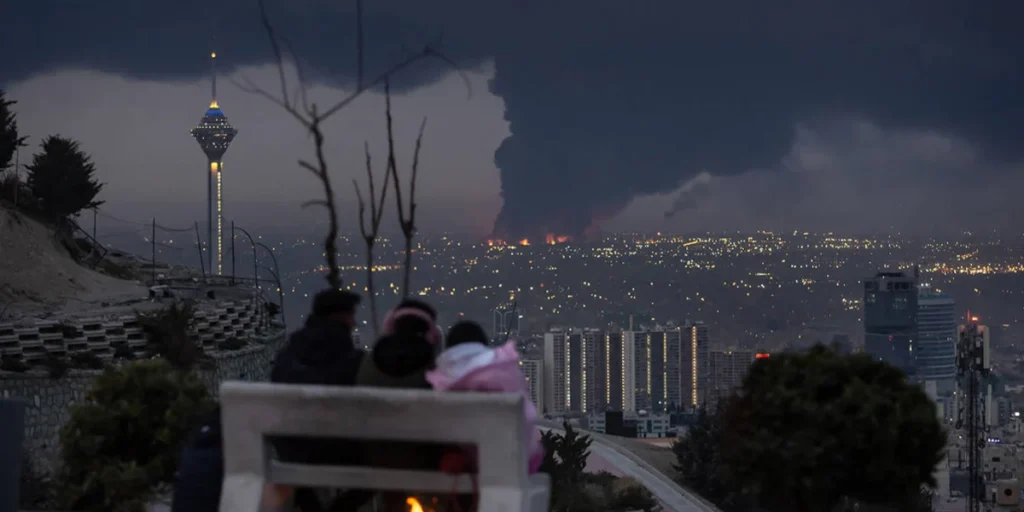
The escalation of hostilities involving Iran in the first quarter of 2026 introduced the most significant energy shock since the 1973 oil embargo. Global oil prices surged, testing the resolve of major economies. However, unlike the crises of the 20th century, the 2026 shock was met with a diversified global energy infrastructure. The proliferation of renewables and the strategic deployment of natural gas reserves prevented the catastrophic industrial shutdowns that many analysts had projected.
2027: The Pivot Toward Stability
As we approach 2027, the data suggests that the worst of these exogenous shocks have been absorbed. We are seeing a decline in the volatility indices that plagued 2025 and 2026, setting the stage for a period of moderate, sustainable recovery.
Supporting Data: Why the Baseline Holds
The "benign baseline scenario" is not rooted in wishful thinking, but in quantifiable economic shifts.
Inflationary Trends
Inflation, which peaked in the mid-2026 aftermath of the energy surge, has begun a steady descent. The primary drivers are twofold: the stabilization of energy input costs and a cooling labor market. As the initial panic-buying phase of the 2026 conflict dissipated, global shipping costs returned to near-pre-conflict levels.
Productivity and Innovation
A critical, often overlooked variable is the role of technology. Throughout the volatility of 2025 and 2026, business investment in automation and artificial intelligence continued unabated. This has created a "productivity cushion," allowing firms to maintain margins despite rising labor costs. Data indicates that corporate output per hour worked has risen by an average of 2.2% annually, significantly offsetting the inflationary pressures of the trade-war era.
Debt and Fiscal Sustainability
While public debt levels remain historically high, the cost of servicing that debt is beginning to stabilize as central banks signal an end to the era of rate hikes. This provides governments with the fiscal space to continue supporting strategic industrial sectors without further fueling inflationary fire.
Official Responses and Institutional Perspectives
International financial institutions have largely pivoted from "emergency mode" to "long-term strategic planning."
- The Federal Reserve: Recent statements from the Federal Open Market Committee (FOMC) suggest a commitment to a "steady state." The goal is no longer to crush inflation at the expense of growth, but to allow the cooling economy to find its natural equilibrium.
- The IMF and World Bank: The latest multilateral reports emphasize the importance of "economic security." Their responses have shifted from providing liquidity for emergency relief to funding infrastructure projects designed to harden supply chains against future geopolitical interference.
- Corporate Leadership: Global CEO surveys conducted in Q3 2026 indicate a significant shift in sentiment. Firms are moving away from the "just-in-time" inventory models that proved disastrous during the 2025 trade shocks, favoring a "just-in-case" model that prioritizes redundancy and geographical proximity to end-markets.
Implications for 2027 and Beyond
The transition into 2027 carries profound implications for investors, policymakers, and the general public.
Risk Asymmetry
While the baseline is benign, we must acknowledge that risks remain skewed to the downside. A further escalation in the Iran conflict, or a sudden reversal of the recent trade stabilization, would immediately alter the outlook. However, these "tail risks" are now priced into the market. Investors have learned to live with the reality that the world is no longer a seamless globalized system but a series of interconnected, yet often competing, economic blocs.
The Return of Strategic Autonomy
The most significant long-term implication is the end of the "hyper-globalization" era. Every major power is now pursuing a strategy of economic sovereignty. For the global economy, this means a permanent increase in the cost of certain goods but a significant decrease in systemic fragility. This is a trade-off that the global market has, thus far, proven willing to accept.
The Growth Outlook
We project a global GDP growth rate of approximately 2.8% for 2027. While this is modest by pre-2020 standards, it is remarkably resilient given the historical magnitude of the shocks endured. The growth will be uneven—emerging markets that have successfully integrated into the new trade blocs will likely outperform, while those still reliant on outdated, volatile supply chains will continue to struggle.
Conclusion
The global economy of 2027 will be defined by its survival. Having weathered the "Liberation Day" tariffs and the energy shocks of the Iran War, the international system has demonstrated a structural capacity to adapt that was previously underestimated.
We are moving away from the "shock-driven" volatility of the last two years and into a new, more sober chapter of economic management. It is a world where political risk is a permanent line item on every corporate balance sheet, and where resilience is valued as highly as efficiency. While we must remain vigilant against the unpredictable nature of geopolitical conflict, the evidence currently points toward a trajectory of disinflation, moderate growth, and a cautious, hard-won stability.
The turbulence of 2025 and 2026 served as a stress test for the global order; the results are in, and the system, while battered, remains standing—and ready for the next phase of evolution.



