

By Stephen S. Roach
September 30, 2026
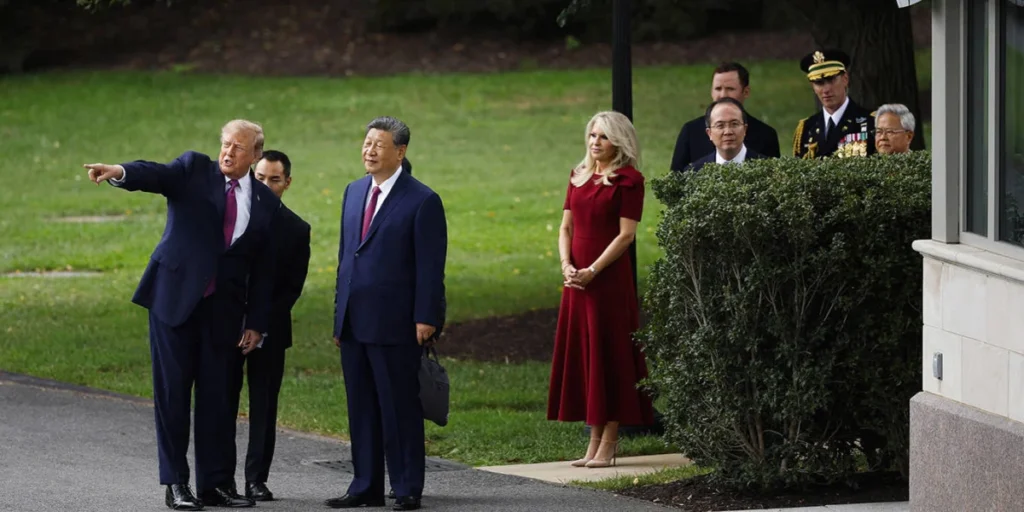
NEW HAVEN — In the high-stakes theater of modern geopolitics, the optics of a summit often serve as a surrogate for genuine policy progress. Last week’s meeting between U.S. President Donald Trump and Chinese President Xi Jinping in the neutral territory of a global diplomatic forum was, by every metric of substantive governance, a hollow exercise. While the world looked on with bated breath—hoping for a de-escalation of the systemic frictions currently defining the U.S.-China relationship—what transpired was a masterclass in performative statecraft.
The summit, characterized by opulent displays of protocol and choreographed photo opportunities, failed to move the needle on the critical issues that threaten global stability. As the dust settles, it is increasingly clear that the event was less a diplomatic breakthrough and more a vanity project designed to project an illusion of control, masking a profound lack of actionable policy.
The Main Facts: A Summit of Stagnation
The fundamental reality of the recent summit is the glaring absence of tangible outcomes. Despite months of back-channel negotiations and the mobilization of thousands of diplomatic staff, the joint statement issued at the conclusion of the meeting was devoid of new commitments.
The agenda was ambitious, encompassing trade tariffs, the regulation of Artificial Intelligence, the sovereignty of Taiwan, and the role of the People’s Republic of China in ongoing conflicts in Europe and the Middle East. On every single one of these points, the two leaders opted for platitudes over policy. Trump’s declarations of "heartfelt admiration" for Xi—delivered with a performative flourish that appeared to prioritize personal branding over national interest—served only to highlight a strategic vacuum.
For observers in Washington and Beijing, the failure is twofold: it demonstrates an inability to manage the world’s most consequential bilateral relationship and suggests that both leaders are increasingly comfortable with the status quo of "managed hostility," even as the risks of miscalculation grow daily.
Chronology of a Failed Engagement
The trajectory of this summit was marked by a steady erosion of expectations.
- June 2026: Following a series of heated rhetoric regarding semiconductor export controls, White House aides signaled that a face-to-face meeting was in the works to "stabilize the guardrails" of the relationship.
- August 2026: Preliminary talks in Singapore between senior trade ministers reached an impasse. The focus shifted from substantive trade reform to merely securing a venue for a presidential-level summit.
- September 25, 2026: President Trump arrived at the summit site, emphasizing his intent to "make a deal," a recurring motif of his administration that has rarely translated into the complex geopolitical sphere.
- September 27, 2026: The meeting took place. Instead of closed-door sessions aimed at policy breakthroughs, the schedule was dominated by a lavish state luncheon and a series of "friendly" photo calls.
- September 28, 2026: The formal conclusion saw no signed memoranda of understanding. The two leaders parted ways with nothing more than an agreement to "keep lines of communication open," a phrase that has become synonymous with diplomatic failure.
Supporting Data: The Economic and Geopolitical Reality
The chasm between the leaders’ rhetoric and the reality on the ground is supported by a wealth of recent data.
Trade and Industrial Policy
Since the beginning of 2026, U.S. exports to China have seen a contraction of 4.2%, driven by the ongoing tit-for-tat tariff wars. Despite the Trump administration’s claims of "rebalancing," the trade deficit remains stubbornly high. Furthermore, the decoupling in critical technology sectors—specifically high-end computing and AI—has accelerated. According to the latest figures from the U.S. Department of Commerce, venture capital investment into Chinese AI firms by American entities has hit an all-time low, yet the flow of illicit dual-use technology remains a significant point of contention that the summit failed to address.
Security and Conflict
The role of China in supporting the Russian industrial-military complex remains a primary irritant for the U.S. state department. Intelligence reports released shortly before the summit indicated that Beijing has continued to provide "non-lethal but essential" dual-use components to Moscow. The summit offered a chance for a hard conversation on this front; instead, reports suggest the topic was relegated to a side conversation that lasted less than fifteen minutes.
Official Responses: The Spin Machine
Following the summit, the official response from both capitals was predictably sanitized.
A spokesperson for the White House press office lauded the meeting as a "historic milestone in personal diplomacy," emphasizing the "warm chemistry" between the two heads of state. This rhetoric, however, fell flat among seasoned foreign policy analysts. Within the halls of the State Department, officials who spoke on the condition of anonymity expressed profound frustration, describing the event as a missed opportunity that leaves the U.S. without a clear strategy for the remainder of the fiscal year.
In Beijing, the state-run media outlets took a different approach, framing the summit as a victory for Chinese patience. The People’s Daily characterized the meeting as a move toward "mutual respect," carefully omitting the lack of progress on trade and security. By presenting the meeting as a validation of China’s current trajectory, Xi effectively neutralized any potential domestic pressure for concessions, leaving the U.S. side with little to show for the spectacle.
Implications: The Long-Term Cost of Style Over Substance
The implications of this failed summit are far-reaching. By prioritizing pageantry, both Trump and Xi have signaled that they are uninterested in the difficult, unglamorous work of genuine diplomacy.
1. The Erosion of Credibility
When leaders treat high-level summits as reality television, they erode the credibility of their own administrations. International allies—particularly those in Europe and the Indo-Pacific—are now left to wonder if the U.S. is capable of maintaining a coherent long-term strategy toward China. If Washington cannot secure tangible wins in a controlled environment, its ability to lead a unified coalition becomes increasingly questionable.
2. The AI Arms Race
Without a framework for the regulation of AI and autonomous weapons systems, the world is sleepwalking into a digital arms race. The summit was the ideal venue to establish "red lines" for AI deployment in military contexts. The failure to do so guarantees that the next two years will be defined by rapid, unchecked technological competition, increasing the probability of a catastrophic misunderstanding.
3. Taiwan and Regional Security
Perhaps most concerning is the lack of progress regarding the Taiwan Strait. While the U.S. continues to affirm its "One China" policy, the lack of a clear, private understanding regarding military posturing in the region leaves the status quo in a precarious position. Every day without a concrete diplomatic agreement is a day that the margin for error shrinks.
Conclusion: The Vanity Trap
History has shown that summits are only as good as the work that precedes them and the implementation that follows. By choosing to substitute substance with ceremony, Trump and Xi have not only wasted a vital opportunity to stabilize the most dangerous bilateral relationship of the 21st century; they have also revealed the limitations of their own leadership styles.
President Trump’s obsession with the "trappings of power"—the grand entrance, the handshakes, the televised smiles—reflects a fundamental misunderstanding of the nature of statecraft. Power is not found in the appearance of friendship; it is found in the ability to project national interests and hold adversaries accountable.
As we look toward the remainder of 2026, the question is no longer whether these two leaders can find common ground. The question is how much more volatility the global economy and the international security order can withstand while the two most powerful men on Earth continue to play at diplomacy, rather than practicing it. The summit was a disappointment, but more than that, it was a warning. If we continue to favor the optics of peace over the substance of stability, we should not be surprised when the mirage eventually gives way to a much harsher reality.



