

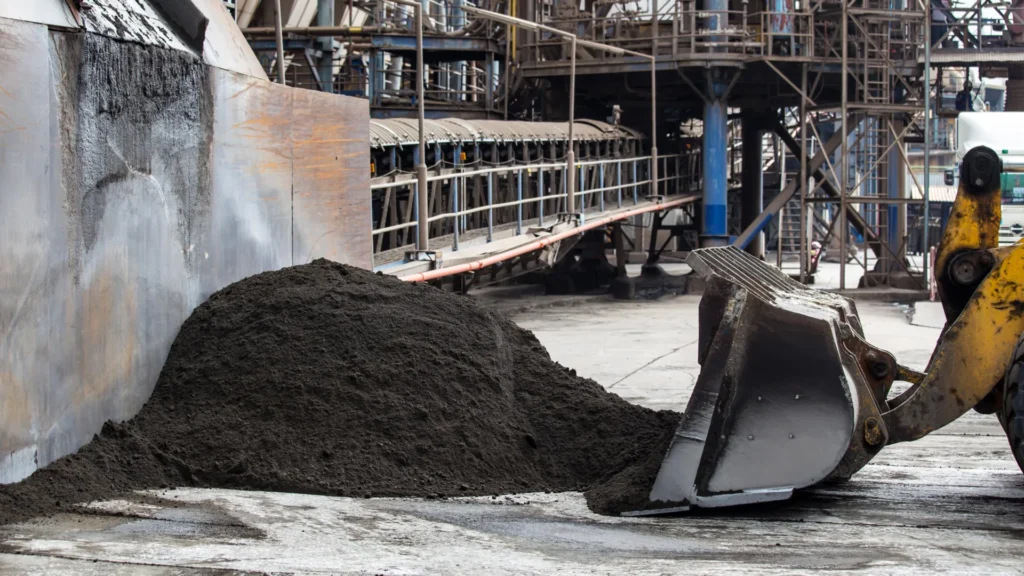
For decades, the heavy detritus of modern industry—coal ash, red mud, and mine tailings—has been viewed primarily as an environmental burden. These massive waste streams, often sequestered in leaky ponds and sprawling landfills, represent the "ghosts" of the industrial age. However, a new, multi-disciplinary research initiative led by Worcester Polytechnic Institute (WPI) is challenging this narrative, proposing that these stockpiles are not just waste, but a dormant, high-value resource of silica and rare earth elements (REEs) essential to the 21st-century economy.
With a $3.3 million grant from the National Science Foundation’s (NSF) Growing Convergence Research program, a coalition of researchers is looking to the natural world to solve one of the most stubborn challenges in sustainable engineering: how to extract valuable minerals without relying on the energy-intensive, chemically toxic processes that have traditionally defined extractive metallurgy.
The Genesis of the Project: Merging Biology and Engineering
The five-year, two-phase effort is headed by Mingjiang Tao, an associate professor in WPI’s Department of Civil, Environmental, and Architectural Engineering. The project’s architecture is intentionally cross-disciplinary, bridging the gap between geochemistry, materials science, and synthetic biology.
Joining Tao are co-principal investigators Carrick Eggleston and Yan Wang, alongside a broad consortium of institutions, including George Mason University, the University of California San Diego, the University of Massachusetts Amherst, and the University at Buffalo. The goal is to move beyond the traditional "take-make-waste" industrial model and toward a circular economy where the remnants of coal power plants and mining operations become the feedstock for high-tech manufacturing.
"Recovering critical minerals is only part of the opportunity," Tao explains. "We want to develop a process that uses as much of each waste stream as possible, separating strategically important elements while converting the remaining material into useful products. That whole-material approach could fundamentally change how industries manage waste and obtain essential resources."
The Hidden Wealth in the Slag Heap
To understand the scale of the potential, one must look at the data. Modern society runs on silicon—the backbone of semiconductors, glass, ceramics, and concrete. Producing these materials currently requires massive thermal energy and harsh chemical reagents. Ironically, the very industry that demands these materials produces them in bulk as waste. Coal ash, metallurgical slag, and concrete debris are rich in silicon, yet they are discarded by the millions of tons.
A Multi-Billion Dollar Opportunity
The economic incentive is staggering. Recent research indicates that U.S. coal ash landfills contain approximately 11 million tons of rare earth elements. At current market valuations, this trapped wealth is estimated at $8.4 billion—nearly eight times the nation’s entire current raw domestic reserve.
These rare earth elements (REEs) are not merely industrial curiosities; they are the lifeblood of national security, clean-energy technologies, and global telecommunications. As the world pivots toward electric vehicles, wind turbines, and advanced defense systems, the demand for these minerals has reached a fever pitch. By tapping into existing waste, the U.S. could potentially reduce its reliance on foreign supply chains, bolstering domestic security while simultaneously remediating hazardous environmental sites.
Biomimicry: Learning from the Masters of Silica
If the project’s goal is to revolutionize mineral recovery, its inspiration is found in the microscopic architecture of the natural world. Diatoms (unicellular algae), sea sponges, and certain terrestrial plants have been "engineering" silica for millions of years. They possess the ability to pull dissolved silicon from their environments and weave it into complex, functional structures—all at ambient temperatures and pressures.
The Biological Strategy
The research team is investigating how these organisms utilize biological molecules and organic scaffolds to manipulate mineral formation. By adapting these natural biological processes, the WPI-led team hopes to develop low-energy, eco-friendly methods to "unlock" the silicon and minerals trapped within industrial slag.
Instead of smelting materials at temperatures exceeding 1,000 degrees Celsius, the team aims to use bio-enabled pathways to dissolve these wastes selectively. This process would not only isolate rare earth elements but also refine the residual silica into high-value products like specialized glass or semiconductor components.
The Role of AI and Computational Chemistry
While biology provides the blueprint, modern computational power provides the tools to scale it. The project is heavily reliant on Artificial Intelligence (AI) to accelerate the discovery of the necessary biomolecules.
"The project combines expertise from biology, geochemistry, materials science, metallurgy, engineering, computational chemistry, and artificial intelligence," says Tao. By using advanced predictive modeling, researchers can simulate how specific synthetic biomolecules will interact with complex waste mixtures. This allows the team to "test" thousands of chemical interactions in a virtual environment before moving to the laboratory, drastically reducing the time and financial cost of experimentation.
Leadership and Specialized Expertise
The project’s structure is built to maximize the impact of each researcher’s specialty:
- Mingjiang Tao: Leads the project and directs research on biosilicification—the process by which organisms form silica—and bio-enabled metallurgy for REE recovery.
- Carrick Eggleston: A geochemistry expert, Eggleston is tasked with optimizing the chemical reaction pathways. His team will map the kinetics of silicate dissolution, carbonation, and the transformation of waste into new materials like silicone or glass.
- Yan Wang: A pioneer in battery recycling and sustainable manufacturing, Wang will spearhead the development of the industrial-scale recovery methods, ensuring that the "lab-bench" successes can eventually transition to the factory floor.
Implications: A New Industrial Ecosystem
The potential implications of this project reach far beyond scientific discovery. If successful, this research could fundamentally shift the environmental impact of heavy industry.
Economic and Environmental Synergy
By turning landfills into "urban mines," industries could lower their environmental footprint and reduce the demand for new, destructive mining operations. This transition is essential for reaching net-zero goals, as traditional mineral extraction is notoriously carbon-intensive. Furthermore, by creating marketable products out of waste, the project provides an economic incentive for companies to clean up their existing waste sites, rather than simply paying for long-term storage and monitoring.
Educating the Next Generation
The project also serves as a pedagogical engine. Through WPI’s immersive STEM experience, graduate and undergraduate students will be embedded directly into the research. This hands-on training ensures that the next generation of engineers and scientists is equipped to think in terms of "convergence"—the ability to see biology, data science, and heavy industry as a single, unified field.
Looking Forward: A Five-Year Roadmap
The five-year, two-phase timeline reflects the ambition of the research.
- Phase One focuses on the fundamental science: identifying the biological molecules capable of extracting minerals and building the AI models to predict their effectiveness.
- Phase Two will focus on scalability and economic viability. The researchers will move from small-scale laboratory trials to pilot-scale studies, testing whether these bio-engineered methods can operate efficiently under real-world industrial conditions.
The team’s ultimate vision is the creation of a broader "bio-enabled, silicon-based materials ecosystem." By connecting policymakers, industry partners, and academic researchers, they hope to draft the blueprint for an industrial future where waste is no longer a liability, but a strategic asset.
As the global community faces the dual pressures of resource scarcity and climate change, the work being done by Tao, Eggleston, Wang, and their colleagues serves as a beacon. By looking at the humble diatom and the massive coal-ash pond with equal curiosity, they are proving that the solutions to our most complex engineering problems may have been waiting in nature all along. If the project succeeds, the legacy of the industrial age—its piles of ash and mud—may finally be put to work building the next generation of clean, sustainable technology.



