

Nashville has become a victim of its own success. With a vibrant culinary scene, a legendary musical heritage, and a hospitality sector that has seen its hotel inventory double in under a decade, the "Music City" now welcomes an estimated fifteen million visitors annually. For the modern traveler—particularly those who prioritize solitude, scarcity, and authentic connection over the manufactured chaos of Broadway—the city’s booming popularity presents a paradoxical problem. As the neon glow of downtown grows brighter, the authentic, quiet soul of Tennessee risks being drowned out by the sheer volume of the crowd.
However, a growing cohort of discerning travelers—and local veterans who navigated this shift years ago—have identified a simple, elegant solution: to fix a crowded city, you do not find a quieter corner of the urban grid. You leave it entirely.
The Geological Treasure Trove: A Landscape Defined by Force
Within a two-hour radius of downtown Nashville lies one of the densest concentrations of waterfalls in the eastern United States. This is not the hyperbole of a regional tourism board, but a geological inevitability. To the east of the city, the Cumberland Plateau rises with dramatic suddenness. For millions of years, the rivers draining this high ground have carved deep, winding gorges through layers of sandstone and limestone, creating a subterranean and surface water network that rivals any in North America.
The Giants of the Plateau
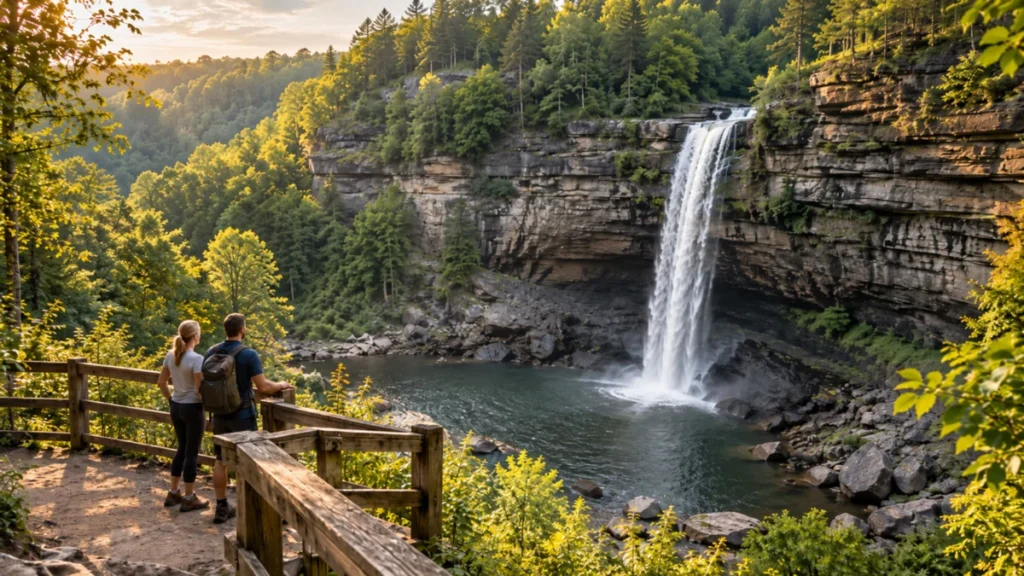
- Fall Creek Falls: Standing at a staggering 256 feet, this is the tallest free-falling waterfall east of the Mississippi River. It serves as the crown jewel of the state park system, offering a visceral reminder of the raw power of gravity.
- Burgess Falls: This site offers a masterclass in hydraulic engineering. The water descends a three-tiered staircase of cascades before plunging 136 feet into a mist-shrouded gorge.
- Cummins Falls: Widely regarded by locals and naturalists as the premier swimming hole in the state, it offers a rugged, unmanicured beauty that remains a favorite for those willing to brave the hike.
- Twin Falls (Rock Island): A geological curiosity, these falls are not fed by a traditional stream. Instead, water seeps through the limestone of a reservoir dam, emerging eighty feet up a vertical cliff face, creating a sprawling, ethereal curtain of water that defies conventional waterfall logic.
The Logistics of Escape: The Case Against the DIY Approach
While the self-drive model remains an option, it is increasingly fraught with friction. For the uninitiated, navigating rural Tennessee is not as straightforward as a GPS map might suggest. The region is characterized by narrow two-lane roads, undulating topography, and notoriously unreliable cellular coverage.
Furthermore, these natural landmarks are not static. Conditions shift with the weather, the season, and even the hour. Cummins Falls, for example, operates under a strict permit system to protect the environment and manage capacity; the gorge is often closed entirely if upstream rainfall creates even a marginal risk of flash flooding. Similarly, infrastructure at sites like Burgess Falls can remain closed for years due to storm damage or maintenance.
Arriving at a locked gate after a ninety-minute drive is a common, if frustrating, occurrence for the solo traveler. Add to this the fatigue of a day spent hiking, followed by a dark, winding drive back to the city on roads lacking shoulders and frequented by high populations of deer, and the "adventure" quickly loses its luster.
Professional Curation: Bridging the Gap with Private Tours
Recognizing these logistical hurdles, a boutique industry of private hiking and waterfall tours has emerged to provide a high-end, frictionless alternative. Companies such as Nashville Adventures are now facilitating access to these remote areas, offering a service that fundamentally changes the visitor experience.
The Value Proposition of Guided Expeditions
- Logistical Expertise: Guides act as on-the-ground intelligence, monitoring trail conditions and permit requirements in real-time. This eliminates the uncertainty of the DIY approach.
- Safety and Comfort: By providing professional drivers and high-quality vehicles, these tours remove the stress of navigating rural roads, especially during the shorter, darker days of winter.
- Customized Itineraries: Unlike mass-market bus tours, private excursions prioritize the traveler’s goals. Whether a group wants a strenuous climb or a leisurely photography session, the day is tailored to their specific fitness and interest levels.
- The Economic Reality: When traveling in groups, the cost-per-person for these tours often surprises guests. By sharing the vehicle cost rather than paying per-seat, groups of friends or corporate cohorts find the service surprisingly accessible, often costing no more than a few rounds of drinks on Broadway.
Supporting Data and Visitor Profiles
The demand for these excursions is not limited to outdoor enthusiasts. The primary demographic includes the "second-time visitor"—the traveler who has already checked the Ryman Auditorium and the Grand Ole Opry off their list and is seeking a more profound connection to the Tennessee landscape.
Equally significant is the rise of the "Group Offsite." Nashville has become a hub for corporate retreats, family reunions, and destination weddings. For a group of eight to ten people, the coordination of three rental cars and the struggle to find parking at trailheads often leads to fractured experiences. A private tour acts as a social glue, consolidating the group and ensuring that the logistical burden—the "coordination problem"—is managed by a third party.
The Wider Implications: The Underpriced Value of Silence
The most compelling argument for these excursions is the stark contrast between the city’s volume and the countryside’s silence. In an era where travel is increasingly digitized and commodified, the ability to access true, physical, and acoustic privacy is becoming a luxury good.
There is a profound disconnect between the perception of Nashville as a loud, crowded urban center and the reality of its periphery. Just two hours from a Broadway honky-tonk, a traveler can find themselves standing before a 256-foot waterfall with no one else in sight, especially during the shoulder seasons of spring and late autumn.
This "gap"—the distance between the hyper-commercialized urban center and the ancient, quiet wilderness that surrounds it—is arguably the most underpriced asset in the Nashville travel market.
Summary of the "Well-Constructed Day"
For those planning their escape, industry experts suggest that the difference between an "adequate" day and a "transformative" one lies in three specific factors:
- Strategic Timing: Avoiding weekends is paramount. Mid-week excursions ensure that the popular gorge trails are less crowded, offering a more intimate experience with the landscape.
- Local Knowledge: Accessing hidden viewpoints that are not marked on standard tourist maps. This requires a guide who understands the interplay between water levels and lighting, particularly during the "golden hour."
- The "Return" Experience: A well-planned day concludes with the transition back to the city. By removing the stress of the return drive, guests are able to maintain the sense of calm and clarity they gained in the wilderness, rather than losing it to the anxieties of urban traffic.
Ultimately, the surge in Nashville’s popularity does not have to come at the expense of the traveler’s sanity. By stepping outside the city limits, visitors are discovering that the most meaningful way to experience Nashville is, in fact, to leave it. As the city continues its rapid growth, this "exit strategy" serves as a vital reminder that the true heart of Tennessee lies not in the neon, but in the limestone, the forest, and the steady, ancient pulse of its waterfalls.



