

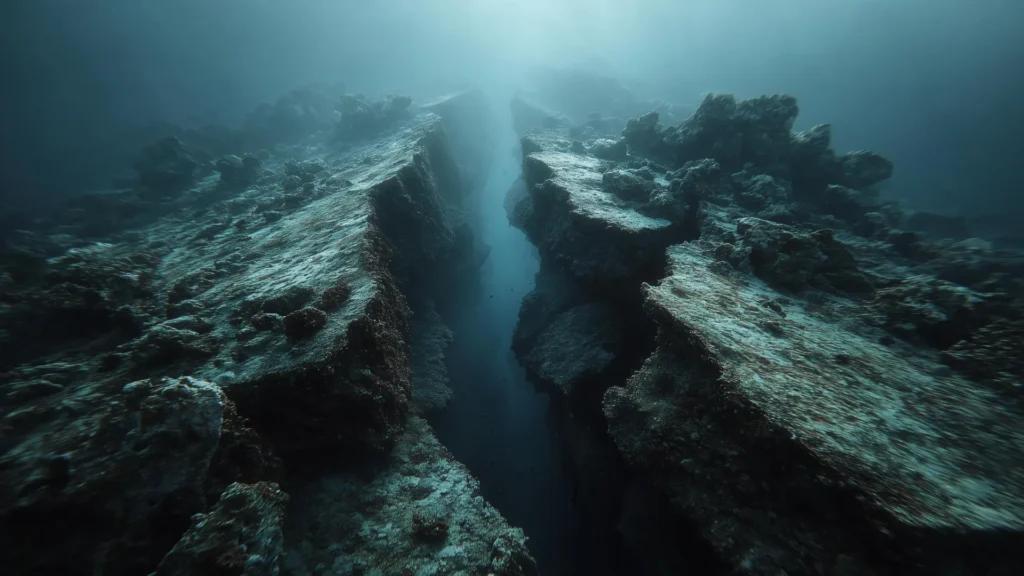
Beneath the turbulent waters off the coast of the Pacific Northwest, a massive, hidden drama is unfolding. In a landmark study published in Science Advances, researchers have captured the first high-resolution, "ultrasound-like" imagery of a major tectonic system—the Cascadia subduction zone—actively fracturing and falling apart.
For decades, the scientific community has understood that subduction zones, where one massive tectonic plate is forced beneath another, are the engines behind Earth’s most formidable geological phenomena: catastrophic earthquakes, explosive volcanic eruptions, and the long-term tectonic dance that shapes our continents. However, the end-of-life process for these massive systems has remained a theoretical mystery. Now, through data gathered by the 2021 Cascadia Seismic Imaging Experiment (CASIE21), scientists have witnessed a subduction zone not collapsing in a single, cataclysmic event, but rather "derailing" one piece at a time.
The Life and Death of a Tectonic Engine
To understand the gravity of this discovery, one must first understand the life cycle of a subduction zone. Subduction is the geological process of recycling; as oceanic plates sink into the mantle, they carry crustal material deep into the Earth’s interior. This process is the planet’s primary mechanism for heat dissipation and crustal renewal.
However, subduction is not an infinite loop. If it were, the Earth’s surface would eventually become a jumbled mess of continental collisions, and the ocean basins would vanish entirely. Geologists have long debated what forces a mature subduction zone to cease operations.
"Getting a subduction zone started is like trying to push a train uphill—it takes a huge effort," explains Brandon Shuck, a geologist at Louisiana State University and lead author of the study. "But once it’s moving, it’s like the train is racing downhill, impossible to stop. Ending it requires something dramatic—basically, a train wreck."
The findings beneath the Juan de Fuca and Explorer plates, which are currently being forced beneath the North American plate, suggest that this "train wreck" is a prolonged, piecewise disintegration rather than a singular, violent crash.
Chronology of a Tectonic Fracture
The narrative of this discovery began in 2021 with the CASIE21 expedition. Researchers deployed a sophisticated array of sensors and sound-wave generators, effectively performing a medical-grade ultrasound on the Earth’s crust. By sending sound pulses into the seafloor and analyzing the echoes that bounced back from the underlying structures, the team was able to map the tectonic landscape with unprecedented clarity.
The Findings: A 75-Kilometer Tear
What the imaging revealed was startling: the subducting plate is not a uniform slab. Instead, it is riddled with large faults and fractures, some of which penetrate deep into the lithosphere. The most prominent feature identified is a massive, 75-kilometer-long tear that has resulted in a vertical offset of roughly five kilometers.
The researchers noted that the state of this tear varies significantly along its length. By analyzing earthquake records, they discovered that some sections of the fault remain seismically active, while others have gone entirely quiet. This silence is the "smoking gun" of a plate in the process of detachment.
"Once a piece has completely broken off, it no longer produces earthquakes because the rocks aren’t stuck together anymore," Shuck observed. The quiet segments indicate that the plate has already separated in those locations, and these detached areas are steadily expanding, effectively dismantling the tectonic boundary from within.
Supporting Data: The Mechanics of "Piecewise" Termination
The data suggests that the Cascadia subduction zone is undergoing "episodic" or "piecewise" termination. The key to this process is the role of transform boundaries—faults where crustal sections slide horizontally past one another.
In the case of the Cascadia region, these transform faults act as "geological scissors." As they cut across the sinking plate, they isolate individual fragments, transforming them into microplates. These microplates—smaller pieces of the Earth’s rigid outer shell—begin to move independently of the parent plate.
As these pieces detach, the parent plate loses the "slab pull"—the gravitational force exerted by the dense, sinking plate that keeps the entire subduction conveyor belt moving. Shuck likens this to removing cars from a runaway train. Eventually, the system loses the momentum required to drive the subduction process, leading to the eventual death of the entire tectonic boundary. This process, while appearing rapid on a geological scale, takes millions of years to complete, representing a slow-motion unraveling of the Earth’s crust.
Official Perspectives and Expert Interpretation
The scientific community has lauded the study for its ability to reconcile modern observations with the ancient geological record. For years, geologists have puzzled over "fossil" microplates found in places like Baja California, where fragments of the ancient Farallon plate remain scattered like tectonic debris.
These remnants have long hinted that the Farallon plate’s disappearance was not a singular event, but the Cascadia study provides the first contemporary, real-time mechanism to explain how such fragmentation occurs. By observing the "slab windows"—gaps created when a piece of the plate breaks off—researchers can now see how hot mantle material surges toward the surface. This surging material is likely responsible for unusual volcanic activity and shifting magma patterns that have long confounded researchers.
"It’s a progressive breakdown, one episode at a time," Shuck said. "And it matches really well with what we see in the geologic record, where volcanic rocks get younger or older in a sequence that reflects this step-by-step tearing."
The Implications: Earthquakes and Human Risk
Perhaps the most pressing question for the public, particularly those living in the Pacific Northwest, is whether these tectonic tears increase or decrease the risk of a "Big One."
The researchers are quick to temper concerns. While these structural findings are significant for the field of geophysics, they do not fundamentally alter the current earthquake hazard assessment for the region. The Cascadia subduction zone remains a potent threat capable of producing massive earthquakes and tsunamis. The structural changes observed by Shuck and his team are unfolding over millions of years—a timeframe far removed from the human scale of concern.
However, the discovery does offer a path toward more accurate modeling. A seismic rupture—the rapid movement along a fault that triggers an earthquake—is heavily influenced by the structures it encounters. Knowing that the plate is fractured, or that certain sections are detaching, allows scientists to better predict the "path" of a potential rupture.
Future Research Directions
The CASIE21 findings have opened a new window into the complexity of the Earth’s interior. Future studies will likely focus on:
- Refined Mapping: Identifying other potential "slab windows" along the Cascadia boundary.
- Dynamic Modeling: Incorporating these new fault geometries into existing earthquake simulators to see if they act as "speed bumps" or conduits for seismic energy.
- Comparative Analysis: Investigating other subduction zones globally to determine if piecewise termination is a universal standard for tectonic death or if Cascadia is an anomaly.
Conclusion
The study of the Cascadia subduction zone serves as a humbling reminder of the Earth’s dynamic nature. While we often perceive the continents and ocean floors as static, they are, in fact, in a constant state of flux. The "derailment" of the Cascadia system is a testament to the fact that even the most massive geological processes are finite.
By witnessing this slow-motion breakup, scientists have gained more than just a map of deep-sea fractures; they have gained a blueprint for understanding the life and death of the tectonic systems that define our planet. As the Juan de Fuca plate continues its fractured descent, it leaves behind a legacy of volcanic shifts and microplate remnants, providing a rare and valuable lesson in the enduring, yet finite, nature of the ground beneath our feet.



