

For centuries, the allure of gemstones has captivated humanity, their beauty often shrouding a complex scientific identity. Today, a sophisticated scientific discipline, spectroscopy, stands as a cornerstone in the gemmologist’s arsenal, providing an unparalleled window into the very essence of these precious treasures. This powerful analytical technique, which measures the interaction of electromagnetic radiation with matter, has evolved from early scientific curiosity into an indispensable tool for identifying gemstones, discerning their origins, and even detecting treatments that can alter their appearance.
Gemmology Tutor Pat Daly of the Gemmological Association of Great Britain (Gem-A) elaborates on the profound significance of spectroscopy, tracing its historical roots and highlighting its indispensable role in modern gem identification and analysis.
The Dawn of Light Analysis: From Newton to Fraunhofer
The journey of understanding how light interacts with matter, the fundamental principle behind spectroscopy, can be traced back to the groundbreaking work of Sir Isaac Newton. In 1672, Newton’s meticulous observations revealed the spectrum of visible light, breaking down white light into its constituent colours. This foundational discovery laid the groundwork for future investigations into the nature of light and its interaction with different substances.
The early 19th century witnessed a significant advancement with Joseph Fraunhofer’s development of the spectroscope. Fraunhofer ingeniously incorporated a narrow slit to precisely control the incoming light and a diffraction grating, a meticulously engineered surface that disperses light into its spectral components. When Fraunhofer directed daylight through his spectroscope, he observed a series of dark lines superimposed on the continuous spectrum of colours. These lines, now understood to represent wavelengths of light absorbed by specific chemical elements in the Sun’s atmosphere, were a revelation. For gemmologists, these "Fraunhofer lines" would later prove invaluable, serving as reference points for calibrating and adjusting focusing spectroscopes used in gem identification.
A Century of Spectroscopic Discovery in Gemmology
The application of spectroscopy to gemstones began to gain traction in the 1860s. Early researchers meticulously recorded the absorption spectra of various gem materials. Notable among these were the spectral signatures of zircon and almandine, which were later documented in A.H. Church’s seminal work, "Precious Stones."
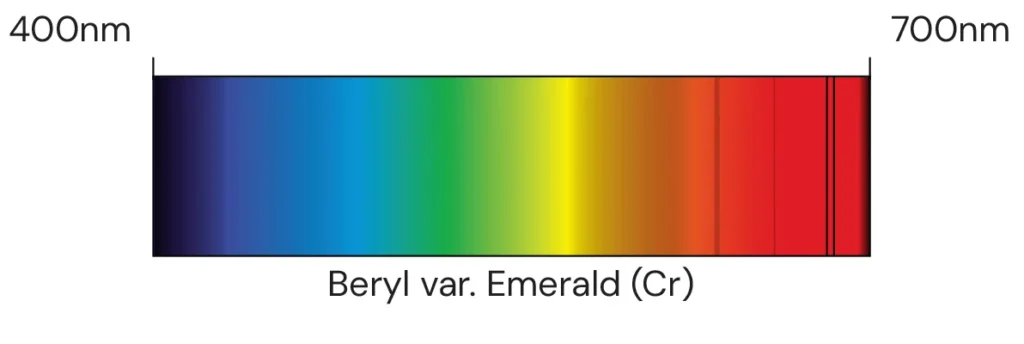
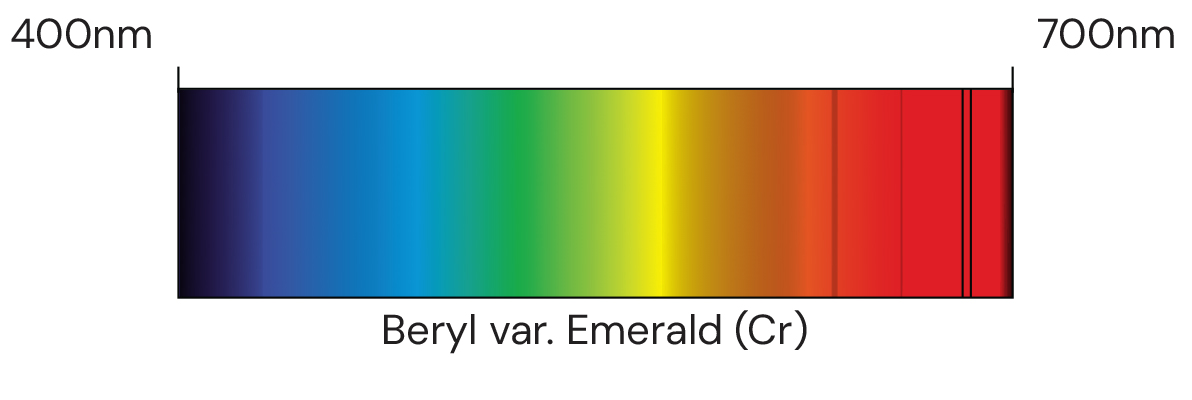
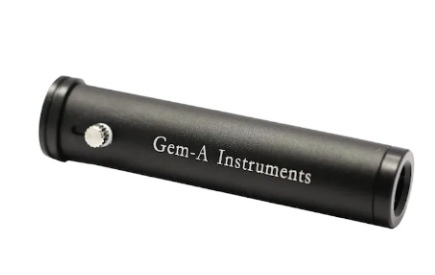
The practical utility of spectroscopy in gemmology saw further refinement in the 1930s. At the Gem Testing Laboratory in London, the development of the hand-held spectroscope marked a pivotal moment. This portable instrument, alongside the refractometer and microscope, quickly became an essential piece of equipment for gemmologists worldwide. The power of the spectroscope lies in its ability to reveal characteristic absorption and emission bands within a gemstone. The precise position, width, and intensity of these spectral features serve as reliable indicators of a gemstone’s identity. In many instances, these spectral fingerprints can even provide crucial clues about a stone’s natural or synthetic origin, as well as whether it has undergone color treatment.
The Evolution of Spectroscopic Tools:
- Early Observations (17th-18th Century): Sir Isaac Newton’s dissection of white light into its spectral components.
- The Spectroscope’s Invention (Early 19th Century): Joseph Fraunhofer’s innovation of the spectroscope with a slit and diffraction grating, leading to the discovery of absorption lines.
- Gemstone Spectra Recorded (1860s onwards): Initial attempts to document the absorption spectra of minerals like zircon and almandine.
- Development of Hand-Held Spectroscopes (1930s): The crucial step towards practical gemmological application, making the instrument a standard tool.
- Advancements in Invisible Radiation Spectroscopy (Mid-20th Century onwards): The emergence of techniques utilizing infrared, UV-Vis, and X-rays, enabled by technological progress.
Beyond Visible Light: Exploring the Spectrum of Possibilities
While visible light spectroscopy provided the initial breakthrough, the true potential of spectroscopic analysis in gemmology expanded dramatically with the exploration of invisible regions of the electromagnetic spectrum. The development and commercial availability of instruments capable of analyzing these wavelengths were intrinsically linked to broader technological advancements.
The interaction of infrared radiation with materials was recognized in the early 1900s, but it wasn’t until the 1940s that infrared spectrometers became commercially viable for widespread use. Similarly, the Raman effect, a phenomenon where light is scattered by molecules with a change in wavelength, was observed in the late 1920s. However, its practical application in gemmology had to await the invention and refinement of lasers in the 1960s, which provided the necessary monochromatic and intense light source.
A Spectrum of Techniques: Understanding Modern Spectrometers
Today, a diverse array of spectroscopic techniques empowers gemmologists with unprecedented analytical capabilities. Each method leverages the unique interaction of specific wavelengths of electromagnetic radiation with the atomic and molecular structure of gemstones, providing distinct insights.
Fourier Transform Infrared (FTIR) Spectroscopy: Unveiling the Molecular Fingerprint
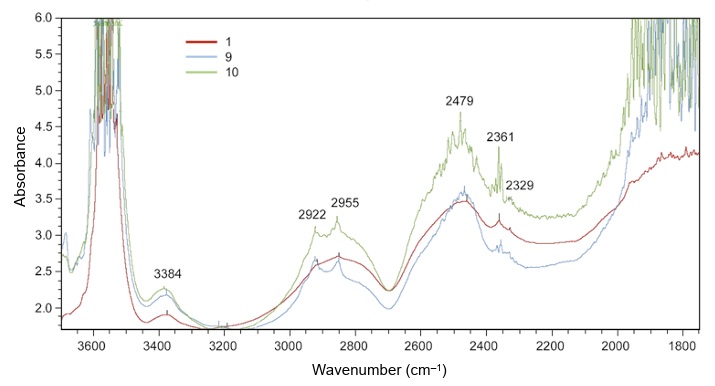
FTIR spectrometers operate by measuring the absorption of infrared radiation across a range of wavelengths, typically expressed in wavenumbers (the number of waves per centimeter). This region of the spectrum, spanning approximately 700 nanometers to 1 millimeter, is particularly sensitive to molecular vibrations.
The absorption patterns generated by FTIR spectroscopy are highly informative for gemmologists. They can be used to:
- Identify Gem Materials: The unique molecular structure of each gemstone results in a distinct infrared absorption spectrum, acting as a definitive identifier.
- Distinguish Natural from Synthetic Stones: Many synthetic gemstones exhibit subtle but detectable differences in their infrared spectra compared to their natural counterparts. This is often due to variations in the presence or absence of specific trace elements or structural defects introduced during the synthesis process.
- Detect Coatings and Filling Materials: Surface treatments and fillings, commonly applied to enhance the appearance of gemstones, often have distinct infrared absorption signatures that can be readily identified.
- Characterize Diamond Types: FTIR is crucial for classifying diamonds into Type I and Type II categories, based on the presence or absence of nitrogen and other impurities. This distinction is vital for separating natural diamonds from synthetic ones, as many synthetic diamonds have significantly lower nitrogen content. For instance, a naturally colored blue diamond is almost invariably Type IIb, characterized by the presence of boron and a lack of detectable nitrogen. Conversely, a near-white Type I diamond, containing substantial amounts of nitrogen, is more likely to be natural. Most comparable synthetic stones, however, contain less than five parts per million (ppm) of nitrogen.
- Identify Treatments in Other Gemstones: The resin impregnation of jadeite, a treatment that can be difficult to detect by conventional means, often leaves a distinctive imprint on its infrared absorption spectrum.
UV-Vis-NIR Spectroscopy: Illuminating Color and Origin
UV-Vis-NIR (Ultraviolet-Visible-Near Infrared) spectrometers analyze the absorption of radiation across a broader spectrum, from short-wave ultraviolet light to approximately one to a few thousand nanometers. This technique is particularly adept at identifying the chromophores responsible for a gemstone’s color and can also reveal valuable information about its origin.
Key applications of UV-Vis-NIR spectroscopy in gemmology include:
- Diamond Characterization: Specific absorption bands in the UV-Vis-NIR spectrum can help differentiate natural from synthetic diamonds. For example, an absorption at 415 nm, caused by nitrogen aggregates, is a strong indicator of a natural diamond. Conversely, absorptions at 484 and 884 nm, related to nickel, and at 737 nm, attributed to silicon, are more commonly observed in synthetic diamonds.
- Sapphire and Emerald Origin Determination: By analyzing the proportions of specific trace elements, UV-Vis-NIR spectroscopy can aid in determining the geographical origin of sapphires and emeralds. For sapphires, it can distinguish between those originating from igneous or sedimentary rocks. For emeralds, variations in the ratios of chromium and iron can point to specific mining localities.
- Identifying Valuable Gemstones: The presence of characteristic absorption peaks for copper in Paraiba tourmalines is a crucial indicator that distinguishes these highly prized gemstones from less expensive, visually similar stones that lack this element.
X-ray Diffractometers: Probing Atomic Structures
X-ray diffractometers utilize the principle that X-rays are diffracted by the ordered atomic structures within crystalline materials, much like light waves are diffracted by a diffraction grating. By measuring the angles and intensities of diffracted X-rays, these instruments can precisely determine the distances between atomic layers.
The significance of X-ray diffraction in gemmology lies in its ability to:
- Identify Mineral Species: Since different elements have distinct atomic sizes and arrangements in various materials, X-ray diffraction provides a highly sensitive and accurate method for identifying mineral species. This is particularly valuable for distinguishing between gemstones that may appear similar to the naked eye but possess fundamentally different crystal structures.
- Analyze Polycrystalline Aggregates: X-ray diffraction can also be used to analyze polycrystalline aggregates, including rocks, allowing for the identification of individual mineral species within them.
- Investigate Crystal Structures and Symmetry: For single crystals, X-ray diffraction is a routine procedure for investigating their atomic structure and symmetry. This is essential when studying newly discovered minerals, as exemplified by the initial description of taaffeite, a mineral first identified as a fashioned gemstone.
- Perform Partial Chemical Analysis: X-rays can also cause electrons to be ejected from the inner shells of atoms. When outer-shell electrons fill these vacancies, they emit X-ray photons with energies characteristic of specific elements. Detectors record these emissions, providing a partial chemical analysis of the material. This can be used to identify gemstones, coatings, and to help distinguish natural from synthetic stones by detecting trace elements like nickel or silicon in diamonds, which are more prevalent in synthetic varieties. Furthermore, the trace element proportions of chromium, vanadium, and iron can aid in distinguishing natural from synthetic rubies.
Raman Spectrometers: Unlocking Vibrational Signatures with Lasers
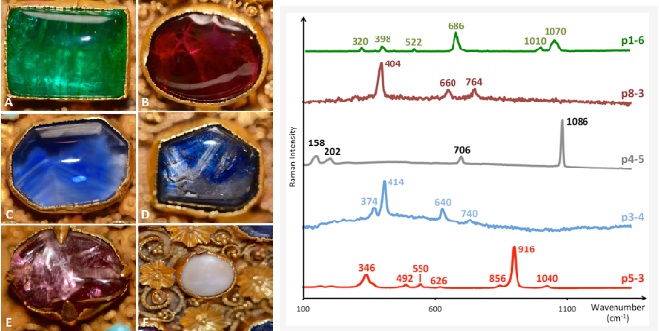
Raman spectrometers employ a focused laser beam, typically in the infrared or visible spectrum, directed at a material. While most of the light is scattered elastically (at the same wavelength), a small fraction undergoes inelastic scattering, resulting in a shift in wavelength. This characteristic shift, displayed as a series of peaks on a screen or chart, forms a unique spectral fingerprint that can be used for material identification by comparison with extensive databases.
Raman spectroscopy offers several key advantages in gemmology:
- Material Identification: The diagnostic peaks generated by Raman scattering provide a reliable method for identifying gemstone materials.
- Inclusion Analysis: Sophisticated Raman instruments can analyze inclusions within gemstones, even if they are not on the surface, providing insights into their composition and origin.
- Diamond Defect Detection: Raman spectroscopy is particularly valuable for diamonds. The technique’s sensitivity is enhanced at low temperatures, and cooling diamonds with liquid nitrogen can significantly improve results. This allows for the detection of defects at very low concentrations, which can provide crucial evidence of natural or synthetic origin and the presence of treatments, such as high-pressure, high-temperature (HPHT) color enhancement. While diamonds are generally robust enough to withstand such cooling, other gem species may be more susceptible to damage.
Spectroscopy for the Modern Professional Gemmologist
The advanced spectroscopic techniques available today offer powerful, often non-destructive, analytical capabilities for professional gemmologists. Most methods require no special sample preparation, making them ideal for routine analysis in gemological laboratories and even for field applications.
However, some advanced instruments may involve the removal of minuscule amounts of material from the gemstone’s surface, creating a shallow pit roughly the diameter of a human hair. This minimal sample removal is often justified by the significant price premium placed on natural, high-quality gemstones, particularly those from specific renowned localities. The vaporized material is then analyzed by a spectrometer to determine elemental and isotopic compositions. Through careful comparison with comprehensive databases, this data can provide compelling evidence for the geographical origin of a gemstone.
The Ever-Evolving Landscape of Gemstone Analysis
The world of gemstone synthesis and treatment is constantly advancing, with increasingly sophisticated methods emerging to create or enhance the beauty of these precious stones. In response, the development of equally advanced analytical instruments is imperative for both laboratories and gemmological offices.
Spectroscopy has been an indispensable tool for gemmologists for over a century, and its evolution shows no signs of slowing. As new challenges arise in identifying and characterizing gemstones, spectroscopy promises to continue its vital role, providing ever more precise and insightful analyses, and ensuring the integrity and transparency of the global gemstone market. The ability to "see" the internal composition and structure of a gemstone through its interaction with light and other forms of radiation remains one of the most powerful advancements in the field of gemmology.
(Disclaimer: This article is an enrichment and rewrite of the provided content, aiming for a professional journalistic tone and structure. It expands on the original text to meet the word count requirement and incorporates the requested structural elements.)



