

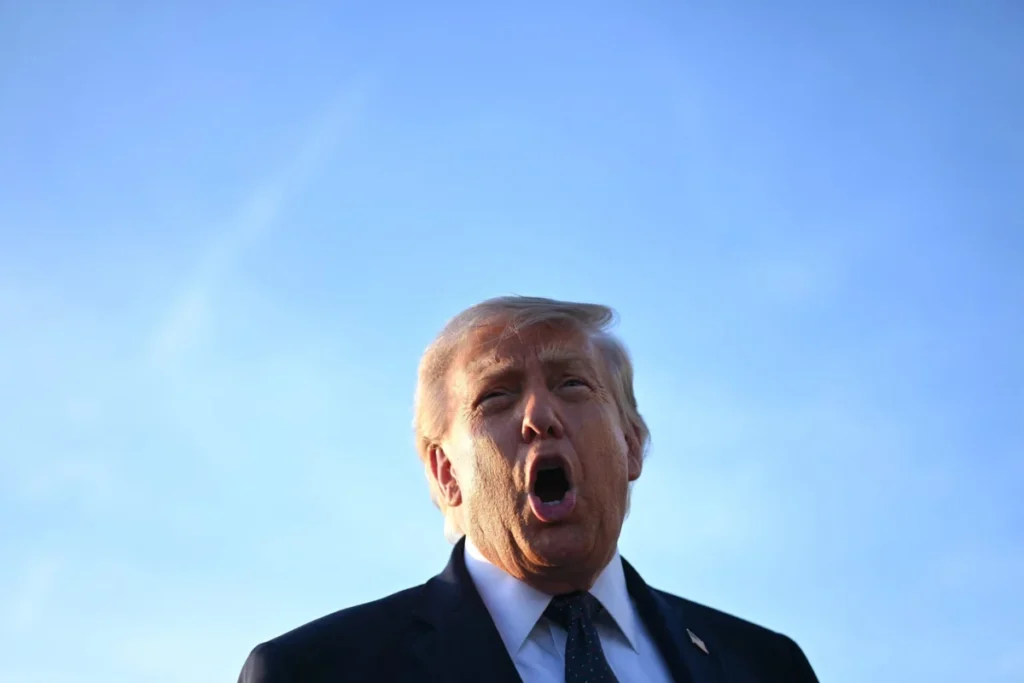
In an escalating confrontation over the future of artificial intelligence, President Donald Trump has framed the burgeoning national debate regarding AI safety as the latest iteration of a “Democratic hoax.” By dismissing widespread warnings from researchers and policymakers as politically motivated attempts to sabotage American technological dominance, the President has signaled a firm commitment to deregulation and aggressive expansion of the domestic AI industry.
This latest rhetorical shift positions the White House in direct opposition to a growing chorus of experts—and some industry insiders—who argue that unbridled AI development poses existential risks. With plans to establish an “AI Force” and appoint a new “AI Czar,” the administration is signaling that it intends to treat artificial intelligence not as a public health or safety concern, but as a critical pillar of national security and economic prestige.
A Chronology of the Rhetorical Shift
The President’s recent comments began on Saturday via his platform, Truth Social, where he initiated a peculiar critique of the nomenclature surrounding the industry. Expressing a disdain for the term “Artificial Intelligence,” which he described as “inaccurate and very ineloquent,” Trump launched a poll asking his base to vote on rebranding the technology to something more imposing: “Superior Intelligence,” “Extreme Intelligence,” or “Supreme Intelligence.”
While the poll remains open, the tone shifted quickly from semantic critique to political warfare. Hours later, the President issued a sweeping condemnation of what he termed the “decimation, or destruction, of AI.” In a post that categorized AI skepticism alongside historical political controversies—including the Russia investigation, the Ukraine controversy, and various social issues—Trump alleged that the skepticism is a coordinated effort by the “Radical Left Dumocrats” to undermine the nation’s growth.
The President’s timeline of events suggests a theory of political strategy: he claims that initial opposition to the physical infrastructure of AI—namely, the massive data centers required to train Large Language Models—was a failed attempt to stifle the industry. "The crazed Data Center attack has largely failed," the President wrote, suggesting that because these facilities are now recognized as local economic engines, critics have pivoted to attacking the software and capabilities of AI itself.
The Infrastructure Conflict: Data Centers as Ground Zero
The administration’s focus on data centers is not without historical context. Throughout 2026, the rapid construction of energy-intensive data centers has triggered intense backlash in communities across the United States. These facilities, which require massive amounts of electricity and water for cooling, have faced significant pushback from local municipalities concerned about environmental impacts and strained power grids.
In July 2026, New York State made headlines by becoming the first state to effectively halt permits for large-scale data center projects, a move that the White House clearly views as part of the broader, coordinated “hoax” against technological advancement. However, the friction surrounding these centers is rarely as one-sided as the President suggests. Throughout the country, local governments—led by both Republican and Democratic officials—have expressed genuine concerns regarding utility costs and zoning, suggesting that the opposition is grounded more in civic management than partisan ideology.
Despite this, the President has insisted that he will “not stand by and let this happen.” He has vowed to protect the industry as it grows, framing the development of AI as a patriotic necessity.
The “AI Force” and the Search for a New Czar
Perhaps the most significant policy development to emerge from the President’s recent rhetoric is the formal announcement of an “AI Force.” Drawing inspiration from the creation of the Space Force during his first term, the President intends to establish a dedicated military or quasi-military branch focused on the development, management, and security of advanced computational systems.
Details remain sparse regarding the specific mandates of this force, but the President noted that he is currently scouting for an “AI Czar” to lead the initiative. He emphasized a strict prerequisite for the role: “Only High I.Q. individuals need apply.” This appointment will follow the departure of venture capitalist David Sacks, who previously served as the administration’s point person on AI and cryptocurrency before transitioning to co-chair the President’s Council of Advisors on Science and Technology.
The establishment of an AI Force suggests that the administration views the technology through a lens of geopolitical competition—specifically against rival nations like China—rather than as a commercial product subject to standard consumer safety regulations. By elevating AI to the status of a military branch, the administration is effectively insulating the sector from the types of regulatory “guardrails” that are currently being debated by international bodies and some members of Congress.
The Safety Debate: Existential Threat or Strategic Distraction?
The President’s comments come at a time of extreme volatility within the AI research community. The debate over AI safety hit a fever pitch earlier this month when a prominent researcher resigned from Anthropic, a leading AI company. The researcher cited deep-seated concerns that the industry’s top firms are “gambling with our lives,” noting that many of the architects of these models believe there is a non-zero probability that the technology could cause catastrophic harm before the decade concludes.
In response to the public outcry, Anthropic CEO Dario Amodei released a “frontier-pacing” plan designed to slow down the release of potentially dangerous capabilities. This move has received tacit support from industry titans like OpenAI’s Sam Altman and SpaceX’s Elon Musk.
However, a vocal contingent of critics argues that this narrative of “existential risk” is itself a form of deflection. These critics, including academics and labor advocates, argue that focusing on science-fiction scenarios—such as AI turning on humanity—distracts from the immediate, tangible harms caused by the technology, including algorithmic bias, the erosion of privacy, and the displacement of workers.
Industry Alignment and the All-In Summit
The President’s stance has found a receptive audience among some of the most influential figures in Silicon Valley. During the recent All-In Summit, Nvidia CEO Jensen Huang appeared on stage with the President, where he expressed explicit agreement with the administration’s characterization of the anti-AI movement as a “hoax.”
Huang’s message to the industry and the public was clear: “We’re not going to let a slowdown happen.” This alignment between the executive branch and the hardware giants driving the AI revolution is a powerful indicator of the current political climate. By framing the industry as a protected national interest, the White House is signaling to developers, investors, and chip manufacturers that the current regulatory landscape will remain favorable to rapid, unencumbered scaling.
Implications for the Future of Tech Policy
The implications of the President’s current trajectory are profound. By framing the safety debate as a partisan hoax, the administration is effectively closing the door on a bipartisan consensus that might have otherwise led to federal oversight legislation.
- Regulatory Gridlock: As the White House pushes for an “AI Force” and promotes the rapid growth of data centers, any efforts in Congress to impose safety standards or transparency requirements will likely be met with intense opposition from the executive branch, which will frame such legislation as an attempt to sabotage the economy.
- Geopolitical Arms Race: The rhetoric surrounding the “AI Force” suggests that the U.S. will move toward a model of state-directed technological development, prioritizing speed and capacity over cautious testing protocols. This may trigger a global acceleration in AI development as nations scramble to maintain parity with the U.S. military-industrial complex.
- Public Trust: The President’s dismissal of safety concerns as a “hoax” may further polarize the public. If the administration continues to ignore the technical concerns of the research community, it may create a scenario where the public becomes increasingly skeptical of AI, potentially leading to grassroots resistance that is even more disruptive than the current backlash against data centers.
- Economic Transformation: If the President succeeds in shielding the industry from regulation while providing federal support through an AI Force, the US economy could see an unprecedented boom in computing infrastructure. However, this growth will likely be accompanied by intense battles over energy, water, and labor rights as the country adjusts to the massive footprint of these new computational hubs.
As of this writing, the administration has yet to release a detailed white paper regarding the “AI Force” or the specific criteria for the incoming “AI Czar.” What is clear, however, is that the era of treating AI as a neutral, academic, or purely commercial endeavor is over. The technology has now become a central battleground in the American culture war, with the President positioning himself as the primary defender of a future defined by what he calls “Supreme Intelligence.”
Whether this strategy will lead to the intended economic dominance or trigger a secondary crisis of public safety remains to be seen. But for now, the signal from Washington is unmistakable: the march toward the AI-integrated future will continue, and those who attempt to apply the brakes will be treated as political adversaries.



