
In an industry defined by the relentless, often exhausting pace of seasonal trend cycles, the luxury label La Ligne has carved out a distinct—and arguably radical—path: it has bet everything on the enduring power of the uniform. As the brand celebrates its 10th anniversary, its cofounders, Molly Howard, Valerie Macaulay, and Meredith Melling, stand as a testament to a leadership dynamic rarely seen in the high-stakes world of fashion. Their secret weapon isn’t just a keen eye for design or a robust business plan; it is a foundation built on deep, professional, and personal friendship.
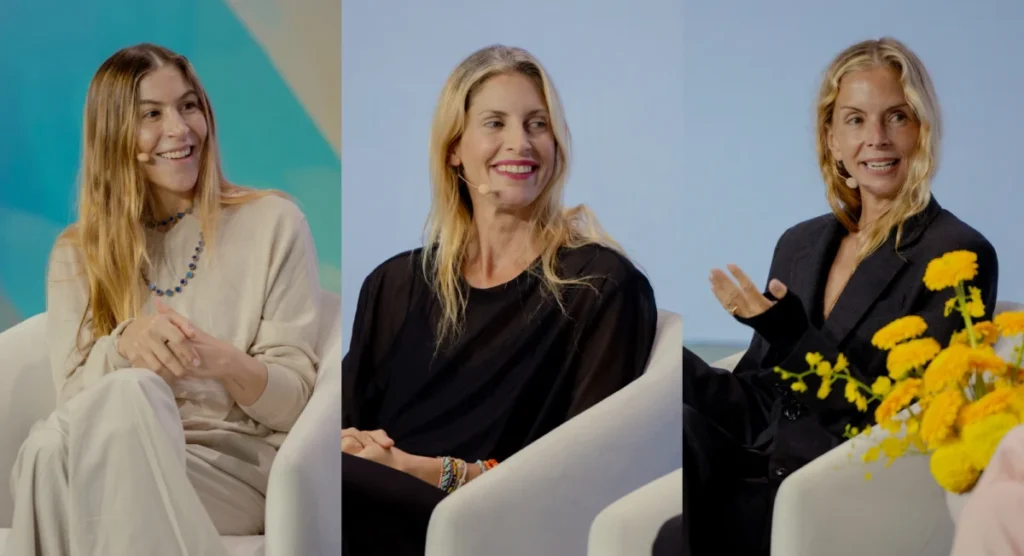
The trio recently took the stage at the 2026 WWD x FN x Beauty Inc. "Women in Power" event in New York City. During a keynote conversation titled "Made Together: Friendship, Ambition & the Future of Fashion," moderated by WWD news director Lisa Lockwood, the founders offered a rare glimpse into the mechanics of their partnership and the philosophy that has sustained them for a decade.
Main Facts: A Decade of Collaborative Leadership
La Ligne, which translates to "The Line" in French, began with a simple, almost elemental, premise: a focus on the most iconic wardrobe staple in existence—the stripe. Since its inception, the brand has grown from a boutique concept into a formidable force in the direct-to-consumer and wholesale luxury markets.
The leadership structure is intentionally lean. By maintaining a board comprised exclusively of the three founders, the company avoids the bureaucratic inertia that often plagues larger, venture-backed fashion houses. This structure allows for an agility that has been critical during the brand’s rapid scaling. They operate on a majority-rule decision-making process, a system that, while simple in theory, requires a profound level of mutual respect and trust. When one founder’s domain—be it finance, brand strategy, or creative direction—is at the forefront, the others defer to that expertise, creating a fluid, high-trust environment.
The Chronology: From Vogue Desks to a Global Brand
The genesis of La Ligne was not born in a boardroom, but in the corridors of Vogue. In the early 2010s, both Meredith Melling (then serving as chief brand officer) and Valerie Macaulay (then chief creative officer) were witnessing a seismic shift in how fashion was consumed.

"The way we were consuming content was changing," Melling explained during the panel. "The way designers had to make clothes to feed the ‘beast’ of the trend cycle was changing."
At the time, the digital revolution—spearheaded by the rise of Instagram—was accelerating the fashion calendar to an unsustainable pace. As magazine editors, the founders were expected to report on an endless churn of micro-trends. Yet, they noticed a striking irony: even within the fashion elite, the women who had access to every runway look imaginable were choosing to dress in simple, timeless pieces.
"One day, I walked into Valerie’s office, and I just asked, ‘Wouldn’t it be great to just have a line of stripes?’" Melling recalled. "It was like a lightning bolt."
The duo realized that there was a massive, underserved market for high-quality, permanent staples that functioned as a uniform. They brought in Molly Howard, who had cut her teeth in business development at Rag & Bone, to provide the financial backbone and operational rigor necessary to turn their "lightning bolt" idea into a scalable business. Together, they left their established careers, traded the security of the masthead for the volatility of entrepreneurship, and launched La Ligne.
Supporting Data and Brand Philosophy
The core of La Ligne’s success lies in its refusal to chase the "fad." While competitors were pivoting every three months to satisfy the demands of algorithmic trends, La Ligne focused on perfecting the classics: the Breton stripe, the crisp collared shirt, the perfectly weighted sweater, and the effortless camisole.

Their business model is equally anti-establishment. The brand eschews traditional runway shows, which are notoriously expensive and often wasteful. Instead, they leverage a "community-first" approach. This is best exemplified by their "La Bande" portrait series. By featuring real women—including notable figures like Dianna Agron and Erin Walsh, alongside everyday patrons, children, and even pets—the brand allows its customers to define the style. By documenting how these individuals incorporate La Ligne into their own lives, the founders have created a brand identity that feels organic and inclusive rather than top-down.
Financially, the brand has remained resilient. Despite facing significant global hurdles—including the logistical nightmare of the COVID-19 pandemic and the volatile landscape of international tariffs—the company has managed to maintain a start-up mentality. Their commitment to keeping the leadership team small ensures that their overhead remains focused on product quality rather than administrative bloat.
Official Responses and Strategic Partnerships
The maturity of the brand is currently evidenced by its strategic growth and external validation. Recently, La Ligne entered into a collaboration with Banana Republic, a move initiated by the larger entity. This partnership signifies a "graduation" of sorts; it demonstrates that the brand’s aesthetic—once considered a niche, elevated preference—has now attained a level of cultural ubiquity that appeals to the broader market.
Regarding their collaborative process, Molly Howard noted that the "majority-rule" system serves as a safeguard against ego. "We don’t have to agree on every single nuance of every single decision," Howard explained. "We just have to agree on the direction of the brand. Because we trust each other’s history and professional instincts, we can disagree on a specific color palette or a marketing strategy without it ever becoming personal."
This sentiment is echoed by Macaulay and Melling, who emphasize that their friendship is the "first layer" of the business. They argue that in a startup, the emotional toll of failure is high, and having partners who are also friends provides a psychological safety net that allows them to take bigger risks with the product.

Implications: The Future of Fashion Entrepreneurship
The success of La Ligne offers a compelling blueprint for the future of fashion entrepreneurship. As the industry grapples with the environmental and social costs of "fast fashion," labels that prioritize longevity, high-quality materials, and sustainable, slow-growth models are becoming increasingly attractive to consumers.
The "La Ligne model" highlights three major shifts:
- The Move Away from Top-Down Trends: Success is now found in empowering the customer to style the product, rather than dictating how it "should" be worn.
- Lean Governance: The efficacy of a small, empowered board of founders suggests that agility is a more valuable asset than corporate hierarchy in the modern retail climate.
- Friendship as a Strategic Asset: In an era of remote work and digital disconnection, the collaborative, high-trust dynamic of the La Ligne team serves as a reminder that human connection remains the most potent tool in building a lasting brand.
As the brand looks toward its next decade, it faces the challenges of scaling without losing the intimacy that made it a success. However, if the last ten years are any indication, Howard, Melling, and Macaulay are well-equipped to navigate these transitions. By focusing on the "line" that connects the past (classic style) to the future (sustainable, community-driven retail), they have proven that even in a world obsessed with the new, there is always a place for the timeless.
The "Women in Power" event served as a reminder that these three founders have not only built a successful company, but they have also built a durable, resilient, and human-centric way of working that may well influence the next generation of fashion leaders. In a city and an industry that moves at lightning speed, they have succeeded by slowing down—and, above all, by doing it together.