
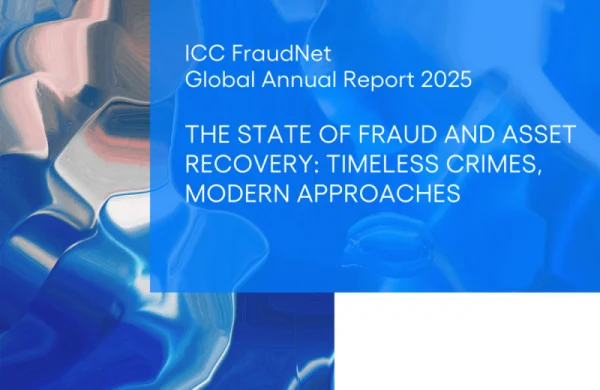
In an era where the lines between technological innovation and criminal exploitation are increasingly blurred, the International Chamber of Commerce (ICC) Commercial Crime Services has released its highly anticipated 2025 Global Annual Report on Fraud and Asset Recovery. Marking its fifth edition, the publication—titled “The State of Fraud and Asset Recovery: Timeless Crimes, Modern Approaches”—serves as a definitive roadmap for legal practitioners, investigators, and policymakers tasked with combating the sophisticated, borderless nature of modern financial crime.
As global economies become more digitized, the methods employed by fraudsters have evolved from traditional embezzlement to complex, AI-driven scams that transcend jurisdictions in milliseconds. The report arrives at a critical juncture, providing a comprehensive analysis of how the legal community can bridge the gap between archaic regulatory frameworks and the rapid advancement of digital deception.
The Evolution of a Global Sentinel: ICC FraudNet
Founded in 2004 under the umbrella of ICC Commercial Crime Services, ICC FraudNet has cemented its reputation as the world’s leading network of independent lawyers specializing in fraud and asset recovery. Today, the organization represents a formidable coalition of 125 expert members and 8 strategic partners spanning 81 countries.
The strength of the organization lies in its geographic diversity and its collaborative spirit. By pooling the expertise of legal minds from jurisdictions as varied as the Cayman Islands, Singapore, Ghana, and Japan, ICC FraudNet provides a unified front against acquisitive misconduct. The 2025 report is not merely a collection of observations; it is a manifestation of two decades of accumulated intelligence, designed to equip practitioners with the strategies necessary to navigate the labyrinthine world of international asset tracing.
Structural Pillars of the 2025 Report
Nicola Stenhouse, Executive Secretary of ICC FraudNet, emphasizes that this year’s edition is intentionally structured to provide actionable intelligence rather than abstract theory. The report is organized into six foundational themes that reflect the current exigencies of the legal and forensic landscape:
- Perspectives on AI: Assessing the dual-use nature of artificial intelligence in both perpetrating and solving fraud.
- Enforcement and Regulation: An analysis of shifting legislative landscapes and the efficacy of current global standards.
- Asset Recovery Investigations: A deep dive into the interplay between criminal, civil, and technological methodologies.
- Cybercrime: Addressing the rise of ransomware, phishing, and digital extortion.
- Tackling Fraud, Corruption, and Money Laundering: A focus on the nexus between institutional corruption and illicit financial flows.
- Practical Perspectives: Real-world case studies and operational strategies for the field.
“Each part offers not only thoughtful analysis but also practical tools and strategies to navigate today’s complex landscape,” says Stenhouse. By compartmentalizing these themes, the report allows practitioners to drill down into specific areas of concern, ensuring that the insights provided are directly applicable to the cases currently occupying their dockets.
Chronology of a Crisis: The Shift toward Digital Fraud
The publication of the 2025 report follows four previous iterations that have tracked the gradual transformation of global fraud. A historical look at these reports reveals a distinct progression:
- The Early Years (2021–2022): Initial reports focused on the post-pandemic surge in opportunistic fraud, particularly regarding government relief schemes and the vulnerabilities of remote work environments.
- The Middle Years (2023): The conversation shifted toward the hardening of regulatory requirements and the complexities of enforcing cross-border judgments.
- The Modern Era (2024–2025): The current report signifies a pivot toward the “Technological Imperative.” For the first time, the focus has moved beyond mere procedural recovery to the existential threats posed by Large Language Models (LLMs) and automated decision-making systems.
This chronology demonstrates that while the intent of fraud—to illicitly acquire assets—remains a “timeless crime,” the mechanisms have undergone a radical modernization that requires an equally radical upgrade in legal defense strategies.
Supporting Data: A Global Effort
The 2025 Global Annual Report is a massive collaborative undertaking, featuring 23 original papers written by 37 leading experts. The sheer breadth of the contributor base—ranging from the United Kingdom and the United States to Panama, the British Virgin Islands, and South Africa—ensures that the report avoids a Western-centric bias.
This diversity is essential because asset recovery is inherently jurisdictional. An asset stolen in Singapore may be laundered through shell companies in the BVI and eventually held in a trust in the United Kingdom. By synthesizing insights from experts in these disparate locations, the report provides a “follow the money” manual that respects the nuanced legal traditions of various regions while offering a cohesive strategy for global litigation.
Official Responses and Expert Insights
Dr. Dominic Thomas-James, the Editor of the Report, notes that the impact of AI on the legal profession is perhaps the most debated and significant development of the current year. “Trends in investigations such as Large Language Models and the impact of AI-decision making in litigation and investigations are explored,” he explains.
The report does not shy away from the darker side of these technologies. It provides cautionary tales regarding AI’s ability to act as a “manipulator”—creating deepfakes, generating sophisticated phishing emails, and automating the spread of disinformation. However, it also highlights the optimistic potential of AI as a tool for investigators.
“Tales of caution about AI’s ability as a manipulator, as well as encouragement as to its helpful role in investigations, as well as its competence, or otherwise are all considered,” Dr. Thomas-James added. This balanced view is essential; legal professionals must understand the adversary’s tools to effectively counter them.
The Implications: Moving Toward Real-World Solutions
The ultimate goal of the 2025 Global Annual Report is to bridge the gap between scholarly insight and the cold, hard reality of the courtroom. As Dr. Thomas-James summarizes, “Ultimately, the papers draw upon collective and individual experiences, best practices, and case studies seen at the cutting edge of the field.”
The Future of Asset Recovery
The implications of this report are profound. Firstly, it signals that law firms and investigative agencies must become more tech-literate. The ability to trace assets now requires an understanding of blockchain ledgers, digital footprints, and, increasingly, the algorithmic patterns of AI-assisted fraud.
Secondly, the report advocates for stronger international cooperation. Since fraudsters rely on the slow pace of international legal assistance (MLATs) and the lack of communication between foreign police forces, the report’s emphasis on the “global network” approach serves as a blueprint for how private sector experts can assist in speeding up these processes.
A Call to Action
For the legal professional, the 2025 report serves as both a manual and a warning. It is a reminder that in the face of decentralized, tech-savvy criminal syndicates, traditional, isolated law practice is no longer sufficient. Success in the coming years will depend on:
- Cross-border integration: Utilizing networks like ICC FraudNet to bypass local bureaucratic delays.
- Technological proficiency: Implementing AI-driven investigative tools to counter AI-driven fraud.
- Regulatory vigilance: Engaging with the enforcement trends outlined in the report to ensure that asset recovery efforts remain compliant with evolving international standards.
Conclusion
The 2025 Global Annual Report on Fraud and Asset Recovery is more than a summary of legal scholarship; it is a tactical manual for the front lines of the war against financial crime. By addressing the “timeless” nature of fraud through the lens of “modern” technological shifts, ICC FraudNet has provided the international community with the tools to confront the future with confidence.
As the global financial system continues to evolve, the challenge for legal practitioners will be to ensure that the rule of law remains more agile than the criminals it seeks to prosecute. For those committed to justice and the recovery of illicitly obtained assets, this report is an indispensable resource.
To download the full 2025 Global Annual Report and explore the individual contributions from the world’s leading experts, visit the official ICC FraudNet website.