
In a breakthrough that fundamentally alters our understanding of planetary evolution, an international team of geochemists has uncovered evidence that Earth’s water cycle was operating deep within the planet’s interior far earlier than previously believed. The study, published in the journal Nature Communications, suggests that more than three billion years ago, our young, scorching planet was already orchestrating a sophisticated dance between its surface and its mantle—a process long thought to be a hallmark of modern plate tectonics.
Led by Dr. Eric Vandenburg of the University of Adelaide, the research team focused their efforts on the Pilbara Craton in Western Australia. This region is a geological treasure trove, housing some of the best-preserved crustal rocks on Earth. By analyzing the chemical fingerprints trapped within these ancient formations, the researchers have effectively reconstructed a geological narrative dating back 3.1 billion years, revealing that water was not merely sitting on the surface, but was actively driving volcanic activity from deep underground.
The Chronology of a Young World
To understand the magnitude of this discovery, one must look at the timeline of the early Earth. Three billion years ago, the planet was a vastly different, more hostile environment. The prevailing scientific consensus has long held that the Earth’s interior was significantly hotter than it is today, making the lithosphere—the planet’s rigid outer shell—too buoyant and weak to support the cold, sinking slabs of rock that characterize modern plate tectonics.
For decades, the standard model of geological history suggested that the "recycling" of surface materials—whereby oceanic crust sinks into the mantle to be melted and eventually returned to the surface via volcanism—did not begin until much later in Earth’s history. The discovery in the Pilbara Craton challenges this timeline. It indicates that the Earth had developed a method for "subducting" or sinking surface material into the mantle long before the global, integrated system of plate tectonics as we know it today had fully matured.
Unraveling the Mystery: The Pilbara Craton
The Pilbara Craton serves as a rare time capsule. While most of the Earth’s surface from the Archean Eon has been recycled, eroded, or metamorphosed into oblivion, the Pilbara remains relatively stable. This stability allowed Dr. Vandenburg and his colleagues from institutions including Monash University, the Australian National University, and Germany’s GEOMAR Helmholtz Center for Ocean Research to isolate chemical signatures that have remained undisturbed for eons.
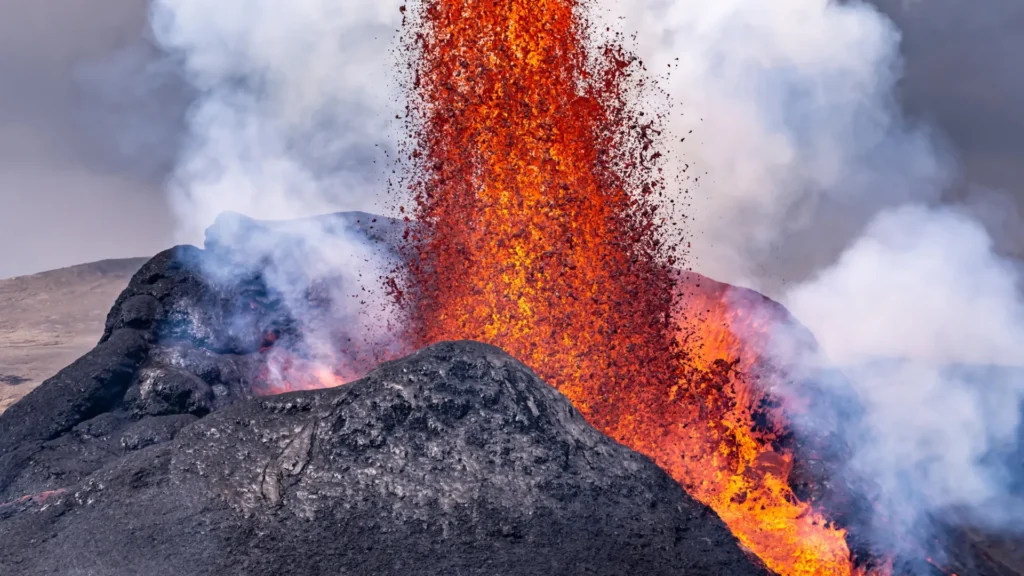
The team’s analysis centered on the composition of volcanic rocks that bear a striking resemblance to those found today in the Pacific "Ring of Fire." In modern geology, these volcanoes are fed by magma generated when water-soaked tectonic plates slide into the mantle. The presence of similar chemical signatures in 3.1-billion-year-old rocks suggests that the mechanism for introducing water into the mantle was already active during the planet’s infancy.
Mechanism of Motion: Introducing "Dripduction"
One of the most compelling aspects of the study is the proposal of a mechanism known as "dripduction." Since the conditions of the early Earth precluded the large-scale sliding of massive tectonic plates, the researchers posit that gravity and density were the primary drivers of material transport.
The Mechanics of the Drip
"Dripduction" describes a process where portions of the Earth’s cooler, denser outer crust became gravitationally unstable. These water-rich sections would essentially "sag" or "drip" downward into the hot, viscous mantle beneath them. As these crustal drips descended, they carried with them significant volumes of surface water.
From Drip to Magma
As the crustal material sank into the extreme heat of the mantle, it underwent dehydration—the water was squeezed out of the rock. This released water lowered the melting point of the surrounding mantle rock, facilitating the creation of magma. This buoyant magma then rose toward the surface, fueling the volcanic eruptions that eventually cooled to form the rocks now found in the Pilbara. This process effectively demonstrates that the Earth was already a self-regulating, dynamic system, capable of moving water into its deepest layers to fuel its volcanic evolution.
Official Perspectives and Expert Analysis
Dr. Eric Vandenburg, reflecting on the findings, noted that the discovery was as surprising as it was significant. "The early Earth was too hot for plates to behave that way, so until now it has been unclear whether surface water could have made that journey more than three billion years ago, and if so, how," Dr. Vandenburg stated. "What surprised us was finding evidence that large amounts of water had already made their way deep into the Earth’s interior and influenced the formation of volcanic rocks."
The study represents a collaborative triumph, involving experts from across the globe. By combining geochemical modeling with field observations, the team was able to provide a robust argument for a process that was previously only theoretical. The consensus among the researchers is that while the Earth did not operate exactly as it does today, the fundamental "plumbing" of the planet—the movement of water between the surface and the interior—was an essential feature even in its early stages.
Implications for Earth’s Evolution and Beyond
The discovery of water recycling 3.1 billion years ago has profound implications for several branches of earth science.
Continental Growth and Development
The recycling of surface materials into the mantle is a primary engine for the growth of continents. By injecting water into the mantle and triggering magma production, the "dripduction" process likely played a crucial role in forming the early crustal foundations that eventually grew into the continents we inhabit today.
The Ingredients for Life
The movement of water and other volatiles between the surface and the deep interior is not merely a geological curiosity; it is a prerequisite for life as we know it. By regulating the planet’s chemistry and fueling volcanic activity, this recycling process helped stabilize the Earth’s surface environment. Understanding when this process began helps scientists estimate when the planet became "habitable" in the sense that it could sustain complex geological and chemical cycles necessary for life to thrive.
Re-evaluating Planetary Dynamics
This research forces a recalibration of how scientists view the evolution of terrestrial planets. If Earth was capable of such complex internal recycling during its infancy, it challenges the assumption that planetary "maturity" is a slow, linear process. Instead, it suggests that Earth was a highly dynamic, energetic body much earlier than we gave it credit for.
Conclusion: A More Dynamic Early Earth
The findings from the Pilbara Craton effectively bridge a major gap in the geological record. By proving that the Earth was recycling its most essential substance—water—over three billion years ago, the team has illuminated the early mechanisms that helped shape the modern world.
As researchers continue to analyze the Pilbara rocks and seek out other rare, ancient sites, the narrative of our planet’s youth continues to shift. We are no longer looking at a static, cooling sphere, but rather a vibrant, active laboratory that was already beginning to exhibit the characteristics of a living planet. This study not only honors the complexity of the Earth’s deep history but also underscores the necessity of interdisciplinary collaboration in uncovering the secrets of our origins. The "dripduction" of the Archean Eon, it seems, was the first step in the long, ongoing process of turning a primordial rock into the blue, water-rich, and continent-laden world we call home.