
By Adrianne Appel
Regulatory Affairs Correspondent
September 8, 2026
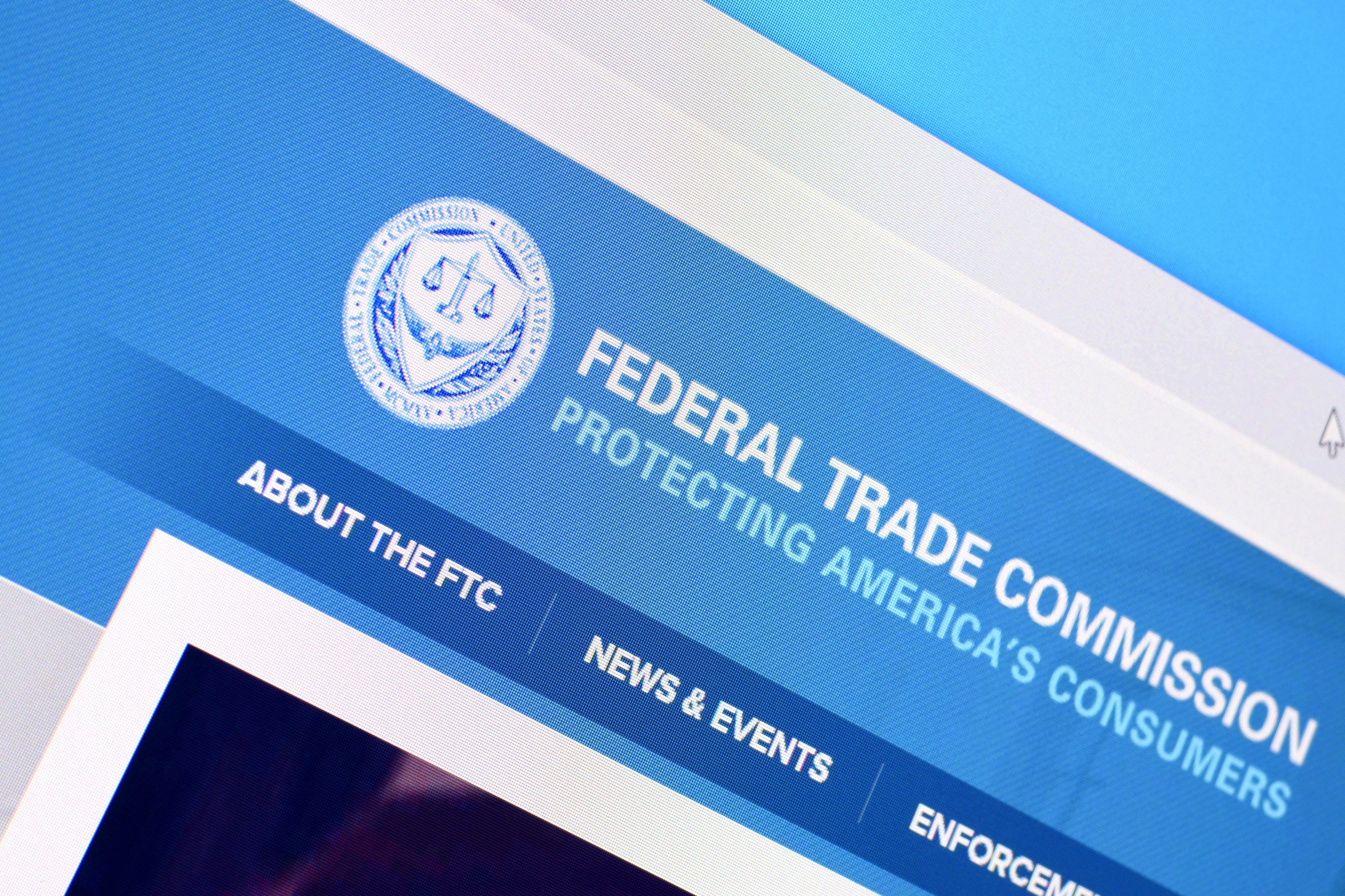
In a landmark enforcement action that signals a new era of federal oversight for artificial intelligence marketing, the U.S. Federal Trade Commission (FTC) has reached a $930,000 settlement with Cox Media Group and two affiliated entities. The settlement resolves allegations that the companies engaged in deceptive marketing practices by significantly overstating the efficacy and functional capabilities of their AI-driven advertising services.
This enforcement action underscores the FTC’s growing commitment to policing "AI-washing"—the practice of making unsubstantiated or fraudulent claims about a company’s AI capabilities to gain a competitive advantage in the marketplace. As businesses across the globe scramble to integrate generative AI and machine learning into their operational models, the case serves as a stern warning that the agency will not tolerate the exploitation of technological buzzwords to mislead consumers or corporate clients.
The Core Allegations: Beyond the Hype
The FTC’s complaint centers on the marketing claims made by Cox Media Group (CMG) and its partners regarding their proprietary "AI-powered" targeting services. According to the federal regulator, the companies pitched these services as revolutionary tools capable of leveraging sophisticated machine learning algorithms to perform highly precise consumer behavior prediction and real-time ad targeting.
However, the FTC’s investigation uncovered a significant disparity between the promised performance and the actual technical reality of the services provided. The agency alleges that the companies misrepresented the sophistication of the technology, failing to inform clients that the services did not deliver the level of precision or automated intelligence that the marketing materials suggested.
"Businesses that market AI services must ensure that their claims are truthful, substantiated, and not misleading," the FTC noted in its public statement regarding the settlement. By failing to meet these standards, the companies allegedly induced clients to purchase services under false pretenses, effectively inflating the value of the product through deceptive technological claims.
Chronology: The Road to the Settlement
The path to this settlement began well before the official announcement on September 8, 2026. The FTC’s inquiry into AI marketing claims has been accelerating over the past 24 months, reflecting a broader governmental push to establish guardrails around emerging technologies.
- Early 2025: Initial industry reports began circulating regarding discrepancies in the performance metrics of several AI-driven marketing platforms. Independent audits and internal whistleblowers began questioning the efficacy of the "predictive behavioral modeling" touted by CMG and other firms.
- Late 2025: The FTC initiated a formal investigation, issuing civil investigative demands to Cox Media Group and its affiliates. The inquiry focused on internal documentation, algorithm training data, and marketing collateral produced by the companies.
- Spring 2026: Settlement negotiations began as the FTC presented preliminary findings that suggested a pattern of unsubstantiated claims. The companies were faced with the choice of litigating the claims—which would have involved public disclosure of proprietary technical data—or reaching a financial settlement.
- September 8, 2026: The FTC officially announced the $930,000 settlement, marking a significant milestone in the agency’s "Operation AI-Trust," an ongoing initiative to protect the integrity of the AI marketplace.
Supporting Data: The Anatomy of Deceptive Marketing
To understand the scope of this case, one must look at the data points that the FTC identified as "materially misleading." The agency’s investigation focused on three specific areas of concern:

- Algorithmic Transparency: The companies allegedly claimed to use advanced, real-time data processing to identify consumer intent. The investigation revealed that much of the "AI" function was, in fact, basic, legacy-style demographic filtering that did not utilize modern machine learning or predictive analytics.
- Performance Metrics: Marketing materials promised a specific percentage of improvement in ad-spend efficiency. The FTC found that these figures were based on limited, cherry-picked data sets that were not representative of the actual performance the average client would experience.
- Data Sourcing: The companies implied that their AI was trained on a proprietary, massive, and unique data ecosystem. The investigation found that the data utilized was largely generic and accessible to competitors, contradicting the "unique proprietary intelligence" narrative pushed in sales decks.
The $930,000 figure, while modest in the context of global media giants, is intended to be a disgorgement of profits obtained through these deceptive practices. It represents a significant "cost of doing business" that the FTC hopes will discourage other firms from inflating their AI capabilities.
Official Responses and Industry Impact
In response to the settlement, representatives for the entities involved have pledged to update their marketing compliance procedures. While the companies did not admit to intentional wrongdoing, they have agreed to a permanent injunction that prohibits them from making further unsubstantiated claims regarding the performance or nature of their AI services.
The FTC’s leadership has been vocal about the implications of this case. "Marketing an AI service as a ‘magic box’ that solves complex business problems is a dangerous trend," said an FTC spokesperson. "We expect companies to be transparent about what their technology actually does, how it works, and what the limitations are. If a company claims their service is ‘AI-driven,’ that service must be demonstrably powered by AI, not just a label slapped onto a legacy software product."
Industry analysts are calling this a "compliance inflection point." For legal and compliance departments, the mandate is clear: Marketing and sales teams must now be brought into the loop of technical due diligence. Any claim made about an AI product’s performance must be backed by a paper trail of validation testing, independent benchmarks, and clear disclosures about the tool’s actual capabilities.

Future Implications: The Compliance Landscape
The settlement with Cox Media Group is likely the first of many. As the FTC continues to sharpen its focus on the intersection of consumer protection and emerging tech, companies across all sectors—from fintech to healthcare—are re-evaluating their marketing strategies.
1. The Death of the "AI" Buzzword
Moving forward, the mere inclusion of "AI" in a product description will likely trigger higher levels of scrutiny from both federal regulators and sophisticated B2B clients. Companies will need to provide "AI nutrition labels" or detailed white papers that explain the underlying technology, the training data used, and the expected outcomes of the tool.
2. Enhanced Due Diligence for Corporate Buyers
For the corporate clients who purchased these services, the settlement highlights the importance of technical due diligence. Businesses should no longer take software vendors at their word when they claim their platform uses "state-of-the-art" generative AI. Instead, procurement departments will likely require technical audits to verify that the software does, in fact, utilize machine learning models as described.
3. Heightened Regulatory Scrutiny
The FTC’s success in this case provides a blueprint for future enforcement. We can expect to see more "Operation AI-Trust" style investigations targeting firms that use deceptive AI claims to facilitate stock price inflation or to secure venture capital funding under false pretenses.

4. A New Standard for Compliance Documentation
Corporate legal teams are now tasked with ensuring that marketing materials are not just "persuasive," but "verifiable." This requires a tight integration between engineering teams—who know the limitations of the software—and marketing departments—who are responsible for communicating the product’s value. Bridging this gap will be the primary compliance challenge for firms operating in the AI space for the remainder of the decade.
Conclusion
The $930,000 settlement involving Cox Media Group is a decisive move by the FTC to curb the reckless promotion of artificial intelligence. By holding firms accountable for their marketing claims, the regulator is attempting to ensure that the rapid advancement of technology is matched by an equally robust commitment to corporate integrity. For businesses, the lesson is straightforward: In the age of AI, transparency is not just an ethical choice—it is a regulatory necessity. As we move further into 2026, the firms that prioritize honesty over hype will be the ones best positioned to navigate the increasingly rigorous oversight of the federal government.