In the high-stakes, often grueling ecosystem of luxury fashion, where creative directors are frequently defined by their brooding intensity or conceptual austerity, Camille Miceli stands as an outlier. Since assuming the mantle of artistic director at Emilio Pucci in 2021, Miceli has eschewed the industry’s penchant for performative melancholy, opting instead to anchor the heritage brand in a philosophy of unadulterated sunshine and "Dolce Vita" escapism.
Her tenure has been marked by a radical reimagining of what a storied Italian house can represent in the 21st century. By marrying the kaleidoscopic, archival motifs of Emilio Pucci with a contemporary, inclusive, and experiential retail strategy, Miceli has not only revitalized the brand’s aesthetic but has fundamentally shifted its emotional frequency.
The Philosophy of Light
Miceli’s approach to leadership is as intentional as her design work. For her, the "Pucci spirit" is a tangible asset—a "vitamin brand" that relies on vivid colors and infectious energy to remain relevant.

"It’s true that I am someone quite positive; I like to enjoy myself a lot, and I think that we came on this planet not to suffer," Miceli reflects. This is not merely a personality quirk but a strategic choice in a career defined by the pressures of the global luxury market. "That’s my life goal, and as soon as something becomes dark, I try to put it back into the light. I am a hypochondriac, and stress and anxiety can make you feel sick, so I try to avoid that."
This quest for equilibrium is bolstered by her decade-long commitment to yoga. Introduced to the practice during an Ayurvedic retreat in Kerala, India, Miceli found a mentor in Arnaud Caby, who has since become a fixture at Pucci’s experiential events. Whether in the sun-drenched cloisters of Capri or the historic streets of Rome, Miceli integrates these wellness sessions into the brand’s presentation, signaling to her audience that the Pucci lifestyle is as much about inner peace as it is about external glamour.
A Chronology of Creative Evolution
To understand the current iteration of Pucci, one must look at the trajectory of the woman at its helm. Miceli’s career is a masterclass in apprenticeship, marked by deep, long-standing relationships with the titans of twentieth-century fashion.

The Formative Years: Art, Fashion, and Family
Born to a French stylist mother, Dominique, and an Italian art-book publisher father, Stefano, Miceli grew up at the intersection of high culture and visual storytelling. She recalls tagging along on photoshoots with the legendary Guy Bourdin, an experience that instilled in her a lifelong appreciation for composition and provocative imagery.
The Alaïa Apprenticeship (1990s)
At 15, Miceli began an internship with the incomparable Azzedine Alaïa. It was here that she learned the rigor of the trade. Alaïa, a family friend, was a demanding mentor who pushed her to develop a "maniaque" attention to detail. "He was a genius but also very difficult and hard on me because he knew me personally," she recalls. The bond was profound, culminating in Alaïa designing her wedding dress—a testament to the deep, familial nature of the fashion industry during that era.
The Chanel Tenure
Following her baccalaureate, Miceli joined Chanel as a publicist. Working under the formidable Karl Lagerfeld for eight years, she gained an insider’s view of the machinery of a global fashion powerhouse, from casting to show production. It was during this period that she honed her loyalty—a trait she maintains today. "I’ve been always staying long in any job. I’m quite loyal; I don’t like to change all the time."

The Marc Jacobs and Louis Vuitton Era (1998–2021)
In 1997, Miceli transitioned to Louis Vuitton, joining Marc Jacobs during the inception of the brand’s ready-to-wear line. With the help of Naomi Campbell, who facilitated an introduction, Miceli began a transformative chapter.
Initially focused on communication and brand identity, it was Jacobs who recognized her latent design talent. "Marc gave me my wings," she says. He tasked her with developing jewelry, a category that had not yet been explored with such vigor. She would later collaborate with Pharrell Williams on the iconic 2008 coat-of-arms high jewelry collection, a project that cemented her reputation as a visionary in the accessories space. Her subsequent work at Dior, where she created the globally successful Tribales earring, further solidified her status as a commercial and creative powerhouse.
Supporting Data: The "Pucci" Effect
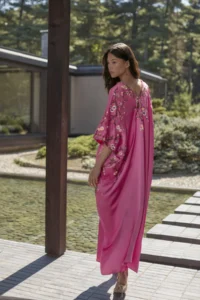
Miceli’s strategy of leveraging archival motifs—the vibrant, swirling prints that defined the jet-set era—has successfully bridged the generational divide. By applying these patterns to modern silhouettes like mini-dresses, pareos, and technical swimsuits, she has captured the attention of a demographic that spans from Gen Z to high-net-worth legacy clients.

Celebrity adoption has been a crucial component of this resurgence. Icons of contemporary style, including Margot Robbie, Dua Lipa, Hailey Bieber, and Kylie Jenner, have been frequently spotted in Pucci, signaling a "cool factor" that the brand had struggled to maintain in previous decades. This shift is not incidental; it is the result of a deliberate, data-driven approach to brand positioning that prioritizes "experiential luxury" over traditional runway spectacles.
Official Responses and Creative Vision
The decision to launch her inaugural collection in Capri in 2022 was a symbolic homecoming, paying tribute to the 1951 opening of Emilio Pucci’s first boutique on the island. Miceli views the founder’s legacy not as a historical relic but as a living, breathing blueprint for a vibrant life.
"He was doing the limbo," she laughs, describing her admiration for the founder’s zest for life. "Pucci is a vitamin brand; the colors must be fun and vivid, otherwise it all becomes boring."

When discussing her team, Miceli is notably humble, frequently deflecting credit to the artisans and collaborators who bring her visions to life. Her leadership style—inspired by Marc Jacobs’ ability to make his team "shine"—is evident in the way she conducts press previews, ensuring that those behind the scenes are recognized for their contributions.
Implications for the Future of Luxury
As Miceli looks toward the future, her focus remains on "catching the moment." With half-Italian and half-French heritage, she is currently exploring new ways to manifest the Pucci spirit, with whispers of upcoming projects in Paris.
The implications of her tenure are clear: the future of luxury houses lies in their ability to be "open and inclusive." By moving away from the rigid, exclusionary hierarchies of the past, Miceli is creating a brand experience that invites participation. Her goal is not to dictate taste but to curate beauty.

"People sometimes ask me, what kind of period of art do you like? It’s more about what I think is beautiful," she says. "It’s not universal. It’s a question of taste, my taste, and it can’t be a rule."
In a world where fashion often feels like a series of mandates, Camille Miceli offers an invitation. Her Pucci is a sanctuary of color, a celebration of the "Dolce Vita," and a testament to the idea that, in fashion as in life, the most sophisticated thing one can do is remain light, curious, and profoundly human. As she continues to evolve the brand, the industry watches with interest, proving that perhaps the most powerful currency in luxury is, and always has been, joy.