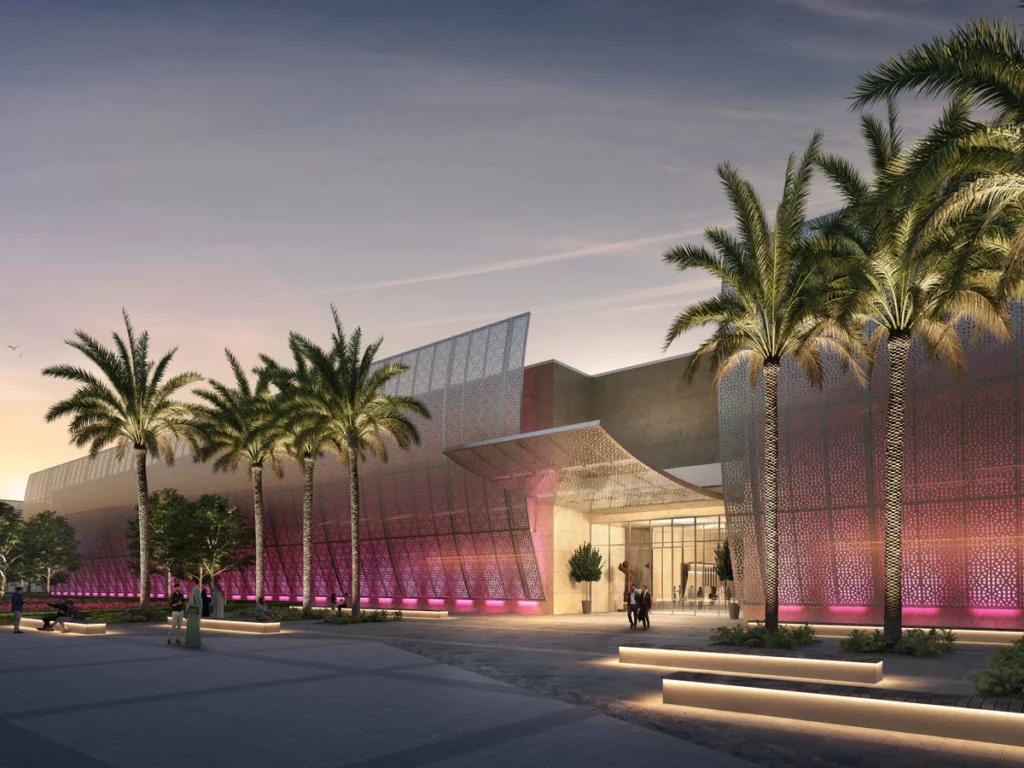
The global art calendar is set for a seismic shift this November as Frieze, one of the world’s most influential contemporary art fair brands, makes its highly anticipated debut in the United Arab Emirates. Frieze Abu Dhabi has officially announced the 84 exhibitors selected for its inaugural edition, which will take place from November 19 to 22, 2024. Set against the backdrop of Manarat Al Saadiyat in the city’s prestigious Saadiyat Cultural District, the fair represents a significant evolution in the region’s cultural infrastructure, replacing the long-standing Abu Dhabi Art fair and signaling a new chapter of international commercial integration.
The debut edition promises a sophisticated blend of regional depth and global reach, featuring galleries from 63 cities across 36 countries. Notably, the fair maintains a strong commitment to its host region, with approximately 43 percent of the exhibitors—totaling 36 galleries—hailing from the South West Asia and North Africa (SWANA) region. This strategic balance aims to position Abu Dhabi not just as a destination for international blue-chip secondary market sales, but as a primary engine for regional artistic discourse and discovery.
I. Main Facts: A Global Intersection in the Saadiyat Cultural District
Frieze Abu Dhabi’s first outing is characterized by a curated selection of 84 galleries, a number that reflects a deliberate focus on quality and narrative over sheer volume. The fair is divided into several distinct sectors: the main Galleries section, Focus, Global Futures, and Frieze Masters Abu Dhabi.
Geographic Diversity and SWANA Representation
A cornerstone of the fair’s identity is its heavy emphasis on the SWANA region. Among the 36 regional galleries are heavyweights such as Dubai’s Carbon 12 and The Third Line, Tehran and Toronto’s Dastan, Cairo’s Gypsum, and the influential Sfeir-Semler Gallery, which operates out of Beirut and Hamburg. This strong regional presence ensures that the fair remains rooted in the local ecosystem while providing a platform for these galleries to engage with a global audience.
International Blue-Chip Presence
Complementing the regional participants is an impressive roster of international "blue-chip" powerhouses. These include Gagosian, Pace Gallery, Thaddaeus Ropac, Victoria Miro, and Galleria Continua. Notably, Perrotin—which expanded its global footprint by opening a space in Dubai in 2022—will also be a central participant, underscoring the growing confidence international mega-galleries have in the Gulf’s collector base.
Specialized Sections
- Focus: Dedicated to solo or dual presentations by emerging artists. This section emphasizes experimental practices and provides financial support through bursaries to help younger galleries offset the costs of participation.
- Global Futures: Curated by Tarini Malik, this section features artists whose work engages with histories and ideas resonating across the UAE and the broader region.
- Frieze Masters Abu Dhabi: Curated by Marika Sardar, this section bridges the gap between antiquity and the 20th century. It adopts a thematic lens focused on the Indian Ocean, exploring the historic movement of people, objects, and ideas.
II. Chronology: The Evolution of Abu Dhabi’s Art Scene
The launch of Frieze Abu Dhabi is not an isolated event but the culmination of nearly two decades of cultural investment by the UAE capital. To understand the significance of this transition, one must look at the timeline of the city’s artistic development.
The Era of Abu Dhabi Art (2007–2023)
For 17 years, Abu Dhabi Art served as the city’s primary art fair. Established by the Department of Culture and Tourism – Abu Dhabi (DCT Abu Dhabi), it was instrumental in building a local audience and fostering a nascent market. However, as the Saadiyat Cultural District matured—with the opening of the Louvre Abu Dhabi in 2017 and the ongoing construction of the Guggenheim Abu Dhabi and the Zayed National Museum—the city required a fair with greater international brand recognition and a more rigorous commercial framework.
The Frieze Partnership (2024)
The decision to transition from a government-operated fair to a partnership with Frieze (which is owned by the global entertainment giant Endeavor) marks a pivot toward a more commercial, market-driven model. Frieze brings with it a global database of VIP collectors, a reputation for rigorous selection committees, and a proven "tent" model that has succeeded in London, New York, Los Angeles, and Seoul.
Regional Context: The Race for Cultural Hegemony
The timing of Frieze Abu Dhabi is also significant in the context of regional competition. In February 2024, Art Basel—Frieze’s primary global rival—launched its own initiative in the region via Art Basel Qatar in Doha. Meanwhile, Art Dubai has long held the title of the region’s premier commercial fair. The arrival of Frieze in Abu Dhabi suggests an intensifying competition between Gulf states to become the definitive hub for the Middle Eastern art market.
III. Supporting Data: Analyzing the Exhibitor List
The 84-exhibitor list provides a data-driven look at the fair’s priorities. The inclusion of 63 cities highlights a "polycentric" approach to the art market, moving away from a purely Eurocentric or American-centric focus.
The Focus Section: Supporting Emerging Talent
The Focus section includes six galleries that represent the "cutting edge" of the fair. The galleries and artists selected include:
- Patel Brown (Toronto/Montreal) featuring Marigold Santos.
- Commonwealth and Council (Los Angeles) featuring Dala Nasser.
- Management (New York) featuring Tahir Karmali.
- Iyad Qanazea Gallery (Abu Dhabi) featuring Jawad Al Malhi.
- Solo (Bucharest) featuring Thuy Tien Nguyen.
- W-galería (Buenos Aires/Pueblo Garzón) featuring Chonon Bensho.
By providing bursaries to these galleries, Frieze Abu Dhabi is actively lowering the barrier to entry for smaller enterprises, ensuring that the fair remains a site of discovery rather than just a marketplace for established names.
Global Futures: A Curated Narrative
The Global Futures section is designed to provide intellectual depth. Highlighted artists include Abdullah Al Saadi (representing the UAE at the 2024 Venice Biennale) at Aisha Alabbar Gallery, and Ala Younis at Taymour Grahne Projects. This section serves as a bridge between the commercial aspect of the fair and the institutional rigor found in the neighboring museums of Saadiyat Island.
Frieze Masters: A Historical Perspective
The Frieze Masters section is particularly unique for the Abu Dhabi edition. By focusing on the Indian Ocean, curator Marika Sardar is tapping into a specific historical and geopolitical narrative that is central to the UAE’s identity. Participating galleries such as David Aaron, ArtAncient, and Daniel Crouch Rare Books will present objects that speak to centuries of trade and cultural exchange, offering a "museum-quality" experience within the fair.
IV. Official Responses: Leadership Perspectives
The leadership of Frieze and the cultural authorities in Abu Dhabi have emphasized that this fair is intended to be more than a commercial transaction; it is a "catalyst" for the region.
Dyala Nusseibeh, Director of Frieze Abu Dhabi, highlighted the dual nature of the event:
"Across the main section and Focus, galleries will present ambitious, thoughtfully considered booths, while the curated sections—Global Futures and Frieze Masters Abu Dhabi—will introduce fresh perspectives and avenues for critical inquiry. Frieze Abu Dhabi will be a catalyst for knowledge production, art market integration and meaningful participation in global discourse for the whole region."
Nusseibeh’s comment on "knowledge production" is key. It suggests that the fair aims to contribute to the academic and critical understanding of art, moving beyond the "shopping mall" stigma that sometimes plagues international art fairs.
Kristell Chadé, Executive Director of Fairs for Frieze, spoke to the strategic importance of the UAE:
"The inaugural edition of Frieze Abu Dhabi begins with the depth and ambition of the UAE and wider WANASA art scene and reaffirms our commitment to fostering meaningful dialogues on the global art stage. Complementing Frieze’s expansive reach, the fair amplifies voices from the region in an international context, establishing a key moment of convening and exchange for galleries, artists, institutions and collectors from across the world."
V. Implications: What Frieze Abu Dhabi Means for the Future
The launch of Frieze Abu Dhabi has profound implications for the local, regional, and international art worlds.
1. Market Consolidation and Professionalization
By bringing the "Frieze brand" to Abu Dhabi, the local market is undergoing a process of professionalization. The rigorous selection process for galleries and the presence of international advisors mean that the fair will likely attract a higher tier of global collectors who trust the Frieze imprimatur. This could lead to higher price points and more significant secondary market activity in the region.
2. Soft Power and Cultural Diplomacy
For the Abu Dhabi government, Frieze is a powerful tool of soft power. It reinforces the city’s image as a sophisticated global capital. By hosting a fair that includes galleries from Tehran, Casablanca, Lagos, and Guatemala City, Abu Dhabi positions itself as the "Global South’s" cultural crossroads.
3. The "Saadiyat Effect"
The fair’s location is its greatest asset. Manarat Al Saadiyat is walking distance from the Louvre Abu Dhabi. For collectors, this creates a "total cultural immersion" experience. The fair is no longer just an event; it is part of a larger ecosystem that includes world-class museums, luxury hospitality, and architectural landmarks.
4. A Challenge to Dubai
For over a decade, Dubai has been the undisputed commercial capital of the Middle Eastern art world. However, Abu Dhabi’s massive institutional investment, combined with the arrival of Frieze, creates a formidable challenge. While Dubai remains a hub for the "working" art world—studios, smaller galleries, and logistics—Abu Dhabi is positioning itself as the "high-culture" destination for major acquisitions and institutional networking.
5. Intellectual Exchange
The thematic focus of the curated sections—particularly the Indian Ocean theme in Frieze Masters—suggests a move away from Western-centric art history. This aligns with a broader global trend of "decolonizing" the art market and giving voice to South-South exchanges.
Conclusion
The announcement of the 84 exhibitors for Frieze Abu Dhabi marks the beginning of a high-stakes experiment in the global art market. By blending the commercial prestige of a Western mega-fair with the specific cultural and historical narratives of the SWANA region, Frieze Abu Dhabi is attempting to create a new model for the international art fair. When the doors open at Manarat Al Saadiyat this November, the art world will be watching to see if this "catalyst for knowledge production" can truly bridge the gap between the historic trade routes of the Indian Ocean and the hyper-modern financial circuits of the 21st-century art market.