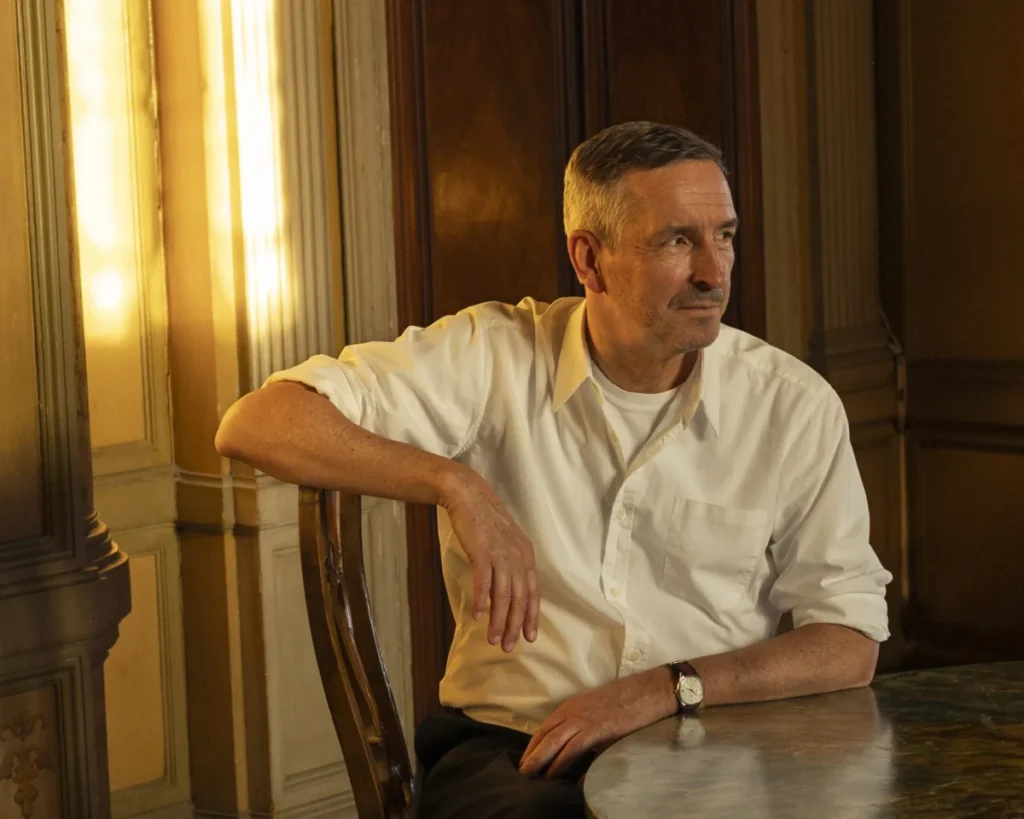
Amid the frenetic energy of the Venice Film Festival—a whirlwind of red-carpet glamour, flashbulbs, and cinematic spectacle—there exists a pocket of profound, hushed serenity. Tucked away within the storied walls of the Palazzo Pisani Moretta, overlooking the shimmering currents of the Grand Canal, a new chapter in the life of legendary Belgian designer Dries Van Noten is currently unfolding.
Since exiting his eponymous fashion label in 2024, Van Noten has not sought the quiet retirement of a quiet coastal villa. Instead, he has turned his keen aesthetic eye toward a new, monumental endeavor: the inauguration of the Fondazione Dries Van Noten. With his inaugural exhibition, “The Only True Protest Is Beauty,” the designer has firmly established his footprint not just in the competitive Venetian art scene, but as a significant force in the global cultural landscape.

The Genesis of an Institution: A New Cultural Map
The Fondazione Dries Van Noten, co-founded by the designer and his longtime partner Patrick Vangheluwe, represents a radical shift in Van Noten’s creative output. Having spent decades defining the language of modern luxury through textiles, patterns, and runway presentations, Van Noten is now applying that same curatorial rigor to a broader canvas. The foundation is designed as a multidisciplinary incubator, fostering cross-pollination between art, design, architecture, photography, music, and gastronomy.
The exhibition, which opened its doors in April, is a testament to the designer’s enduring commitment to beauty as a vital, intellectual, and sensory experience. Running until October 4, the show is housed within the opulent, frescoed halls of the Palazzo Pisani Moretta, a building that provides a dramatic, historical counterpoint to the contemporary works on display.

Chronology of a Vision
The timeline of this project is as ambitious as the scope of the exhibition itself.
- 2024: Following his departure from the Dries Van Noten label, the designer and Vangheluwe officially launch the foundation.
- August 2025: The purchase of the historic Palazzo Pisani Moretta is finalized.
- Late 2025 – Early 2026: A whirlwind six-month period of curation and installation ensues, echoing the high-pressure timelines of the fashion industry.
- April 2026: “The Only True Protest Is Beauty” officially opens to the public.
- October 4, 2026: Closing date for the inaugural exhibition.
- Post-October 2026: The foundation moves to a secondary venue, Studio San Polo, while the Palazzo begins a 14-month restoration project to modernize its infrastructure for public use.
The pace of the project—conceived and executed in less than a year—is a testament to Van Noten’s decades of experience in the fashion industry. "If we managed to do four fashion shows a year in the past, we could manage also to make an exhibition in six months," the designer notes with a characteristic, modest quip.

The Philosophy of Beauty: Data and Interpretation
The exhibition brings together over 200 distinct objects, spanning 20 rooms. The curation eschews rigid, academic categorization in favor of instinctual, emotional, and visual resonance. Among the artifacts are couture pieces by Christian Lacroix, surreal headpieces by Julien d’Ys, and contemporary works by artists like Peter Buggenhout, Misha Kahn, and Virginia Leonard.
Key Curatorial Highlights:
- Textiles and Craft: Palestinian designer Ayham Hassan’s work is prominently featured, utilizing traditional embroidery to anchor contemporary fashion in cultural identity.
- Sculptural Dialogue: Peter Buggenhout’s monumental The Blind Leading the Blind #48 greets visitors on the ground floor, serving as a visceral anchor for the exhibition.
- Furniture and Design: Pieces by Moreno Schweikle, Wendy Andreu, and Joris Laarman are juxtaposed against the palazzo’s antique furnishings, creating a tactile bridge between centuries of craftsmanship.
- Jewelry: The intricate, historical designs of the house of Codognato are woven throughout the displays, acting as delicate threads that tie disparate rooms together.
The title of the exhibition is borrowed from the American songwriter and activist Phil Ochs. While the original lyric—"In such ugly times, the only true protest is beauty"—carried a darker, more cynical weight, Van Noten chose to strip away the first clause. He wanted to avoid grounding his inaugural project in negativity, preferring instead to pose beauty as a question rather than a definitive answer.

Official Perspectives: In Conversation with Dries Van Noten
Speaking with WWD, Van Noten revealed that the most gratifying feedback has been the emotional response from the public. "The soul of the exhibition really speaks to a lot of people," he says. "They come out of it in an emotional way—they say it made them think. And that’s for me the nicest compliment we can have."
When asked about his transition from the "thrills" of fashion to the world of institutional curation, Van Noten remains characteristically pragmatic. "I don’t miss fashion because I think I have the best possibility now," he explains. He continues to provide advisory input on his former brand, overseeing perfumes and store designs, which allows him to maintain a connection to his legacy while operating from a distance that grants him greater creative autonomy.

His decision to base the foundation in Venice—rather than his native Belgium—was a deliberate act of reinvention. "We had lived our whole life there," he notes. "Why not try to find now another country where we are happy?" The city, with its lack of traffic and its democratic reliance on the vaporetto, has provided him with a new rhythm of life—one where he can participate in the local culture, from shopping at the Rialto market to engaging with the city’s residents.
Implications: The Future of the Fondazione
The significance of this foundation extends far beyond the duration of the current exhibition. The 14-month restoration of the Palazzo Pisani Moretta represents a long-term commitment to Venice’s cultural infrastructure. By ensuring the palazzo meets modern climate, humidity, and accessibility standards, the foundation is effectively creating a new public landmark.

Furthermore, the transition to the 5,920-square-foot Studio San Polo in November signals that the foundation intends to remain active year-round, regardless of major tourist cycles. This space, with its stark, gallery-like aesthetic, will host smaller, focused exhibitions and serve as a base for collaborative projects with local schools.
The upcoming three-day music festival, slated to take place after the current exhibition closes, further demonstrates the foundation’s commitment to diversity in art. By inviting everyone from world-class pianists to neighborhood children to participate, Van Noten is cultivating a space that is as much about community engagement as it is about high-concept curation.

Conclusion: A Legacy Reimagined
Dries Van Noten’s move to Venice is more than a change of address; it is a profound realignment of his creative purpose. In a world that often prioritizes rapid consumption and fleeting trends, the Fondazione Dries Van Noten offers a deliberate, thoughtful alternative. By framing beauty as a form of protest—not as a retreat from reality, but as a method for engaging with it—Van Noten has successfully transitioned from a designer of clothes to a designer of experiences.
As the leaves begin to turn in the Venetian autumn, the Palazzo Pisani Moretta remains a beacon of quiet, considered artistry. It is a reminder that even in an age of constant noise, beauty remains a potent tool for connection, reflection, and, ultimately, profound human transformation. Whether the foundation will succeed in becoming a permanent fixture in the Venetian soul remains to be seen, but for now, the inaugural protest is ringing loud and clear across the water.