The enigmatic descriptor "oily green" has long been associated with peridot, a gemstone celebrated for its vibrant verdant hues. Far from a criticism, this term is deeply rooted in the stone’s rich history and unique geological origins, offering a window into the very essence of this captivating mineral. Gem-A Tutor Pat Daly delves into the fascinating world of peridot, unraveling the reasons behind this descriptive moniker and illuminating what it truly reveals about this ancient gem.
The Allure of Peridot: More Than Just Green
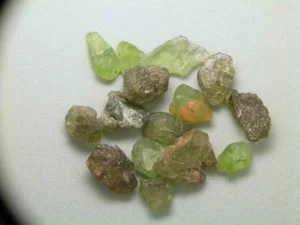
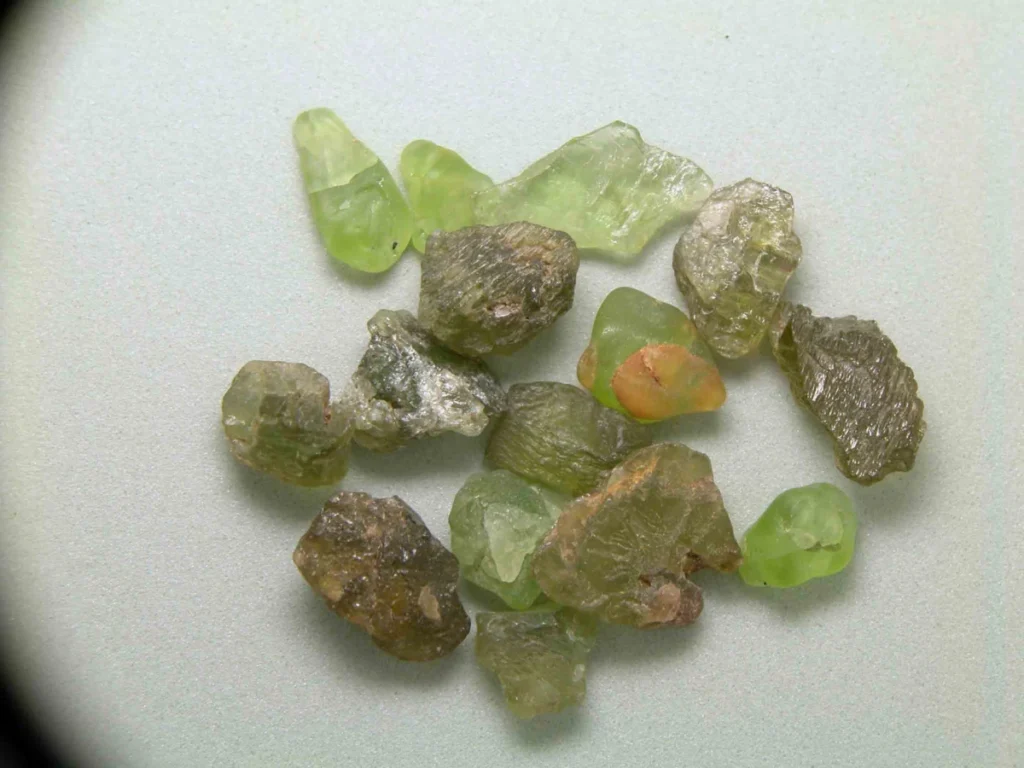
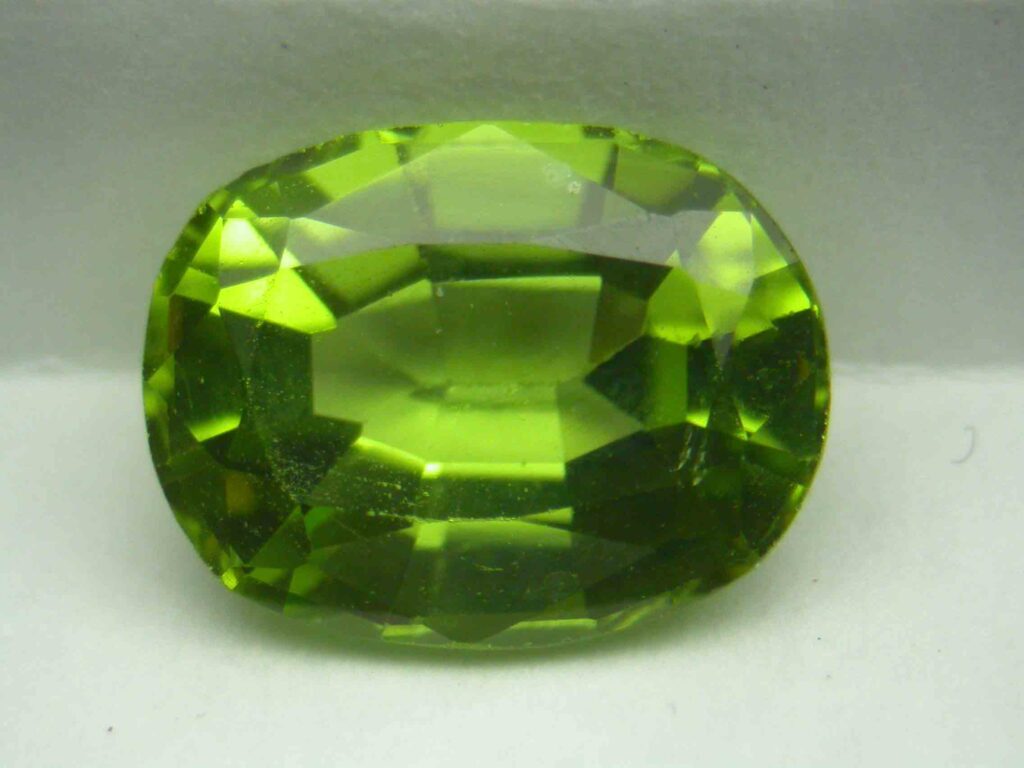
Peridot, a variety of the mineral olivine, is primarily known for its striking green coloration. While it can occasionally exhibit brown or yellow tones, it is the gem-quality stones, almost universally green, that have captured the admiration of gem enthusiasts for millennia. This distinctive color is a direct consequence of its chemical composition: a magnesium silicate with a small percentage of iron. It is this iron content, meticulously integrated into the crystal lattice, that imbues peridot with its characteristic green radiance. Furthermore, trace elements such as nickel and chromium, abundant in the mantle rocks where most gem-quality peridot originates, are believed to play a role in subtly modifying and enhancing these green hues, adding layers of complexity to its visual appeal.
The spectrum of peridot’s green can range from a pale, almost lime green to a deep, olive-like shade, and sometimes even a yellowish-green reminiscent of spring foliage. This variability, while subtle, adds to its unique charm. The brilliance and clarity of peridot are also key factors in its desirability. High-quality peridot stones are often characterized by good transparency, allowing light to refract and reflect within their facets, creating a lively sparkle. The presence of certain inclusions, which we will explore later, can sometimes affect this transparency, leading to the "oily" description.
A Chronicle of the Gemstone: From Ancient Isles to Modern Mines
The history of peridot is as rich and enduring as its color. Its discovery is traced back to classical antiquity, with the isle of Zabargad in the Red Sea emerging as its primary source for centuries. This remote island, often referred to as the "Island of Emeralds" in ancient texts (though it yielded peridot, not emeralds), was the exclusive supplier of this gemstone until well into the 20th century. The allure of peridot from Zabargad was such that it adorned the regalia of pharaohs and was a prized possession in ancient civilizations.
Beyond the Red Sea, other significant sources have contributed to the global supply of peridot. Burma (modern-day Myanmar) has also been a historical producer of large, fine-quality stones. In more recent times, the United States, particularly Arizona, has become a prominent source, with deposits yielding peridot of exceptional clarity and color. Norway, Pakistan, and more recently, China, have also emerged as important producers, with substantial deposits now supplying the international jewelry trade with fine peridot.
The geological journey of peridot is intrinsically linked to the Earth’s fiery origins. Gem-quality peridot typically forms deep within the Earth’s mantle, a realm of intense heat and pressure. It is brought to the surface through violent volcanic activity, either within the ejected volcanic rocks themselves or, more commonly, within large masses of peridotites. These peridotite intrusions, often formed through deformation and recrystallization of mantle material, are the crucibles where peridot takes shape. This deep-seated origin story lends peridot an ancient and elemental quality, connecting it to the very heart of our planet.
The Geological Foundation: Peridotites and the Olive’s Legacy
The term "peridotite" itself provides a crucial clue to understanding the gemstone’s name and its associated color. Peridotites are ultramafic igneous rocks composed predominantly of the mineral olivine. The mineral olivine was named after the olive tree, specifically for its characteristic yellowish-green hue. Over time, this visual resemblance extended beyond the fruit itself to the oil pressed from it. Olive oil, a staple and culturally significant product, became a common point of reference for describing colors.
Therefore, the "oily green" descriptor for peridot is not merely a whimsical observation but a historical echo of this ancient comparison. The color of olive oil, while predominantly yellow, often carries a distinct greenish tinge, a shade that resonated with the natural hue of peridot. However, it is important to note that while olive oil can be a reference, gem-quality peridot is almost invariably a more pronounced and vibrant green, often lacking the strong yellow tones that dominate pure olive oil. This subtle distinction highlights the unique vibrancy of peridot itself.

The formation of peridot within peridotites is a testament to the complex geological processes that shape our planet. These rocks are brought to the surface through processes like mantle plumes and tectonic uplift, bringing with them the treasures of the deep Earth. The presence of these geological formations is key to understanding the distribution and accessibility of peridot deposits worldwide.
Deconstructing "Oily": Unpacking Peridot’s Unique Optical Properties
The association of the word "oily" with gemstones can, for some, carry negative connotations, often linked to artificial treatments. However, in the context of peridot, this is a misapprehension. Peridot is highly valued precisely because it is one of the few gem materials that are almost never treated to enhance their color or clarity. The "oily" description is, in fact, a descriptor of its natural optical characteristics, rather than a sign of artificial enhancement.
So, what does "oily" truly signify when applied to peridot? It often refers to a phenomenon known as a "sleepy" appearance. This can manifest in a few ways:
- Sub-microscopic Inclusions: Peridot can contain minute, almost invisible inclusions that are scattered throughout the gemstone. These sub-microscopic particles can diffuse light as it passes through the stone, leading to a slightly reduced transparency and a softer, less sharp brilliance. This scattering of light can contribute to a perceived "oily" sheen.
- Doubling of Facet Edges: Peridot possesses a relatively high refractive index and birefringence, meaning it can exhibit a noticeable doubling of facet edges when viewed from certain angles. This phenomenon, known as double refraction, can cause pavilion facet edges to appear blurred or indistinct, again contributing to a less crisp visual effect and potentially evoking the "oily" descriptor.
- Internal Light Scattering: In some instances, the internal structure of peridot, including the arrangement of its crystal lattice and the presence of microscopic imperfections, can lead to the scattering of light within the stone. This internal diffusion can create a softer, more diffused glow, reminiscent of the way light interacts with oil.
While these optical characteristics might be perceived as detracting from a stone’s sparkle by some, they are an integral part of peridot’s natural beauty. In fact, a certain degree of light scattering can be beneficial. It can help to illuminate parts of a faceted stone that might otherwise appear dark, even in well-proportioned and polished gems. This can create a unique depth and internal glow, adding to peridot’s distinctive appeal. The presence of specific inclusions, such as the lily pad inclusion (a fluid-filled cavity with a characteristic shape) or biotite inclusions, while visible, are also natural features that contribute to the stone’s individual character and can be indicative of its origin. These inclusions, when properly understood, do not necessarily detract from the stone’s beauty but rather add to its story.

The Uniqueness of Peridot: A Singular Gemstone
In the vast world of gemstones, many commercially significant species boast a wide array of colors, optical effects, and numerous named varieties. Peridot, however, stands apart in its singularity. It is essentially a gemstone defined by its singular, captivating green color and its consistently good transparency. This consistency, coupled with its pleasing hues, has made it a favorite among jewelry designers, artisans, and their discerning clientele for thousands of years.
The current supply situation for peridot is generally favorable, with regular availability of fine gem material. This accessibility, combined with its inherent beauty, allows peridot to be offered at moderate price points, making it an attractive option for a wide range of jewelry. While the largest and most exceptional specimens can command prices in the thousands of pounds, the accessibility of peridot at more affordable levels ensures its continued popularity.
The enduring appeal of peridot lies in its straightforward beauty and its deep historical roots. It is a gemstone that connects us to the Earth’s ancient past, a testament to the transformative power of geological processes, and a reminder of the simple, yet profound, beauty found in nature. Its "oily green" allure is not a flaw but a signature, a unique characteristic that has captivated hearts and minds for millennia, and will undoubtedly continue to do so for generations to come.
For those eager to delve deeper into the fascinating world of peridot and other commercially significant gemstones, Gem-A offers comprehensive educational resources. The online-only course, GemIntro, provides an accessible introduction to gemmology, while the Gemmology Foundation program serves as an ideal pathway for aspiring gemologists and those seeking to launch a career in the gem and jewelry industry. These programs offer the knowledge and expertise to appreciate the intricacies and unique stories behind gemstones like peridot.