

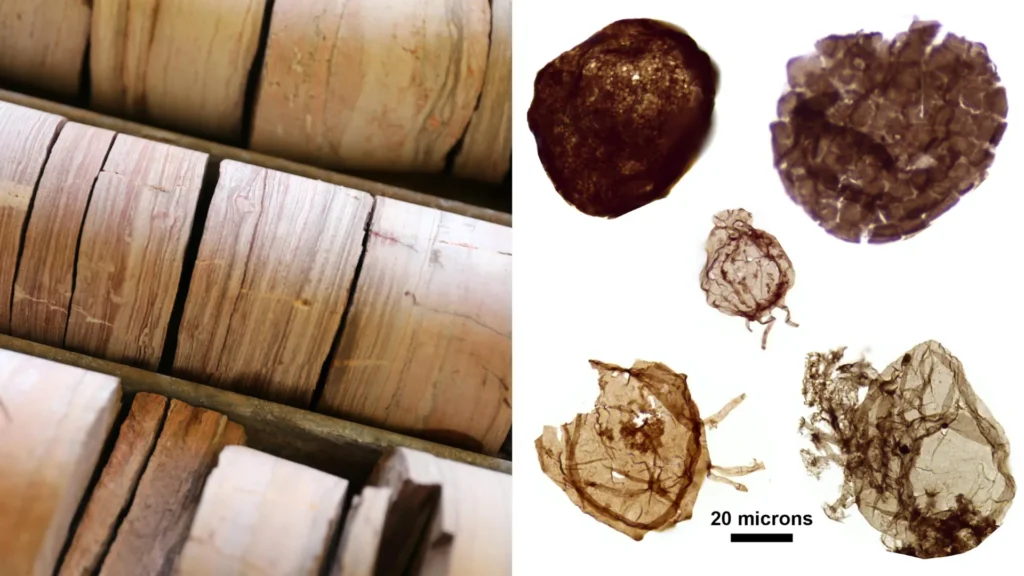
In a nondescript, open-air warehouse in tropical Darwin, Australia, thousands of dusty trays hold the key to one of the most profound mysteries in biological history. These trays contain cylindrical rock cores, extracted from deep beneath the surface by mineral exploration companies decades ago. To the mining engineers who drilled them, these stones were mere geological indicators. To the modern scientific community, however, they represent a literal time capsule containing the oldest evidence of complex life on Earth.
Within these layers of ancient mudstone, preserved for over 1.5 billion years, lie the fossils of microscopic organisms that represent the "eukaryotic revolution." A new study published in Nature has utilized these samples to address a fundamental question that has puzzled evolutionary biologists for generations: Was the emergence of complex life fueled by the presence of oxygen, or did it arise in the harsh, oxygen-deprived conditions of an ancient world?
The Great Divide: Prokaryotes vs. Eukaryotes
To understand the magnitude of this discovery, one must first grasp the foundational divide in the biological world. All life on Earth falls into two distinct categories based on cellular architecture. On one side are the prokaryotes—the bacteria and archaea. These organisms are defined by their simplicity; they are mostly single-celled and lack the complex internal machinery required for high-energy operations.
On the other side are the eukaryotes, the lineage that includes every animal, plant, fungus, and alga on the planet. Eukaryotic cells are the architects of complexity. Unlike their prokaryotic counterparts, they possess a defined nucleus—a "control center" for genetic material—and an array of specialized organelles, such as mitochondria, which act as power plants.
The transition from simple prokaryotic life to complex eukaryotic life was not merely an incremental change; it was a total transformation of the planet’s biological potential. It is widely accepted in the scientific community that this leap occurred through a symbiotic union, where an archaeon and a bacterium merged, effectively creating a "super-cell" capable of far greater metabolic output. However, the exact environmental context of this union—and whether it required an oxygen-rich atmosphere to thrive—has remained a subject of intense debate.
A Chronology of Discovery: From Mudflats to Deep Time
The search for the origins of complex life has long been hampered by the scarcity of the fossil record. Because these early organisms were soft-bodied and microscopic, they rarely survived the pressures of geological time.
The Northern Territory Geological Survey (NTGS) in Australia has become the global epicenter for this research. The fossils found within their archives are not just significant for their diversity; they are the oldest of their kind. While eukaryote fossils have been identified globally in rocks dating back 1.5 billion years, the Australian samples push this timeline back even further, with some specimens dating back 1.75 billion years.
The Geological Window
- 1.75 Billion Years Ago: The earliest known eukaryotes appear in the fossil record, coinciding with a period of massive environmental shift.
- 1.7–1.4 Billion Years Ago: The period analyzed in the current Nature study. During this era, northern Australia was covered by an ancient inland sea, a shallow, nutrient-rich environment that provided a laboratory for early evolution.
- The Modern Era: Mineral exploration companies extract cores, unwittingly preserving the fossilized remains for future analysis.
- 2026: Researchers apply advanced dissolution techniques to these cores, uncovering over 12,000 individual microfossils, providing the statistical power needed to correlate biological complexity with environmental chemistry.
Supporting Data: The Case for Oxygen
The core of the recent study involved a rigorous process of chemical and biological analysis. Researchers took samples of mudstone from the Darwin archives, crushed them, and dissolved the mineral matrix to isolate the organic matter. Under high-powered microscopy, they identified over 12,000 distinct fossils, each representing a tiny, complex life form from a bygone era.
The crucial breakthrough, however, was the pairing of these biological findings with geochemical analysis of the surrounding rock. By examining the chemical signatures within the mudstones, the team could determine the oxygen levels of the ancient seawater at the time the sediment was deposited.
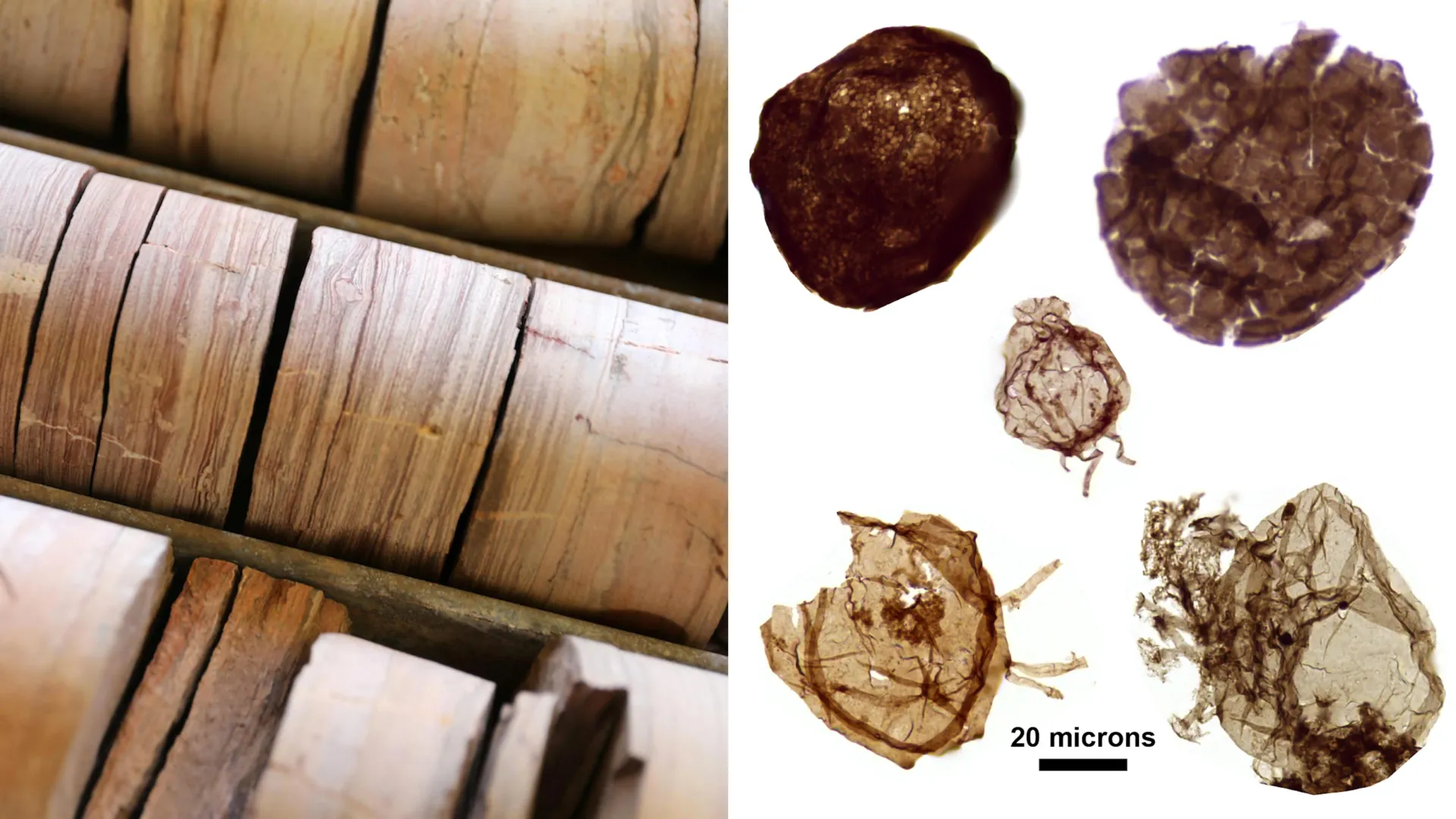
The results were stark and unambiguous. The fossils were found in a wide variety of environments, from coastal mudflats to deeper, open-sea settings. However, they appeared only in samples where there was clear evidence of oxygen. Conversely, samples taken from oxygen-free, or "anoxic," environments were completely devoid of these complex eukaryotes, containing only simple, prokaryotic life forms.
This data directly challenges the growing trend of "anoxic-origin" theories, which have gained traction following the discovery of modern eukaryotes that can survive in low-oxygen conditions. While those modern outliers are fascinating, the fossil record suggests that for the foundational evolution of eukaryotes, oxygen was not merely an option—it was a prerequisite. The massive energy demands of a nucleus and complex organelles necessitated the efficient fuel that only oxygen-based respiration could provide.
Official Responses and Scientific Context
The publication of these findings has sparked significant discourse within the astrobiology and evolutionary biology communities. Dr. [Name/Lead Researcher], who spearheaded the study, noted that the correlation between oxygen levels and eukaryotic presence is "the strongest evidence we have yet that oxygen acted as the primary catalyst for the eukaryotic revolution."
Critics and peers alike have praised the scale of the study. By identifying over 12,000 fossils, the researchers avoided the pitfalls of "small-sample bias," which has plagued previous investigations into the Proterozoic fossil record. The study also aligns with long-held hypotheses—specifically the work of early pioneers who argued that without the "oxygen revolution," life would have remained forever locked in the simple, single-celled state of the prokaryotic world.
However, the study also leaves room for further inquiry. Researchers are now looking to see if there were "pockets" of evolution in more extreme, oxygen-poor environments that simply left no fossil record. As one geologist noted, "The absence of evidence is not evidence of absence, but with 12,000 samples, the pattern is becoming impossible to ignore."
Implications: The Origins of Us
The implications of this study extend far beyond the history of microbes. By defining the environmental conditions required for complex life, researchers are better equipped to model the development of life on other planets. If oxygen is indeed the critical "switch" that turns on complexity, then the search for life in the cosmos must prioritize planets with oxygen-rich atmospheres.
Furthermore, this study reshapes our understanding of our own lineage. Every human being, every tree, and every organism visible to the naked eye is a direct descendant of those tiny, oxygen-dependent cells that thrived in the shallow seas of ancient Australia. We are the beneficiaries of an evolutionary gamble that began 1.7 billion years ago, when the atmosphere finally allowed for the metabolic "luxury" of complex cellular structures.
As the team continues to analyze the vast archives at the Northern Territory Geological Survey, they expect to find even more variations of these ancient organisms. Each new fossil is a data point in a grand narrative, helping to bridge the gap between the chaotic, simple chemistry of the early Earth and the vibrant, complex biosphere we inhabit today.
In the quiet, hot air of a Darwin warehouse, the rocks are finally speaking. They tell a story of a world that waited for the right chemistry to ignite the spark of complexity, and in doing so, they provide a clearer picture of our own improbable origins in the vast, cosmic timeline.
Key Takeaways for Future Research
- Oxygen Dependency: The study confirms that early eukaryotic evolution was intrinsically linked to the oxygenation of the oceans.
- Statistical Robustness: The use of 12,000+ fossils provides a high-confidence dataset that minimizes the impact of potential sampling errors.
- Future Exploration: The Northern Territory Geological Survey’s collection remains a critical asset for global science, proving that mining archives are invaluable resources for evolutionary research.
- Astrobiological Significance: Understanding the "oxygen threshold" for life provides a target for future exoplanet atmospheric studies.



