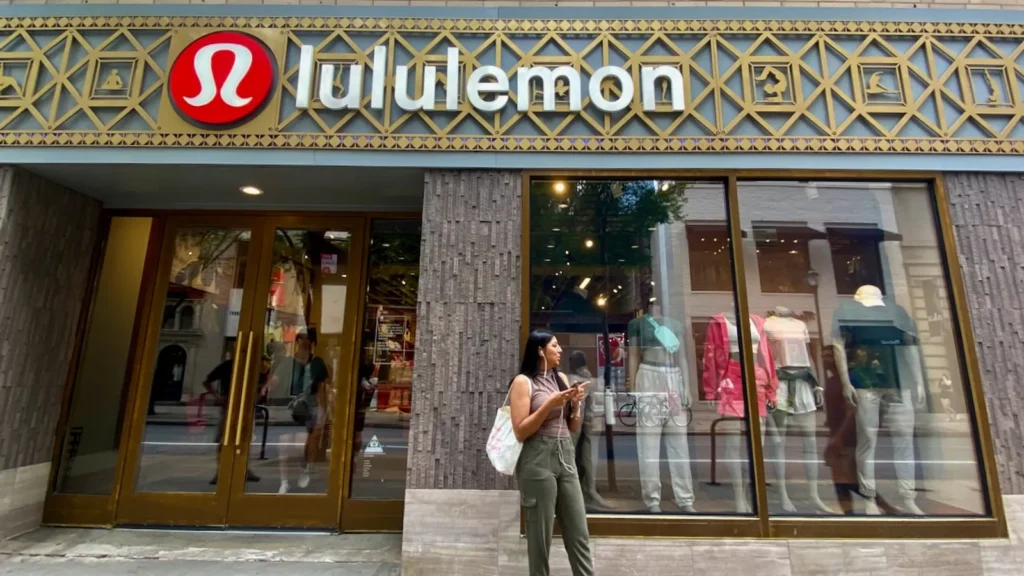
As Lululemon Athletica prepares for a leadership transition next week, the iconic athleisure giant finds itself navigating its most precarious period in recent memory. With its core product lines faltering, revenue guidance slashed for the second time this year, and consumer sentiment shifting, the company is staring down a daunting reality. Incoming CEO Heidi O’Neill, a seasoned veteran of the retail industry with three decades of experience at Nike, is stepping into an environment far more volatile than the one she expected when she accepted the role.
The State of Play: A Retailer in Retreat
The latest fiscal reports from Lululemon paint a stark picture of a brand struggling to maintain its premium status in a cooling market. Perhaps the most alarming metric to emerge from the second quarter is a 20% decline in sales of the company’s flagship product: its leggings.
For years, Lululemon’s high-margin, high-performance leggings have been the bedrock of its success, representing approximately one-third of total revenue. A double-digit drop in this segment is not merely a seasonal fluctuation; it is a signal that the broader "athleisure" trend, which turned Lululemon into a global powerhouse, may be facing a structural correction.
"We did a double take when Lululemon called out that leggings were down 20% in the second quarter," noted Laurent Vasilescu, lead analyst at BNP Paribas. His assessment, shared in a research note, suggests that the decline may not be a temporary dip, but rather the beginning of a multi-year trend as consumer preferences rotate toward new aesthetic categories and away from the ubiquitous legging-centric wardrobe.
Chronology of a Slowdown
The current crisis did not materialize overnight. The company’s trajectory has been under pressure for several quarters, marked by a series of downward revisions to its financial expectations.
- March 2026: Lululemon initially projected a revenue gain of 2% to 4% for the year, signaling confidence that the brand could withstand broader macroeconomic headwinds.
- June 2026: The optimism of early spring proved short-lived. By June, the company was forced to lower its guidance, moving from growth expectations to a projected revenue decline of up to 1%.
- September 2026: The situation reached a new nadir. During the latest earnings call, Chief Financial Officer Meghan Frank, currently serving as interim co-CEO, confirmed that the company now expects annual net revenue to fall by as much as 7%, landing between $10.35 billion and $10.5 billion.
- Q3 2026 Outlook: Looking ahead, the company anticipates a difficult third quarter, with revenue expected to contract by 10% to 11%.
This downward spiral has been characterized by "inconsistent" responses to new product launches. Despite efforts to refresh its inventory and clear out legacy SKUs, Lululemon has struggled to capture the same consumer excitement that defined its pandemic-era boom.
Supporting Data: Where the Pressure Points Lie
The challenges facing Lululemon are geographically broad and operationally deep. CFO Meghan Frank noted that the brand is under significant pressure in its two largest markets: the Americas and China.
The decline in traffic is compounded by a bloated cost base and an inventory strategy that has yet to yield results. Analysts at Jefferies, led by Randal Konik, have pointed to a "negative traffic" trend that is difficult to reverse in the current retail climate. The decision to scale back physical expansion—dropping plans from 40 new store openings to 35—is a tacit admission that the aggressive growth strategy of the past may be unsustainable in the present.
Furthermore, the lack of clarity regarding the 2027 fiscal year—with guidance not expected until March—has created a vacuum of information that is fueling uncertainty among investors. As noted by analysts at William Blair, the leadership transition itself, while necessary, adds a layer of complexity as the market waits to see how the new executive team will pivot.
Official Responses and Strategic Missteps
Lululemon’s leadership has acknowledged the friction in its current business model. Meghan Frank’s commentary during the most recent earnings call was candid, noting that while certain "activations" and specific new styles have seen success, the overall performance of new product launches has been underwhelming.

The company is currently in a "wait and see" mode, awaiting the arrival of Heidi O’Neill. O’Neill, who spent 30 years at Nike, is viewed as a heavy hitter capable of operational discipline, but she is entering the office at a moment of profound weakness.
"When Heidi O’Neill finally takes the helm next week, she will be in the unenviable position of leading a company that is in a worse position than when she accepted the job," says Sky Canaves, a principal analyst at Emarketer.
The consensus among industry experts is that the "turnaround" will be a marathon, not a sprint. The company has attempted to address its product issues by refining its color palettes and focusing on core merchandise, but these steps have thus far failed to stem the tide of falling sales.
Implications for the Future: What Must Change?
The path forward for O’Neill is expected to involve a significant restructuring of priorities. Several analysts have outlined a "must-do" list for the incoming CEO, which includes:
1. Re-evaluating Physical Footprint
Analysts at Jefferies have explicitly called for a pause on brick-and-mortar expansion. In a market where digital traffic is volatile and in-store conversion rates are pressured, prioritizing the optimization of existing locations over the opening of new ones is considered a prudent, if painful, necessity.

2. Streamlining the Product Portfolio
The "inconsistent" response to new product launches suggests that Lululemon may have strayed too far from the core products that established its reputation. There is a strong call for the brand to return to its roots—making the "color palette normal again" and focusing on the high-quality, reliable merchandise that built its original loyal customer base.
3. Tightening Costs and Culture
The company faces a dual-pronged challenge of a bloated cost structure and internal cultural concerns. O’Neill is expected to face immediate pressure to cut costs to protect margins while simultaneously addressing the morale and direction of the company’s workforce.
4. Reclaiming the Americas and China
With its two largest markets underperforming, Lululemon cannot afford a half-measure approach. Reinvigorating growth in the Americas requires a better understanding of the current "post-athleisure" consumer, while the situation in China requires a delicate balance between maintaining brand prestige and navigating local economic pressures.
The Bottom Line
Lululemon is at a definitive inflection point. The brand that redefined casual wear for a generation is now being forced to confront the reality that its dominance in the leggings market is waning. As Heidi O’Neill prepares to take the reins, the stakes could not be higher. She inherits a brand with a strong legacy but a fragile present. Whether she can pivot the company back toward sustainable, profitable growth, or whether this is the start of a long-term contraction, remains the most pressing question in the retail sector today.
The market will be watching closely for her first strategic address. For now, Lululemon must manage the immediate fallout of its Q3 guidance, stabilize its core inventory, and hope that the transition to new leadership provides the spark needed to reignite a stalled engine.