By Financial News Desk
Honey Badger Silver Inc. [TSXV: TUF; OTCQB: HBEIF] has officially detailed the scope and strategic objectives of its 2026 field exploration program at the 100%-owned Nanisivik Project on Baffin Island, Nunavut. As the company continues to leverage its extensive portfolio of northern Canadian assets, the Nanisivik property—a former high-grade zinc-lead-silver producer—is undergoing a profound re-evaluation. By shifting the focus from traditional base metal extraction to a more nuanced exploration of high-value critical minerals and industrial-grade sulphur, Honey Badger is positioning itself at the nexus of the modern energy transition.
The Strategic Shift: Beyond Traditional Mining
The 2026 exploration program represents more than a routine field assessment; it is a fundamental pivot in how the company views the asset. For decades, the Nanisivik mine was viewed strictly through the lens of zinc and lead production. However, Honey Badger’s management believes that the massive sulphide systems present on the property contain untapped wealth in the form of germanium and industrial-grade sulphur.
Chad Williams, Executive Chairman and Interim CEO, emphasized that the current global economic environment necessitates a fresh look at legacy projects. "Our focus for the 2026 on-site work at Nanisivik was to substantiate the potential of this project to host economic zones of silver-bearing mineralization," Williams noted. "Importantly, mineralization at Nanisivik is known to contain zinc, lead, and potentially many other critical minerals."
Williams highlighted that the rise in the price of sulphur and the critical strategic importance of germanium have fundamentally changed the project’s economics. "These minerals were never considered important during the many years that Nanisivik operated as an underground mine. In summary, Nanisivik contains many promising zones located throughout the large project area controlled by Honey Badger."
Chronology: From Historic Production to Modern Exploration
To understand the significance of the 2026 program, one must look at the historical timeline of the Nanisivik site:
- 1976–2002: The Nanisivik Mine operates as a major industrial hub in the Arctic. It produces approximately 17.9 million tonnes of ore, yielding 3.55 billion pounds of zinc, 284 million pounds of lead, and 20.1 million ounces of silver. The mine eventually ceases operations due to a protracted decline in global metal prices.
- 2025: Honey Badger Silver conducts a successful preliminary exploration program, identifying the potential for massive-pyrite mineralization and confirming the existence of high-grade silver-zinc-lead targets outside the historic mine footprint.
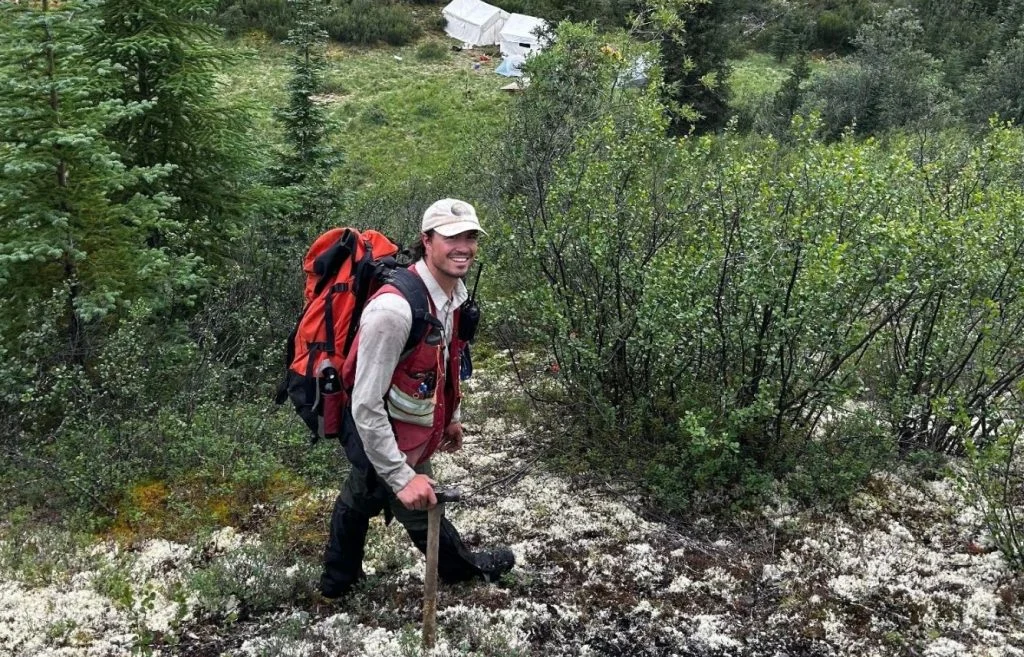
- 2026 (Q3): The company executes its comprehensive 2026 field program. Managed by APEX Geoscience, the team conducts widespread sampling of float and outcrop across the property to characterize the sulphide system using modern analytical techniques.
- Late 2026/2027: The company initiates the integration of new assay data with legacy geophysical and geochemical records, setting the stage for potential follow-up drilling.
Supporting Data: The Scale of the Opportunity
The allure of Nanisivik lies in its sheer scale. While the primary mine provided significant output for 26 years, historical documentation suggests the presence of massive pyrite zones that were largely ignored during the mine’s primary operating life.
The Sulphur Potential
Historical publications, including reports by McNeil et al. (1993), indicate the presence of 50 to 100 million tonnes of massive pyrite mineralization within the South Boundary and North Pyrite zones. While Honey Badger cautions that these figures are historical and not yet compliant with modern NI 43-101 standards, they underscore a massive industrial opportunity. With the rising demand for sulphur in global agriculture and industrial chemical processes, the potential to monetize this massive-pyrite system adds a significant layer of value to the project.
Critical Minerals: The Germanium Factor
Perhaps the most intriguing aspect of the current exploration is the focus on germanium. As a critical semiconductor material, germanium has seen its strategic value soar. Because past mining operations at Nanisivik did not systematically assay for germanium, the full extent of this resource remains an open question—one that Honey Badger is now systematically addressing through modern multi-element geochemical analysis.
High-Grade Polymetallic Targets
Beyond the bulk-tonnage potential of the pyrite zones, the company is also aggressively pursuing high-grade targets. Prospecting at the "Area 14" target has returned grab samples with grades as high as 249 g/t silver and 51.5% zinc. These figures provide a compelling rationale for further investment, proving that the district remains highly prospective for high-grade discoveries outside of the depleted mine workings.
Official Responses and Technical Rigor
The 2026 field team, directed by APEX Geoscience and overseen by Honey Badger Silver, employed strict chain-of-custody protocols to ensure the integrity of the samples. These samples have been submitted to an independent, accredited laboratory. The company expects the resulting data to be the catalyst for the next phase of development.
In a move demonstrating transparency, the company also issued a formal correction regarding its August 27, 2026, disclosure. A previous report incorrectly stated the gold grade for drill hole DH Y-74-01 at the Yava Main Zone as 0.54% gold, when it should have been 0.54 g/t. By proactively addressing this clerical error, the company maintains its commitment to rigorous reporting standards, which is essential for institutional investor confidence.
Implications: A New Era for Honey Badger
The implications of the Nanisivik program extend beyond the immediate results. Honey Badger Silver is positioning itself not merely as a silver company, but as a diversified player in the critical minerals space.
Synergy with Existing Portfolio
With a portfolio that includes the PC Silver Mine, Sunrise Lake, and the Yava property, Honey Badger is effectively creating a "district-scale" footprint in the North. The ability to hold physical silver—10,000 ounces yielding 12% annually—provides a financial buffer that allows the company to remain aggressive in its exploration strategy while other juniors might be forced to conserve cash.
Future Development Paths
The integration of new assays with historical data will guide the next 12 to 24 months. The company has indicated that upon receipt of the analytical results, it will:
- Refine its geological models of the Nanisivik system.
- Assess the necessity for metallurgical testing, particularly concerning the recovery of germanium.
- Plan follow-up drilling to confirm the continuity of the pyrite zones and the high-grade polymetallic targets identified at Area 14.
Conclusion: The "Fresh Lens" Strategy
The Nanisivik project is a testament to the adage that "old mines are the best places to find new ones." By applying 21st-century technology and a 21st-century commodity focus to a 20th-century mine, Honey Badger Silver is attempting to unlock value that was previously invisible.
Whether it is the vast, industrial-scale potential of the pyrite zones or the high-grade, surgical potential of the silver-zinc-lead targets, the 2026 field program serves as a critical milestone. As the company awaits its assay results, the investment community will be watching closely to see if the "fresh lens" applied by Honey Badger can indeed turn a legacy mine into the next cornerstone of the Canadian critical minerals industry.
Disclaimer: This article is for informational purposes only and does not constitute financial advice. Investors are encouraged to conduct their own due diligence and consult with professional advisors before making any investment decisions. The historical estimates mentioned herein are not currently NI 43-101 compliant and should not be relied upon as mineral resources.