Today, the automotive world is holding its collective breath in Austin, Texas. In what is being billed as a transformative event, Tesla is officially launching its “Cybercab”—a radical, purpose-built, two-seater vehicle that lacks both a steering wheel and pedals. Relying entirely on artificial intelligence and a suite of high-definition cameras to navigate the complexities of urban traffic, the Cybercab represents more than just a new product; it is the physical manifestation of Elon Musk’s decade-long quest to transition Tesla from a car manufacturer into an AI and robotics juggernaut.
Whether this launch represents a monumental leap forward for urban transportation or a cautionary tale about over-promising remains the central question of the day.
A Vision Defined: The Anatomy of the Cybercab
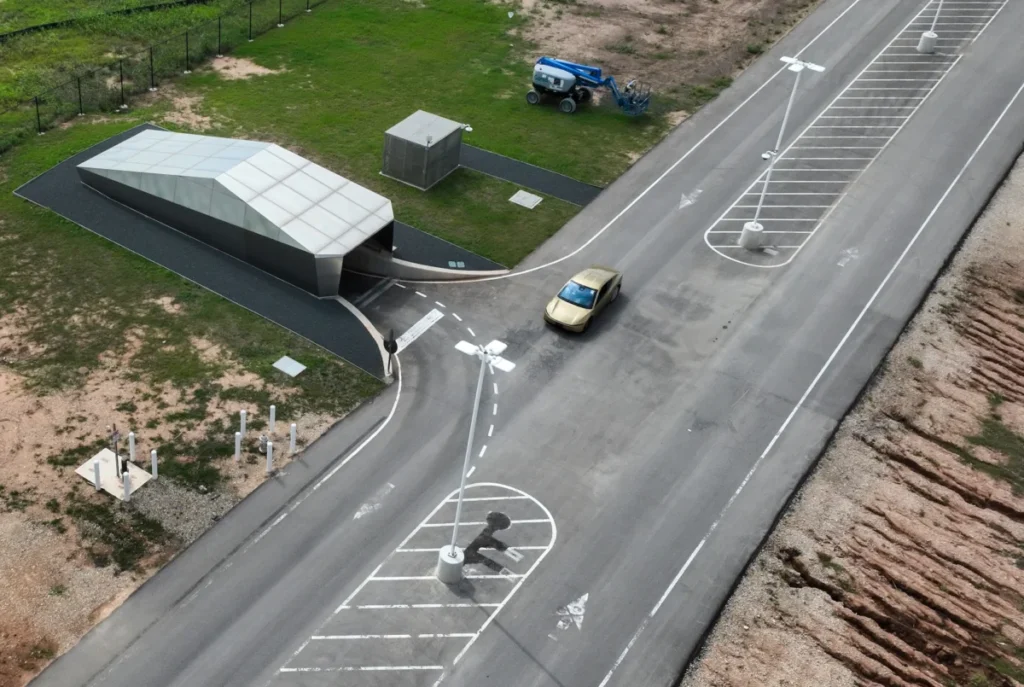
The Cybercab is a striking departure from the traditional Tesla lineup. Small, finished in a distinctive gold, and devoid of the manual controls that have defined human transportation for over a century, the vehicle is designed specifically for the robotaxi economy.
Under the hood—or rather, within its streamlined chassis—lies a philosophy of extreme cost-efficiency. By utilizing a smaller, lighter frame and a lower-capacity battery pack, Tesla has engineered a vehicle that is significantly cheaper to produce than the Model 3 or Model Y. For Tesla, this is the key to scalability. The company’s internal calculus suggests that if the cost of the vehicle is slashed, the path to a profitable, autonomous ride-hailing network becomes significantly shorter.
A Chronology of Ambition and Adjustment
To understand the weight of today’s launch, one must look back at the long, winding road that led here.
The 2016 Promise
In 2016, Elon Musk made a declaration that would haunt his engineering teams for years: he claimed that every Tesla then in production possessed the necessary hardware to achieve full autonomy. He suggested that, eventually, these cars would simply receive an “over-the-air” software update that would turn them into self-driving vehicles.
The Hardware Reality Check
As the years passed, that promise proved overly optimistic. Tesla was forced to iterate its hardware suite multiple times, and Musk eventually walked back the assertion, admitting that millions of older vehicles would require significant retrofits to achieve true autonomy.
The Pivot to “Balls to the Wall”
By early 2024, the strategy shifted. Recognizing that the path to autonomy required a specialized vehicle rather than a repurposed consumer sedan, Musk steered the company toward the Cybercab. In a move that signaled his singular focus, he authorized massive layoffs across the organization, describing the pivot as going “balls to the wall for autonomy.” To Musk, any vehicle that requires a human driver is merely a “variation on a horse carriage.”

The Pilot Programs
Last June, the company began testing its Robotaxi program in Austin using modified Model Y SUVs. Initially, these vehicles were supervised by human employees who could intervene in the event of a system error. While the program has seen some operational success, it has not been without its hurdles. Tesla has documented dozens of minor incidents, ranging from collisions with stationary objects to instances where remote teleoperators had to step in. In July 2025, data revealed that the network’s growth in paid miles was, at times, moving in reverse—a stark contrast to the exponential scaling investors were hoping for.
The Data: Scaling the Robotaxi War
The competition in the autonomous space is fierce, with companies like Waymo—backed by Alphabet—already operating thousands of vehicles in major cities.
Tesla’s proponents argue that the company has a distinct advantage: cost. They point to the fact that Tesla can manufacture dozens of Cybercabs for the price it costs competitors to outfit a single luxury van with expensive LiDAR and radar sensors. In the eyes of Tesla’s most fervent supporters, the robotaxi war is not a battle of technology, but a battle of production efficiency.
However, the raw numbers tell a more nuanced story. According to the state of Texas’s automated vehicle tracker, there are 420 autonomous vehicles currently registered, highlighting the growing, yet still localized, nature of these fleets.
The Geofencing Paradox
Despite the enthusiasm, Tesla’s operations remain confined to geofenced areas. This is a critical point of contention. Musk himself once famously stated, “If you need a geofenced area, you don’t have real self-driving.” Yet, for now, that is exactly how Tesla is operating. Scaling this to a national, or even city-wide, level without the safety net of a geofence remains the industry’s “holy grail”—and its greatest challenge.
Official Rhetoric and the “Storm of Cybercabs”
The messaging leading up to today’s event has been notably different from Tesla’s previous, cautious public relations. In the past, executives emphasized safety and the incremental nature of their “Full Self-Driving (Supervised)” software. Today, the tone is aggressive and grandiose.
Ashok Elluswamy, Tesla’s head of AI, recently took to X to declare that “the streets won’t be the same anymore.” When a follower suggested that Tesla was about to “flood Austin,” Musk responded with a simple, emphatic “Yes.”
The imagery has followed suit. Musk recently shared an AI-generated photo of a massive, swirling dust storm composed entirely of Cybercabs engulfing the city, captioned “A Storm of Cybercabs.” This shift from “slow and safe” to “disruptive and inevitable” signals that the company is no longer interested in managing expectations; it is attempting to manufacture a turning point.

The Implications: A Fork in the Road
Musk is fond of the metaphor of the “fork in the road.” It is a concept he has used to justify radical corporate shifts, from his takeover of Twitter to his tenure at the Department of Government Efficiency (DOGE). He is so committed to the imagery that he once commissioned a 30-foot-tall sculpture of a literal fork on a road for the Burning Man festival, which now resides at a Tesla office.
Today, that fork has arrived for Tesla.
The Bull Case: The AI Transformation
If the Cybercab launch is successful, it serves as the first tangible proof that Tesla has evolved. It would validate the company’s decision to prioritize AI and robotics over traditional automotive manufacturing. It would suggest that the massive capital investment, the hardware pivots, and the high-stakes layoffs were not just reckless gambles, but the necessary birth pangs of a new industry leader.
The Bear Case: The Automaker Trap
Conversely, if the launch fails to deliver, or if the Cybercabs prove unable to navigate the unpredictability of public roads without constant human supervision, the company faces a reckoning. It would reveal that, despite the AI branding and the futuristic designs, Tesla remains, at its core, an automaker—vulnerable to the same manufacturing, regulatory, and safety hurdles as its legacy competitors.
Challenges Ahead: Visibility and Reliability
One of the most significant challenges for the Cybercab is the “visibility factor.” When Tesla used Model Ys for its pilot program, the cars blended into the scenery. The public was largely unaware of which vehicles were autonomous and which were being driven by human owners.
The Cybercab is designed to be impossible to ignore. Its unique, gold-hued design ensures that every movement, every hesitation, and every potential error will be highly visible to the public, regulators, and the media. If the software is not flawless, the company will no longer be able to hide behind the anonymity of a common SUV. Every mistake will be a public spectacle.
Conclusion
As the clock ticks down in Austin, the atmosphere is electric. Tesla has positioned the Cybercab as the ultimate disruptor. By betting the company’s future on this small, two-seater machine, Musk is effectively daring the world to keep up.
The success of this launch will be measured not by the glitz of the unveiling, but by the reliability of the fleet in the months to come. Will the Cybercabs truly "flood" the streets, or will they become another footnote in the history of over-ambitious technology? The answer will likely define the legacy of Tesla for the next decade. For now, the road remains open, and the fork is officially in front of us.