Introduction: The Integrity of Global Trade Under Siege
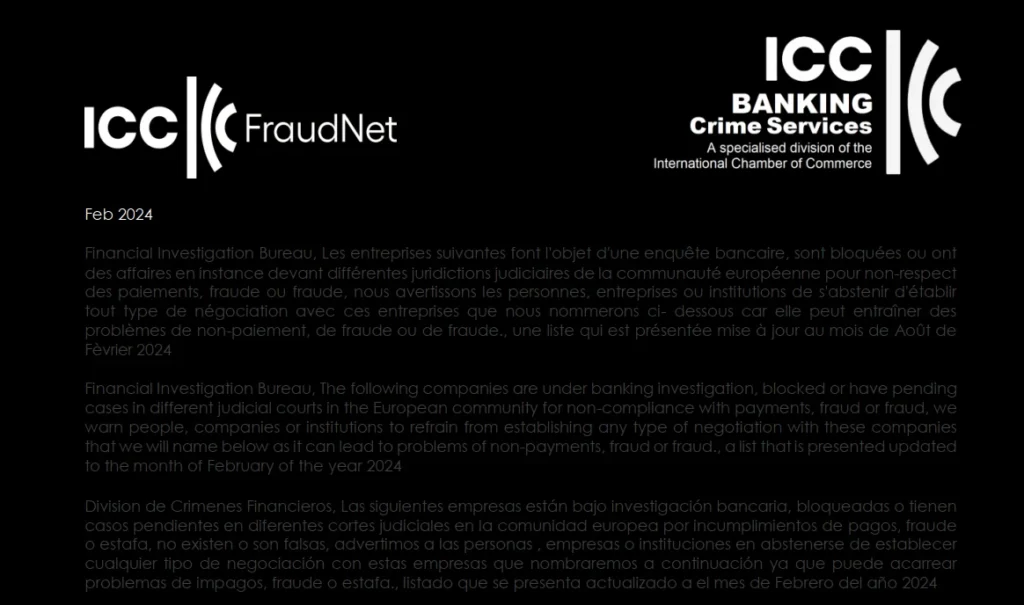
In the interconnected web of global commerce, reputation is the most valuable currency a company possesses. Recently, the International Chamber of Commerce – Commercial Crime Services (ICC-CCS) has been forced to confront a sophisticated disinformation campaign targeting businesses worldwide. Malicious actors have been circulating fraudulent "blacklists"—documents purportedly issued by the ICC-CCS—that contain the contact details of various individuals and companies.
These fabricated documents, which make unauthorized use of the ICC-CCS brand and branding, are designed to mislead stakeholders, erode trust, and inflict irreparable harm on the reputations of the entities listed. The ICC-CCS, a renowned authority in the fight against maritime fraud and commercial crime, has moved swiftly to categorize these lists as entirely baseless, warning the international business community that these documents are instruments of deception.
Chronology of the Disinformation Campaign
The emergence of these fraudulent documents has triggered an urgent internal review within the ICC-CCS. While the exact genesis of the campaign remains under investigation, the timeline of discovery suggests a coordinated effort to sow discord in specific industry sectors.
- Initial Discovery: ICC-CCS intelligence units first identified the presence of these "blacklists" following reports from industry partners who had been contacted by third parties citing the documents as evidence of "malpractice" or "regulatory non-compliance" by the listed companies.
- Verification Protocols: Upon receiving the first reports, the ICC-CCS initiated an immediate audit of its internal documentation and issuance protocols. The audit confirmed that no such lists had been generated, vetted, or distributed by any division within the organization.
- Public Awareness Campaign: Recognizing the potential for widespread damage, the ICC-CCS leadership decided to issue a formal warning to the global business community. This move was designed to stem the circulation of the documents before they could reach key decision-makers in finance and supply chain management.
- Ongoing Monitoring: Currently, the organization is working with digital forensic experts to track the source of the circulation and to notify relevant authorities regarding the unauthorized use of their branding and potential libelous activities.
Supporting Data: The Anatomy of the Fraud
The fraudulent lists represent a high level of sophistication in terms of presentation, if not in content. The perpetrators have leveraged the prestige of the ICC-CCS to lend an air of legitimacy to their claims. By using official-looking letterheads and mimicking the reporting styles of legitimate commercial crime bodies, the attackers have attempted to bypass the critical thinking of procurement officers and legal compliance departments.
The Role of Unauthorized Branding
The use of the ICC-CCS logo and branding is not merely a breach of copyright; it is a calculated attempt at "authority spoofing." By aligning themselves with the ICC-CCS—an organization known for its work with the International Hologram Manufacturers Association (IHMA) to protect against counterfeiting—the perpetrators are essentially using the industry’s own security tools against it.
Analyzing the "Content" of the Lists
Preliminary analysis of the seized documents reveals a common pattern:
- Arbitrary Grouping: The lists often include a mix of established, reputable companies and smaller, perhaps lesser-known entities, suggesting that the criteria for inclusion are either non-existent or based on personal vendettas rather than objective data.
- Lack of Justification: The lists frequently fail to provide specific, verifiable evidence for why a company has been "blacklisted," relying instead on vague terminology that implies criminal involvement or regulatory failure.
- Targeting Strategies: Forensic analysis suggests that the lists are being sent to procurement departments, banks, and maritime insurers—the very entities that rely on ICC-CCS reports to mitigate risk.
Official Responses: The ICC-CCS Stance
The response from the ICC-CCS leadership has been unequivocal. Director Michael Howlett, who has spearheaded the organization’s response to this crisis, has issued a series of directives aimed at protecting the reputation of the legitimate companies mentioned in the fraudulent lists.
"The ICC-CCS would like to make it clear that our organization does not produce lists of this nature," Howlett stated in a recent press briefing. "The contents are entirely false and should not be relied upon by any party, under any circumstances."
Howlett went on to emphasize the malicious nature of the campaign, noting that the objective is clearly the degradation of corporate standing. "It appears that these lists have been created by unknown parties and circulated with the intent of damaging the reputations of the listed companies. They should be completely disregarded and given no credence whatsoever."
The organization has also reminded the public that all official warnings or advisories issued by the ICC-CCS are published exclusively through their authorized channels. Any communication that does not originate from a verified ICC-CCS domain or official public channel should be treated with extreme skepticism.
Implications for Global Commerce and Compliance
The emergence of these fake blacklists carries significant implications for the future of corporate due diligence. In an era where "reputational risk" is a primary concern for boards of directors, the ability for bad actors to weaponize a fake list can have tangible financial consequences.
The Erosion of Trust in Compliance Documents
When fraudulent documents enter the compliance ecosystem, they force legitimate organizations to spend additional resources on verification. This creates a "trust tax," where companies must invest more time and money to confirm the validity of information that should have been reliable in the first place.
Legal and Liability Risks
For the companies caught in the crossfire of these blacklists, the legal implications are twofold:
- Defamation and Libel: The entities targeted have a clear case for defamation. The difficulty, however, lies in identifying the anonymous parties responsible for the initial creation and distribution of the lists.
- Contractual Disputes: If a company is incorrectly blacklisted, it may face sudden contract terminations or the freezing of credit lines. The legal battle to restore a firm’s reputation and financial health can take months, if not years.
The Need for Enhanced Verification Standards
This incident serves as a stark reminder of the importance of robust Know-Your-Customer (KYC) and due diligence processes. Companies should not rely on third-party lists sent via unsolicited email. Instead, they must verify claims through primary sources—direct communication with regulatory bodies, verified legal counsel, and official industry portals.
Safeguarding Against Future Fraud
As digital tools make the forgery of official documentation easier, the business community must adopt a more vigilant posture. The ICC-CCS recommends the following protocols for any organization that receives suspicious documentation:
- Verify the Source: Check the sender’s email address against the official ICC-CCS domain. Be wary of domains that are "look-alikes" or use free email services.
- Cross-Reference with Officials: If you receive a report that lists a company you work with, contact the ICC-CCS directly through their official website to verify the existence of the document.
- Report the Incident: If you receive a fraudulent blacklist, report it immediately to the ICC-CCS. Providing metadata from the email or the physical document can help investigators trace the source of the fraud.
- Public Awareness: Share information about these fraudulent campaigns with your internal compliance and legal teams. Education is the most effective defense against social engineering and document fraud.
Conclusion: Upholding Integrity in a Digital Age
The attempt to hijack the ICC-CCS’s authority is a direct attack on the integrity of the international trading system. By circulating these baseless lists, the perpetrators have not only attempted to ruin the reputations of innocent companies but have also sought to undermine the very infrastructure of trust that the ICC-CCS has spent decades building.
The swift and decisive action taken by Michael Howlett and his team provides a blueprint for how organizations should respond to such threats. By dismissing these lists as "completely baseless" and urging the industry to disregard them, the ICC-CCS has taken the first step in neutralizing the threat. However, the final responsibility lies with the global business community. By adopting a "verify before you act" policy, companies can ensure that they are not misled by those who seek to manipulate the market for their own malicious ends.
The fight against commercial crime is not merely about identifying bad actors; it is about protecting the sanctity of the documents and reports that facilitate safe, secure, and transparent trade. In the face of this disinformation campaign, the message from the ICC-CCS is clear: rely only on the truth, ignore the noise, and hold firm against those who use deception to disrupt the global economy.