ROCK CREEK, BC – Goldcliff Resource Corp. [TSXV: GCN; OTC PINK: GCFFF] has officially announced the identification of a significant new area of gold-silver mineralization at its Kettle Valley gold-silver project, situated in the mineral-rich southern interior of British Columbia. This development, emerging from the company’s ongoing systematic exploration strategy, underscores the geological potential of the North Cliff Zone and provides a fresh catalyst for the company’s near-term drilling strategy.
Executive Summary: A New Horizon at North Cliff
The discovery of the “East Breccia Zone” marks a pivotal milestone in Goldcliff’s exploration program. Following a robust surface rock sampling initiative conducted in May, the company identified a cluster of samples that exhibited anomalous concentrations of gold and silver. This discovery is not merely a statistical outlier; it is a geologically defined zone of carbonate-quartz brecciation and veining that suggests the presence of a larger, structurally controlled epithermal system.
For investors and stakeholders, the identification of the East Breccia Zone provides a tangible target for future drilling. As Goldcliff pivots from broad prospecting to focused, high-priority target testing, the Kettle Valley project is increasingly being viewed as a structurally complex, high-potential asset in a jurisdiction known for its rich mining heritage.
The Chronology of Discovery: From May Sampling to August Prospecting
The story of this discovery began in the spring, following an intensive hand-trenching program in April. The Goldcliff technical team sought to expand its understanding of the property’s geochemical footprint, launching an expanded prospecting and rock sampling campaign between May 9 and May 14.
The May Sampling Initiative
During this period, the geological team collected 79 rock samples across the Kettle Valley property. The objective was to increase sample density and extend the search into previously under-explored areas. The results of these samples yielded three distinct populations:
- Background/Barren: A majority of the samples returned no significant or only weakly anomalous values.
- Anomalous: A subset of samples returned moderately high values.
- High-Grade Potential: A select group returned values exceeding 0.20 g/t gold, aligning with previously identified geochemical trends.
Of particular interest was a cluster of three samples—numbered 18, 19, and 20—which returned the following assays:
- Sample 18: 0.46 g/t gold and 33.36 g/t silver.
- Sample 19: 0.73 g/t gold and 52.00 g/t silver.
- Sample 20: 0.46 g/t gold and 54.46 g/t silver.
The August Field Verification
Recognizing the significance of these elevated silver values, Goldcliff mobilized a field crew for a follow-up examination on August 26. The prospecting team focused specifically on the area surrounding the May sample cluster. Their efforts were rewarded with the discovery of a distinct zone of carbonate-quartz brecciation and veining, which the company has officially designated the "East Breccia Zone."
Geological Context: Understanding the East Breccia Zone
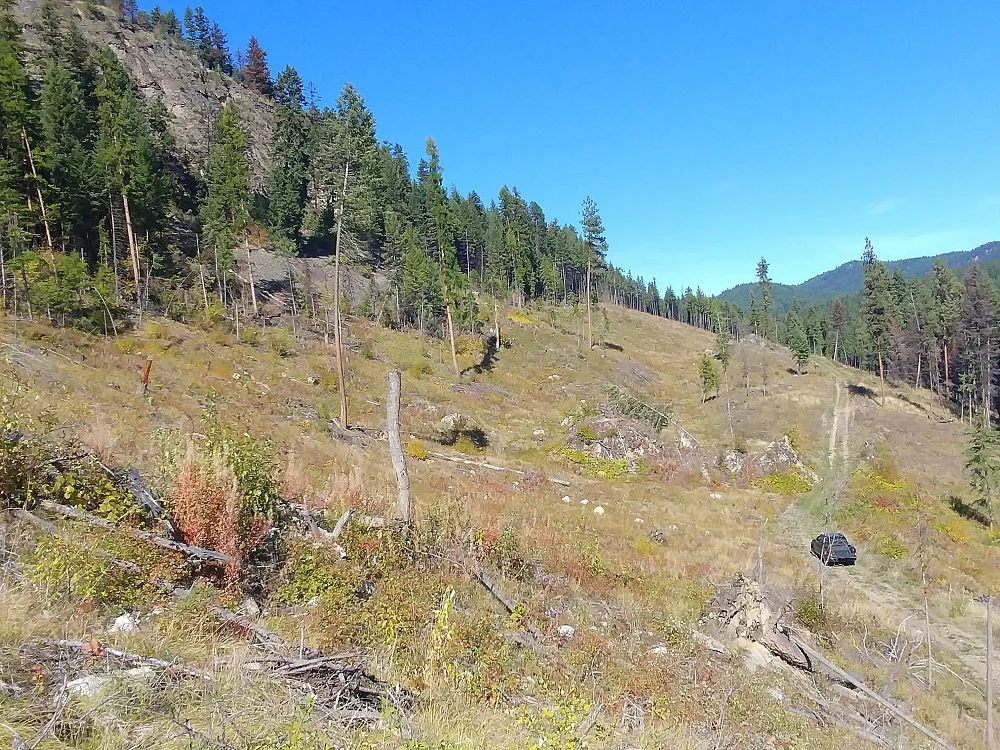
The mineralization at the East Breccia Zone is physically hosted within strong carbonate-quartz breccias and veins. Preliminary geological mapping suggests these features are oriented along and proximal to fault zones that cut through feldspar-megacrystic rhyolite or granite.
Structural Controls and Mineralization
The zone is characterized by a northerly trend and a steep dip, with local widths extending several meters in an east-west direction. While overburden currently masks portions of the site, field observations indicate that the zone extends for at least 50 meters and remains open to both the north and the south.
Geologists have noted that previous sampling of similar gold-silver mineralized carbonate-quartz material occurs approximately 150 meters to the south. The technical team is currently investigating the potential continuity between these two areas, which, if confirmed, could significantly increase the known strike length of the mineralized system.
The Cliff Zone Framework
The East Breccia Zone is part of the larger Cliff Zone, a ridge that has been the focus of extensive prospecting, soil sampling, and rock sampling. The area is defined by intense fracturing, silicification, and alteration across multiple lithologies.
The geological team’s current interpretation is that precious metal mineralization at Kettle Valley follows the classic epithermal model: it is not distributed ubiquitously across the property but is instead preferentially concentrated within or proximal to specific fault structures. These structures are often manifested as silicified topographic highs—a hallmark that continues to guide the company’s exploration focus.
Implications for Exploration and Future Drilling
The identification of the East Breccia Zone has immediate consequences for Goldcliff’s operational roadmap. Having secured the necessary permits for both trenching and drilling, the company is now in a position to transition from surface reconnaissance to invasive subsurface testing.
Refinement of Drill Targets
Management and the geological team are currently evaluating the logistical requirements for a drill program designed to test the East Breccia Zone. The objective is to determine if the surface mineralization translates into consistent, higher-grade zones at depth. By correlating the new geochemical data with existing lithological and structural maps, Goldcliff aims to optimize drill hole placement to maximize the probability of intercepting mineralized structures.
The "Discrete Zone" Strategy
The data collected in May has provided Goldcliff with a refined understanding of the project’s mineral distribution. The stark contrast between the "barren" samples and those with high-grade potential confirms the "discrete" nature of the mineralization. This insight is invaluable; it allows the company to avoid broad, expensive grid-drilling in favor of precision targeting, which is essential for maximizing capital efficiency in the junior exploration sector.
Qualified Person and Corporate Governance
In adherence to National Instrument 43-101 (NI 43-101) standards, the technical information regarding the Kettle Valley project has been reviewed and approved by Warner Gruenwald, P.Geo. Mr. Gruenwald serves as an independent consulting geologist to the company and provides the necessary oversight to ensure that exploration reporting remains transparent, accurate, and consistent with industry best practices.
Broader Market Context: The Value of BC Gold
The Kettle Valley project is situated in a region of British Columbia that continues to attract interest for its potential to host epithermal-style precious metal deposits. For Goldcliff Resource Corp., the ability to consistently identify new, high-potential zones within an existing project highlights the efficacy of their systematic exploration approach.
As the company moves toward the next phase of its exploration cycle, the focus will remain on:
- Expanding the footprint: Investigating the lateral and vertical extent of the East Breccia Zone.
- Structural modeling: Refining the geological map to better understand the relationship between the various fault systems on the property.
- Drill-readiness: Finalizing the logistics for a multi-target drill campaign that includes the newly discovered zone alongside other North Cliff Zone prospects.
Conclusion: A Turning Point
The discovery of the East Breccia Zone represents more than just a successful field program; it serves as a validation of Goldcliff’s technical model for the Kettle Valley project. By identifying a new, mineralized structure that fits the expected geological profile, the company has effectively "de-risked" a portion of its exploration land package while simultaneously expanding the scale of its target area.
As Goldcliff prepares for the upcoming phase of exploration, stakeholders will be watching closely to see if the promising surface assays of the East Breccia Zone are mirrored in the upcoming drill results. For now, the combination of strong geological indicators and a clear, permit-ready roadmap positions the company as an active player in the British Columbia precious metals space.
Disclaimer: This article is for informational purposes only and does not constitute financial or investment advice. Investors are encouraged to perform their own due diligence and consult with professional advisors before making any investment decisions. The information provided is based on reports issued by Goldcliff Resource Corp. and is subject to the inherent risks associated with junior mineral exploration.