Introduction: The Silent Sentinels of the High Seas
In the vast, interconnected network of global commerce, more than 80% of the world’s trade is transported by sea. While the maritime industry serves as the lifeblood of the global economy, it remains perpetually vulnerable to a sophisticated and evolving threat: piracy and armed robbery against ships. Standing as the primary bulwark against these maritime hazards is the ICC International Maritime Bureau (IMB) Piracy Reporting Centre (PRC).
Operating as a 24-hour, single point of contact, the IMB PRC has become an indispensable node in the maritime security architecture. By providing real-time support to vessels under threat and disseminating transparent, verified data, the Centre serves as a critical bridge between ships at sea and the governmental authorities tasked with protecting them. This article explores the operational mandate, the historical evolution, and the profound implications of the IMB PRC’s mission in an era of complex geopolitical instability.
The Operational Mandate: A Global Lifeline
The IMB Piracy Reporting Centre is not merely a monitoring station; it is a rapid-response facilitator. When a master or crew member reports an incident—be it an attempted boarding, a suspicious vessel approaching, or an active hijacking—the PRC acts as the immediate nerve center.
24/7 Vigilance
The nature of piracy is opportunistic, occurring across different time zones and often in the dead of night. The PRC’s round-the-clock operation ensures that no distress call goes unanswered. By maintaining a constant flow of communication, the Centre provides vessels with the critical guidance needed to navigate through high-risk areas, often acting as the primary liaison between the distressed ship and local coastal authorities or international naval task forces.
Transparency and Data Integrity
Reliable data is the foundation of effective maritime security policy. The IMB PRC is renowned for its commitment to transparency. By compiling granular reports on every incident, the Centre provides the maritime industry, insurers, and governments with the evidence required to assess risk, deploy resources, and influence maritime law enforcement strategies. In an industry where under-reporting is a chronic issue, the IMB PRC encourages transparency, ensuring that maritime incidents are not buried in bureaucratic silence.
A Chronology of Maritime Threats: From Traditional Piracy to Modern Asymmetry
The history of the IMB PRC is inextricably linked to the shifts in global maritime criminality. Understanding the Centre’s evolution requires a look at how piracy has transitioned from localized theft to organized, multinational criminal syndicates.
The Rise of the Gulf of Guinea and Southeast Asian Hotspots
In the late 20th century, piracy was largely concentrated in the Malacca Strait. The IMB PRC was instrumental in tracking these shifts, providing data that helped regional governments implement coordinated patrols. As enforcement increased in Southeast Asia, the center observed a migratory shift in pirate activity toward the Gulf of Guinea and the Somali coast.
The Somalia Crisis (2008–2012)
The peak of Somali piracy represented an unprecedented challenge to the global economy. During this period, the IMB PRC functioned as a primary information hub, working alongside international naval coalitions to track "mother ships" and provide real-time updates to transiting merchant vessels. This era solidified the PRC’s reputation as the "gold standard" for incident reporting, as their data directly influenced the decision-making of the International Maritime Organization (IMO) and various flag states.
The Current Landscape: Digital and Physical Threats
Today, the IMB PRC faces a new generation of threats. While physical boarding remains the primary concern, the digitalization of maritime logistics has introduced new vulnerabilities. The Centre continues to adapt, integrating new technologies into its reporting framework to track trends in cyber-enabled maritime crime, ensuring that the maritime industry remains one step ahead of perpetrators.
Supporting Data: The Quantitative Impact of Reporting
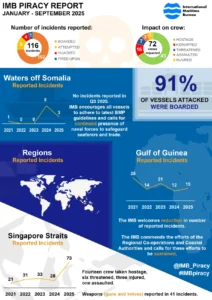
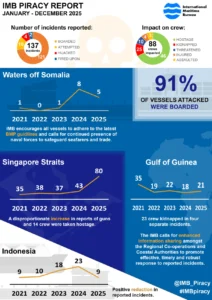
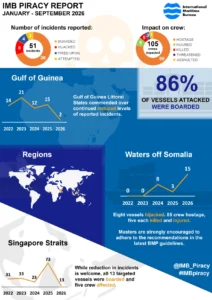
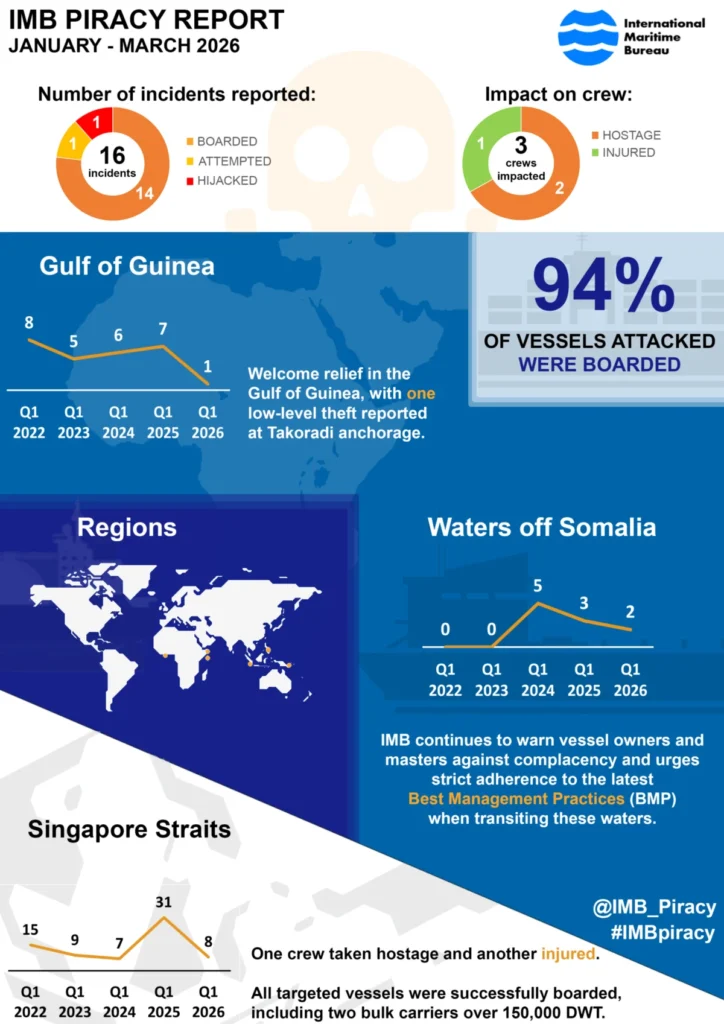
The data collected by the IMB PRC is used by organizations ranging from Lloyd’s List to the United Nations Security Council. The Centre’s annual and quarterly reports serve as the definitive account of maritime safety.
The Cost of Under-Reporting
One of the core challenges the IMB PRC addresses is the "dark figure" of piracy—incidents that go unreported due to concerns over insurance premiums or operational delays. The IMB PRC actively combats this by providing a confidential reporting channel. The data clearly shows that regions with higher reporting rates benefit from more consistent international naval presence and better security infrastructure.
Incident Categorization
The PRC categorizes incidents based on intensity, ranging from "vessels boarded" to "vessels hijacked" or "fired upon." By providing this taxonomy, the Bureau allows for a sophisticated analysis of how pirate tactics evolve. For instance, an increase in "attempted boardings" often serves as a leading indicator for a more organized, violent campaign, allowing shipping companies to harden their vessels (via increased freeboard, barbed wire, or armed guards) before a tragedy occurs.
Official Responses and Collaborative Governance
The IMB is a specialized division of the International Chamber of Commerce (ICC), the world’s largest business organization, representing over 45 million companies. This institutional backing gives the IMB PRC a unique authority in international policy circles.
The ICC’s Holistic Approach
The ICC’s core mission—to make business work for everyone—is reflected in the IMB’s work. By promoting international trade and responsible business conduct, the ICC views maritime security as a prerequisite for global prosperity. Through a mix of advocacy, solution-seeking, and standard-setting, the ICC ensures that the IMB PRC’s findings are not just archived, but acted upon by policymakers in Washington, Brussels, Singapore, and beyond.
A Message from the Leadership
Michael Howlett, Director of the ICC International Maritime Bureau, has frequently emphasized that maritime security is a collective responsibility. "The work of the PRC is about more than just numbers," Howlett notes. "It is about protecting the lives of the seafarers who sustain our global economy and ensuring that the rule of law prevails on the high seas."
The IMB’s collaborative model involves working closely with national governments, the International Maritime Organization (IMO), and private security firms to ensure that the "single point of contact" mechanism is not only functional but universally recognized as the safest protocol for a vessel in distress.
Implications: Why the IMB PRC Matters for the Future
The implications of the IMB Piracy Reporting Centre’s existence extend far beyond the prevention of a single hijacking. Its work shapes the very nature of international maritime law and corporate risk management.
Economic Stability and Global Supply Chains
When piracy thrives, shipping routes are diverted, insurance costs skyrocket, and the price of goods for the average consumer increases. By providing the intelligence necessary to secure these routes, the IMB PRC directly contributes to the stability of the global supply chain. In a post-pandemic world, where supply chain resilience has become a top priority for nations, the work of the IMB PRC is more relevant than ever.
The Future of Maritime Security
As we look toward the future, the IMB PRC is positioning itself to address the intersection of climate change and maritime crime. As changing weather patterns force vessels into new corridors, and as coastal poverty increases in specific regions, the propensity for piracy may shift. The Centre’s ability to forecast these trends based on historical data will be the most valuable tool in the maritime security arsenal.
Strengthening International Cooperation
The IMB PRC serves as a model for how non-governmental organizations can bridge the gap between private enterprise and state security. By maintaining its independence, the Centre provides an objective perspective that is often more trusted by the shipping community than state-led intelligence. This neutrality is its greatest strength, allowing it to foster cooperation between disparate groups, including rival shipping lines, flag states with conflicting interests, and law enforcement agencies across multiple continents.
Conclusion: A Commitment to the Seas
The IMB Piracy Reporting Centre stands as a testament to what can be achieved through consistent, dedicated, and professional advocacy. From its 24-hour command center, it oversees a global network of reporting that safeguards the millions of seafarers currently navigating the world’s oceans.
As an initiative of the International Chamber of Commerce, the IMB PRC embodies the belief that business, when conducted responsibly and within a secure framework, can foster peace and prosperity. By transforming raw, often chaotic data into actionable intelligence, the IMB PRC remains the silent sentinel of the high seas.
For any organization or government looking to understand the true state of global maritime security, the IMB PRC is not just a resource—it is the foundational partner. Through the leadership of figures like Michael Howlett and the vast institutional reach of the ICC, the Centre will continue to adapt to the complexities of the 21st century, ensuring that the pathways of global trade remain open, secure, and resilient for generations to come.
Contact Information for Further Engagement:
For those seeking deeper insights into maritime risk assessments, incident data, or reporting protocols, please contact:
Michael Howlett
Director, ICC International Maritime Bureau
Tel: +44 207 423 6960
Email: [email protected]
The ICC remains committed to promoting international trade, responsible business conduct, and a global approach to regulation. Through its advocacy and dispute resolution services, it continues to support the essential work of the IMB, ensuring that the maritime industry remains the engine of global progress.