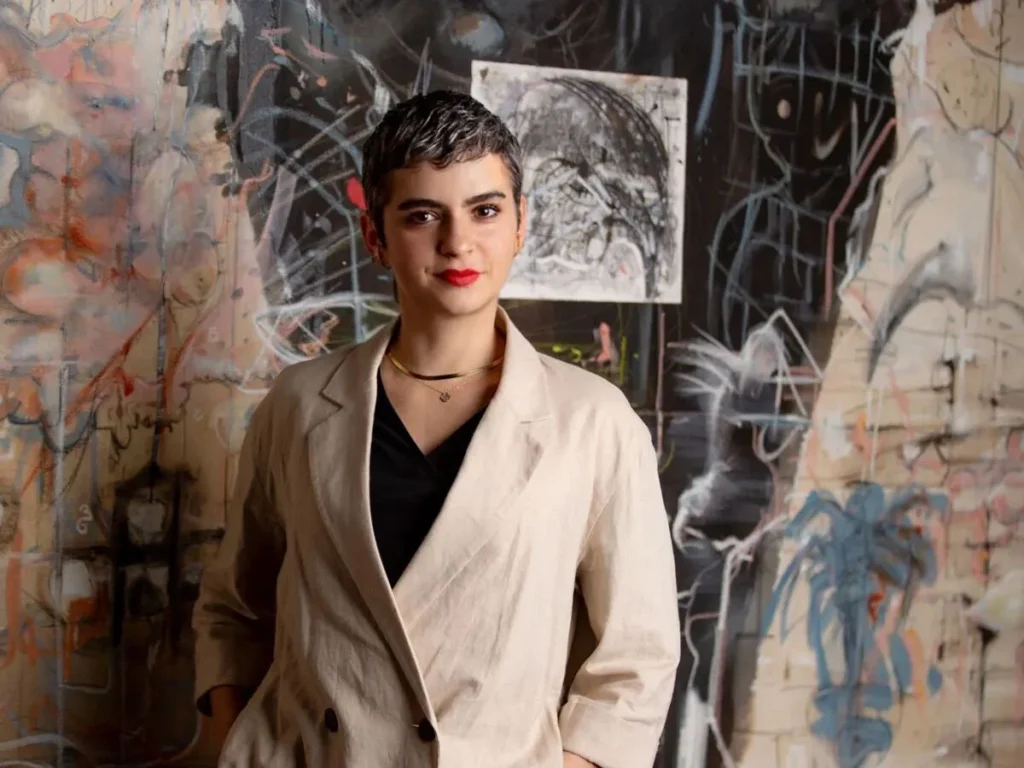
The Riverside Art Museum (RAM) in Southern California, an institution that has evolved from a local landmark into a globally recognized cultural powerhouse, has officially entered a period of transition. The museum’s board of directors announced this week the appointment of Vivian Zavataro as its next executive director. Stepping into the role on October 1, Zavataro brings a wealth of academic rigor, international curatorial experience, and a deep-seated commitment to community-driven museum practices.
Her appointment marks the end of a long-standing chapter for the museum, following the departure of Drew Oberjuerge, who stewarded the institution for over 13 years. As Zavataro prepares to take the helm, she faces the dual responsibility of managing the museum’s growing footprint and overseeing the artistic direction of the Cheech Marin Center for Chicano Arts and Culture—a venture that has fundamentally redefined the cultural landscape of the Inland Empire.
Chronology of Leadership and Institutional Growth
To understand the weight of Zavataro’s new mandate, one must look at the recent trajectory of the Riverside Art Museum. Under the leadership of Drew Oberjuerge, who stepped down in June 2025, the museum underwent a metamorphosis. What was once a beloved, mid-sized community institution transformed into a sophisticated, multi-site entity with an international profile.
The most significant milestone in this timeline was the conceptualization and launch of “The Cheech,” the Cheech Marin Center for Chicano Arts and Culture. The center, housed in a repurposed historic library, became an immediate sensation upon opening, cementing Riverside’s status as a major destination for Chicano art.
The transition process began in early 2025 as the board initiated an extensive national search for a successor who could balance the operational demands of a multi-site museum with the sensitive cultural responsibilities inherent in managing The Cheech. The arrival of Zavataro on October 1 follows a brief leadership gap, during which the board prioritized finding a candidate with a specific blend of scholarly expertise and community-facing advocacy.
Professional Profile: Who is Vivian Zavataro?
Vivian Zavataro joins RAM with a resume that reads like a map of progressive, academic-aligned curatorial practice. She currently serves as the executive and creative director of the Ulrich Museum of Art at Wichita State University in Kansas. Her tenure there has been defined by her ability to bridge the gap between university research and public engagement.
Before her time in Kansas, Zavataro served as the executive director and chief curator of the John and Geraldine Lilley Museum of Art at the University of Nevada, Reno. It was there that she began to establish her reputation as a curator who prioritizes the voices of underrepresented communities. Her work includes high-profile projects with boundary-pushing artists such as Guillermo Gómez-Peña, Justin Favela, and Guillermo Bert.
Notably, her 2021–22 exhibition at the Lilley, En Medio | Senses of Migration, served as a masterclass in thematic curation, exploring the complexities of human movement through sensory and visual storytelling.
Zavataro’s academic credentials further distinguish her. Currently a PhD candidate at the University of Reading in England, her research is deeply rooted in the science of museum audience engagement. This focus is particularly relevant for the Riverside Art Museum, which prides itself on being a space that is both accessible to the public and intellectually stimulating. She also holds dual master’s degrees: one in museum studies from the University of Amsterdam and another in curating from the Zurich University of the Arts.
Supporting Data and Strategic Oversight
Zavataro’s role at RAM is expansive. She is not merely inheriting a single museum building; she is inheriting an ecosystem. As executive director, she will hold primary responsibility for the strategic direction of both the Riverside Art Museum and the Cheech Marin Center for Chicano Arts and Culture.
The departure of Maria Esther Fernández, who served as the inaugural artistic director of The Cheech, in August 2025, has left a vacancy that Zavataro will address through a specific administrative model. According to official releases, the museum will continue its current strategy of relying on guest curators to organize temporary exhibitions at The Cheech. This model allows for a rotating cast of perspectives and keeps the curatorial voice fresh and responsive to contemporary social dialogues.
For Zavataro, this represents a logistical challenge: maintaining high-level cohesion between the permanent collection—largely composed of Cheech Marin’s extensive holdings—and the dynamic, shifting nature of temporary exhibitions. Her background in audience engagement will be the primary tool she uses to ensure that these exhibitions do not just occupy space, but actively invite the Inland Empire’s diverse demographics into the museum experience.
Official Responses and Institutional Vision
The board of directors at RAM has expressed profound optimism regarding the transition. Board President Patricia Reynolds noted in a formal statement that the organization is at a "pivotal moment."
“The Riverside Art Museum has grown from a beloved community museum into a dynamic cultural institution with an international presence,” Reynolds said. “I am incredibly proud of the vision, commitment, and collaboration that have brought us to this moment, and excited about what lies ahead with Vivian as our new director.”
Perhaps most crucially, the endorsement of Cheech Marin himself suggests a smooth transition for the institution’s most high-profile asset. “Riverside Art Museum has come a long way, and The Cheech has become a big part of that story,” Marin said. “But the best part is that we’re still building. Vivian understands artists, she understands museums, and she understands the importance of bringing people together. I’m looking forward to having her on board and seeing what the next chapter looks like.”
For her part, Zavataro’s rhetoric signals a focus on sustainability and deep community integration. “I am honored to join the Riverside Art Museum at such a pivotal moment,” Zavataro stated. “These are places where art, community, and culture meet in ways that feel urgent and alive. I look forward to working alongside the team, board, artists, guest curators, and the broader Riverside and Inland Empire communities to expand this organization’s impact.”
Implications for the Inland Empire Arts Scene
The appointment of Zavataro has broad implications for the arts ecosystem in Southern California. The Inland Empire has historically struggled to retain the level of institutional prestige enjoyed by Los Angeles or Orange County, but the success of the Cheech Marin Center has shifted that narrative. By bringing in a director with international training and a PhD-level understanding of audience development, the Riverside Art Museum is signaling that it intends to remain a primary cultural influencer.
Potential Areas of Development
- Academic Partnerships: Given Zavataro’s history with university museums, it is likely that RAM will increase its collaborative programming with regional institutions like UC Riverside.
- Global Dialogue: Her international education and previous projects with artists like Edi Rama suggest that she may seek to bring more global, transnational perspectives to the museum’s permanent collections.
- Audience-Centric Programming: Her dissertation focus on audience engagement suggests that visitors can expect more interactive, data-driven, and visitor-centered exhibition designs in the coming years.
Challenges Ahead
Despite the enthusiasm, Zavataro faces significant hurdles. Managing two major, distinct cultural sites—the traditional RAM space and the specialized Cheech center—requires a delicate balancing act. Furthermore, the departure of long-term leadership like Oberjuerge and recent high-level staff changes like the exit of Fernández mean that Zavataro will need to spend her first months stabilizing internal operations and building rapport with the existing staff and the local donor base.
The transition also comes at a time when museums across the United States are grappling with the need to be more inclusive and transparent. Zavataro’s commitment to "making sure programs reflect and celebrate the people it serves" will be tested as she navigates the specific socio-political realities of the Inland Empire.
Conclusion
As October 1 approaches, the museum world will be watching Riverside closely. Vivian Zavataro enters this role with the academic pedigree of a curator and the operational experience of an administrator, a combination that is increasingly necessary in the contemporary art world. If her past work is any indication, the Riverside Art Museum is poised to move beyond its role as a regional staple and further solidify its position as a vital, intellectual, and community-rooted institution on the national stage. The “next chapter” mentioned by Cheech Marin is, by all accounts, one defined by evolution, academic rigor, and a continued, steadfast commitment to the power of art to bring people together.