It is impossible to discuss the modern horological landscape without acknowledging Apple. As a tech entity that sells more wrist-worn devices annually than the cumulative output of the entire Swiss watch industry, Apple has fundamentally altered how we perceive the "watch." While my personal collection is built on a foundation of mechanical movements, I have long recognized the necessity of a smartwatch for GPS-tracked training. Historically, I leaned heavily on the Garmin ecosystem for my endurance needs. However, after three months of intensive, daily testing of the Apple Watch Ultra 3, I am forced to reconsider whether the "one-watch collection" can truly be a digital one.

Main Facts: A New Benchmark for Wearable Tech
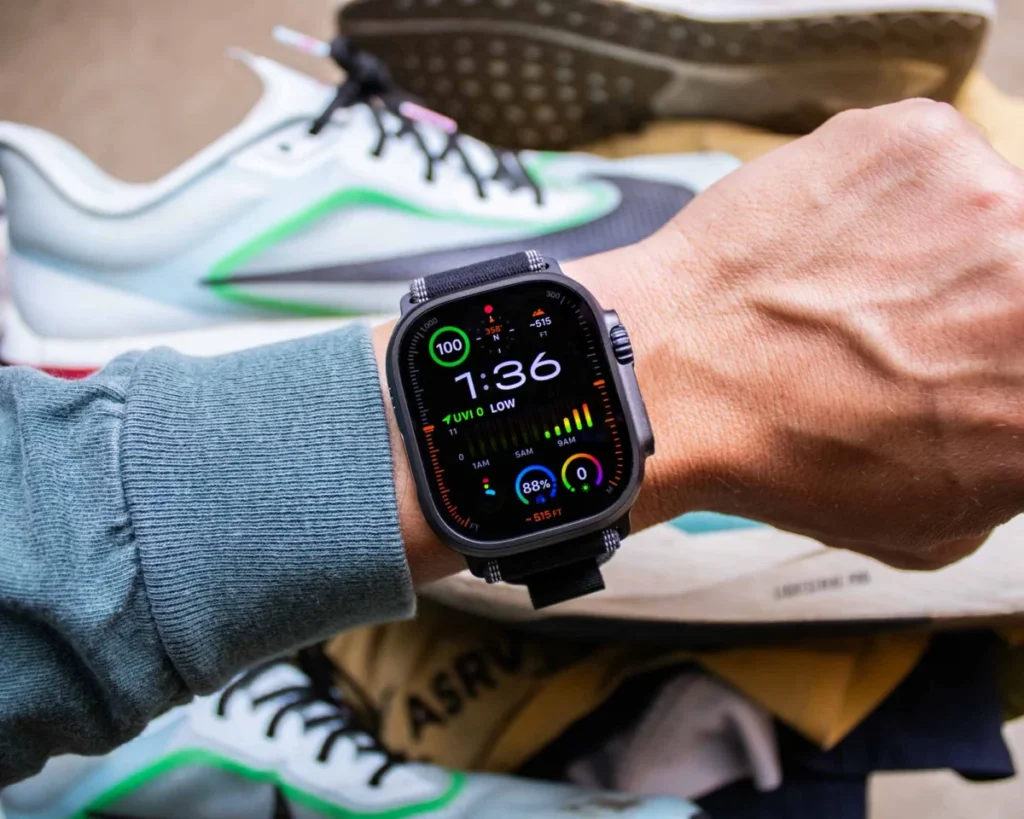
The Apple Watch Ultra 3, which debuted in 2025, represents a significant refinement of the high-performance tier of Apple’s lineup. Crafted from recycled Grade 5 titanium via a sophisticated 3D-printing process, the case is both a marvel of modern manufacturing and a functional powerhouse. It features a flat sapphire crystal, a ceramic and sapphire caseback, and a matte-sandblasted finish designed to minimize glare in harsh outdoor conditions.

Measuring 49mm in "height" (lug-to-lug) and 44mm in width, the device is substantial. Yet, despite its footprint, it is remarkably ergonomic. The defining visual and functional cue remains the protective housing for the Digital Crown, which effectively mitigates the accidental inputs that plague the standard Apple Watch Series 11. Powered by the proprietary S10 chip, the Ultra 3 is not merely a watch; it is a sophisticated, wrist-mounted computer capable of managing health, navigation, and emergency communications with seamless fluidity.

Chronology: From Series 10 to the Ultra 3
My journey into the Apple ecosystem began in late 2024, when I acquired an Apple Watch Series 10 through a health insurance incentive program. I was immediately struck by the intuitive nature of the watchOS interface. It blurred the lines between utility and lifestyle so effectively that it began to dominate my wrist time, leaving my mechanical watches gathering dust on the dresser.

However, the Series 10 had limitations. During my running sessions, the reliance on a touchscreen—which becomes notoriously finicky when faced with sweat or rain—was a point of frustration. Furthermore, the battery life often left me stranded during longer runs or weekend excursions.

The transition to the Apple Watch Ultra 3 felt like moving from a reliable sedan to a purpose-built rally car. Since receiving the Ultra 3, I have integrated it into every facet of my life, from professional meetings to backcountry hikes in Hawaii. Over the last 90 days, the device has undergone a rigorous baptism by fire, moving from a "workout accessory" to an essential daily companion.

Supporting Data: Performance and Technical Metrics
The Power of Physical Controls
The most significant upgrade, in my estimation, is the introduction of the Action Button. By increasing the physical control count by 50%, Apple has fundamentally changed the sports watch experience. In a race environment, where every second counts, the ability to trigger a start sequence with a tactile press—rather than a swipe—is a game-changer.

Display and Readability
The rectangular format of the Apple Watch has often been criticized for its "brick-like" presentation of data. However, the larger screen of the Ultra 3 allows for a six-line data configuration. For a runner, this means having heart rate, pace, elevation, and distance visible simultaneously without needing to cycle through screens. During my testing, I found the customizability of these workout screens to be superior to the fixed-field configurations found on many competing multisport watches.

Battery Life and Charging
The Ultra 3 delivers roughly 42 hours of battery life under normal conditions, extending to 72 hours in low-power mode. While Garmin users may point to multi-week battery life, they often overlook the computational disparity. The Apple Watch is a general-purpose computer running third-party apps and high-resolution visuals. For my needs, moving from a daily charge cycle to an "every-other-day" charge cycle provided a massive increase in convenience, allowing me to take the watch on overnight trips without bringing a charging puck.

Sensors and Connectivity
The Ultra 3’s suite of sensors is comprehensive. Beyond the standard health metrics, it includes a professional-grade depth gauge for diving, a dual-frequency GPS that locks onto satellites faster than any device I have previously tested, and integrated satellite SOS connectivity for emergency situations.

Official Responses and Ecosystem Integration
Apple’s strength lies in its ecosystem. When paired with an iPhone and AirPods, the Ultra 3 transforms into a cohesive training partner. The integration of "Apple Intelligence" and the "Workout Buddy" AI coach represents the future of personal fitness. During runs, the voice feedback provided through my AirPods regarding pace and heart rate zones felt less like a notification and more like having a dedicated trainer running alongside me.

Apple’s official stance, reflected in the latest documentation, emphasizes the "cohesive digital experience." By ensuring that calendar events, alarms, and workout data sync instantaneously across devices, Apple has removed the friction that typically prevents people from fully utilizing wearable data.

Implications: Is the Mechanical Watch Dead?
As a watch enthusiast, I admit there is a specific emotional resonance that a mechanical timepiece provides which the Apple Watch cannot replicate. It does not demand a loupe, nor does it have a beating balance wheel to admire. However, if we strip away the romanticism of horology and look at the functional reality of daily life, the case for the Apple Watch Ultra 3 becomes overwhelming.

The Versatility of Straps
Apple’s strap options—the Trail Loop, Ocean Band, Alpine Loop, and Titanium Milanese Loop—cater to different personas. The Trail Loop is the pinnacle of comfort for office work and sleep tracking, while the Ocean Band is the gold standard for water-based activities. The ability to swap these in seconds allows the Ultra 3 to transition from a rugged sports tool to a somewhat dressier aesthetic (via the Milanese loop) with ease.

Long-Term Durability
After three months of daily wear, the black DLC coating on my unit has remained remarkably pristine. Aside from a few microscopic hairline scratches on the bezel, the watch looks nearly new. This is a testament to the build quality that Apple has managed to achieve with its titanium casing.

Conclusion: A New Standard
The Apple Watch Ultra 3 is not just an incremental update; it is a statement of intent. At a starting price of $799 USD, it occupies a premium space in the market, yet the value proposition is clear. It is, quite simply, the most capable smartwatch ever produced.

For the average consumer, it replaces the need for a dedicated GPS watch, a health monitor, and even a secondary computer for basic tasks. While non-iPhone users will find little reason to defect from the Garmin ecosystem, those already invested in the Apple universe will find the Ultra 3 to be the "missing link" that finally makes a smartwatch feel like a proper, high-performance tool watch.

I remain a fan of mechanical watches, but I am no longer a skeptic of the smartwatch. The Apple Watch Ultra 3 has successfully earned its place on my wrist, and for the foreseeable future, it is staying there. As Apple continues to iterate on this hardware, I look forward to seeing how they further bridge the gap between pure technology and the classic utility of the wristwatch.