By Jeffrey N. Wasserstrom
August 20, 2026
For decades, the standard narrative of democratic transition has been tethered to the geography of the mid-20th century. When political scientists and activists speak of "the third wave" of democratization, their minds instinctively drift to the fall of the Berlin Wall, the velvet revolutions of Prague, and the dissolution of the Soviet bloc. Eastern and Central Europe have long served as the primary classroom for those studying the dismantling of autocracy.
Yet, this Eurocentric focus obscures a more complex and arguably more instructive reality: the remarkable democratic breakthroughs that have occurred across Asia. From the streets of Seoul to the ballot boxes of Manila and beyond, Asian nations have navigated transitions from iron-fisted rule to competitive governance in ways that are as varied as they are profound. As we navigate an era of "democratic backsliding," where authoritarianism is making a global resurgence, these Asian experiences offer a vital, under-utilized repository of strategy and resilience for those fighting for political freedom today.
Main Facts: The Shift in the Democratic Paradigm
The core premise of modern political analysis is that democracy is fragile. However, the history of late 20th-century Asia proves that democratic systems can be forged in the unlikeliest of environments. Sixty years ago, large swaths of Asia were governed by military juntas, entrenched dictatorships, or one-party states where the concept of a "loyal opposition" was nonexistent.
The turning point was not a singular event, but a series of bottom-up movements. By the close of the 20th century, the landscape had shifted: competitive elections—the bedrock of democratic legitimacy—became the regional norm in several key nations. Most strikingly, the leaders of these new democracies were not career politicians groomed in ivory towers; they were, in many instances, former political prisoners, labor organizers, and activists who had transitioned from holding protest signs to holding the reins of government.
The current climate remains challenging. We are witnessing a global drift toward autocracy, often described by political scientists as a "democratic recession." Yet, even amidst this, we see glimmers of hope. In recent months, voters in a pivotal Asian nation successfully reversed years of authoritarian drift, mobilizing in record numbers to oust a leader who had systematically dismantled institutional checks and balances. This event serves as a stark reminder that while authoritarianism is adept at colonizing institutions, it often fails to extinguish the public appetite for accountability.
Chronology: A Century of Struggle and Reform
To understand the current state of Asian democracy, one must look at the arc of the last six decades.
- The 1960s-70s: The Era of "Developmental Autocracy." During this period, the dominant theory was that economic growth required a "strong hand." Nations like South Korea and Taiwan were ruled by figures who prioritized stability over civil liberties, citing the threat of external conflict as justification for martial law.
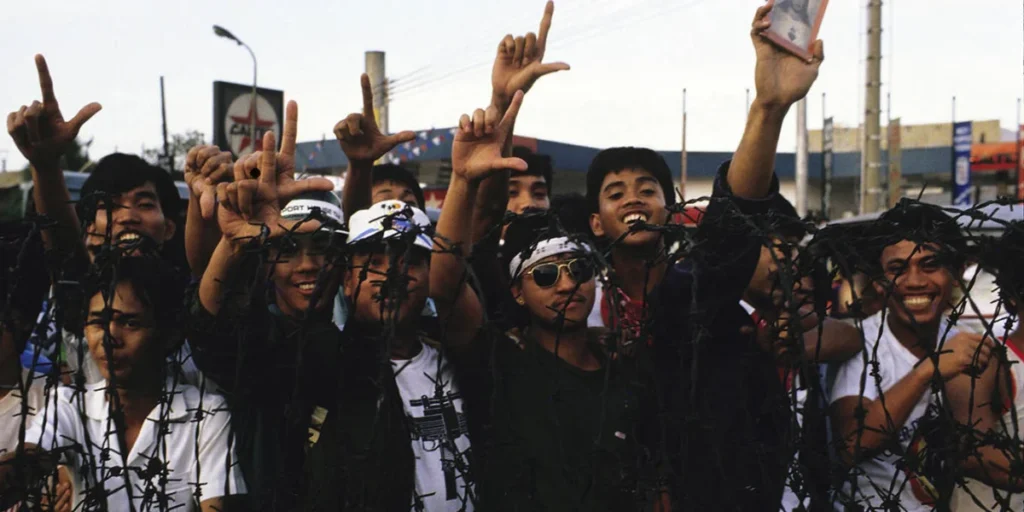
- The 1980s: The Great Awakening. This decade marked a shift. In the Philippines (1986), the "People Power" revolution saw millions flood the streets to end the Marcos regime. Simultaneously, South Korea saw the June Democratic Struggle of 1987, which forced the transition to a direct presidential election system.
- The 1990s: The Institutionalization Phase. Indonesia’s Reformasi movement in 1998 brought an end to the three-decade Suharto dictatorship, setting the stage for one of the world’s most vibrant, if imperfect, democracies.
- The 2010s-2020s: The Backsliding and Resilience Cycle. The rise of populism across the globe saw new "would-be dictators" attempt to capture the judiciary and the media. However, the 2026 legislative and executive shakeups in several key regional players demonstrate that the democratic "muscle memory" developed in the 80s and 90s remains a potent force against consolidation.
Supporting Data: Measuring the Pulse of Freedom
The data tells a story of both fragility and persistence. According to recent metrics from independent watchdog organizations, while global "freedom scores" have dipped for the 18th consecutive year, Asia remains a battleground of high volatility.
- Voter Turnout: In the most recent election in the aforementioned country of focus, voter turnout reached an unprecedented 82%. This suggests that when the stakes of democracy are perceived as existential, the electorate responds with high levels of mobilization.
- Judicial Independence: Comparative studies show that in nations where democratic institutions survived the "populist wave" of the early 2020s, the common denominator was an independent judiciary that refused to bow to executive pressure.
- Digital Activism: Data indicates that social media, while a tool for disinformation, has also acted as a vital organizing platform for youth movements, which have been the primary drivers of recent pro-democracy efforts in East Asia.
Official Responses and Global Reaction
The international community’s response to these developments has been a study in diplomatic caution. The United Nations and various democratic alliances have issued statements lauding the "peaceful transfer of power" in regions where autocrats have been ousted. However, the tone from neighboring authoritarian powers remains one of suspicion.
"We are witnessing a subversion of stability," claimed a spokesperson for a major regional power in a press briefing last week, characterizing the democratic protests as "foreign-instigated." This rhetoric is a hallmark of modern authoritarianism—the attempt to frame legitimate domestic grievances as external interference. Conversely, Western capitals have signaled a cautious optimism, emphasizing that the recent elections are a "victory for the rule of law," though many remain wary of the potential for the ousted regime to influence the political process from the shadows.
Implications: Lessons for the Global Fight
Why does this matter to the rest of the world?
First, the Asian experience highlights the "Coalition of the Diverse." In these successful transitions, the impetus for change did not come from a single political party. It came from a broad coalition—unlikely bedfellows ranging from conservative business leaders to radical student activists—who united under the banner of restoring democratic norms. This is a critical lesson for Western nations currently grappling with extreme political polarization.
Second, the Asian context demonstrates the importance of "Institutional Patience." Many of the region’s democracies were not built in a day. They went through periods of stagnation and even reversal. The realization that democracy is not a destination but a continuous process of maintenance is essential for those who feel discouraged by the current global climate.
Finally, the resilience of these movements provides a blueprint for "Resisting the Digital Autocrat." As autocrats turn to surveillance technology and state-controlled algorithms to maintain power, the grassroots counter-strategies developed in Asian urban centers—using decentralized networks and community-based information sharing—are becoming the new gold standard for activists worldwide.
Conclusion: A New Chapter
We often view democracy through a lens of inevitability—as if it were a natural evolution of history. The reality, as observed in the shifting tides of Asia, is that democracy is a choice made repeatedly by millions of individuals against the weight of institutional inertia.
As we look toward the remainder of the 2020s, the lessons from the East are no longer peripheral; they are central. The "would-be dictator" is a global archetype, but the "citizen activist" is proving to be a more formidable opponent than history gave them credit for. The struggle for freedom is not over; it has merely relocated to the front lines of the 21st century, and it is here that the next great defense of democracy is being written.