
In the rapidly evolving landscape of global fashion, the power dynamic has shifted from the pristine, velvet-roped boutiques of Avenue Montaigne to the digital, algorithm-driven storefronts of the resale market. According to The RealReal’s highly anticipated 2026 Resale Report, the secondary market is no longer merely an alternative for the budget-conscious; it has become the primary battleground for brand dominance, investment strategy, and trend forecasting. As the industry grapples with the complexities of sustainability and the "it-factor" of creative leadership, one house stands at the pinnacle: Chanel.
The Reign of the Creative Vanguard
It comes as little surprise to fashion insiders that Chanel continues to command the top spot on The RealReal’s most-searched list. However, the report reveals that the engine driving this sustained interest is not merely brand heritage, but the seismic impact of specific creative directors.
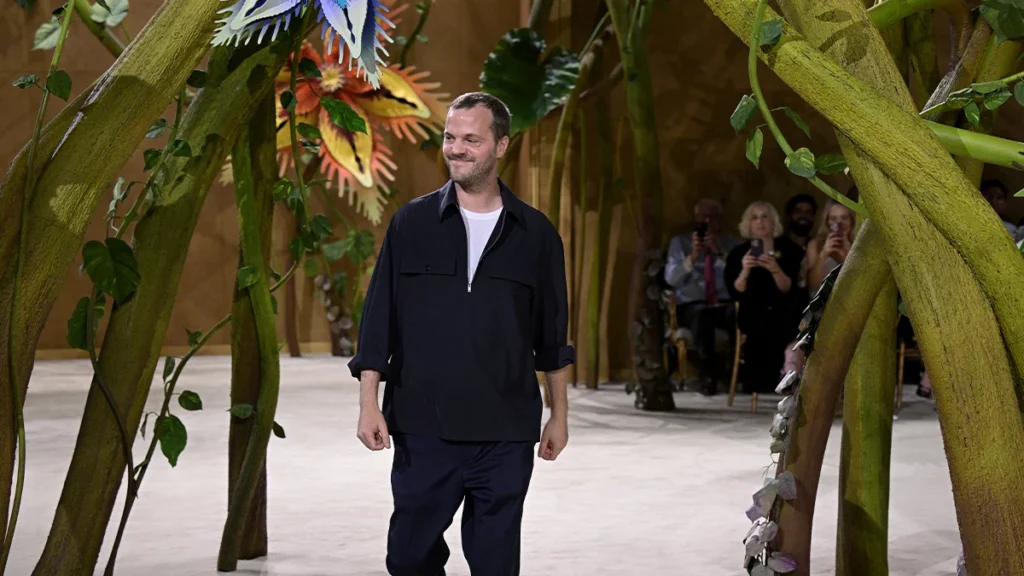
The most explosive metric in the 2026 data involves Matthieu Blazy. Since joining his current house in late 2024, Blazy has orchestrated a creative resurgence that has left the industry breathless. His ability to synthesize archival reverence with avant-garde textures has resulted in a 10,967 percent surge in searches for his name on the platform. This figure is not merely a statistical anomaly; it is a testament to the "creative director effect," a phenomenon where the individual at the helm acts as a lightning rod for consumer demand.
The report highlights that the market is increasingly hyper-sensitive to leadership changes. Sarah Burton’s tenure at Givenchy has translated into a 243 percent uptick in brand interest, while Jonathan Anderson’s strategic vision at Dior has sparked a 158 percent increase. These figures underscore a broader trend: the modern luxury consumer is not just buying a logo; they are buying into a specific, curated vision of the future proposed by designers.
The Hierarchy of Desire: A Market Snapshot
Beyond the individual designers, the brand hierarchy on the resale market provides a roadmap for what is currently considered "blue-chip" in the fashion world. Following Chanel, the top five most-searched brands on The RealReal reads like a roll call of the industry’s heavyweights: Louis Vuitton, Prada, Gucci, and Miu Miu.

The inclusion of Miu Miu in this top tier is particularly telling, reflecting the brand’s meteoric rise in the cultural zeitgeist over the past twenty-four months. The second tier of the top ten—comprising The Row, Hermès, Saint Laurent, Bottega Veneta, and Balenciaga—demonstrates a bifurcation in consumer taste. On one hand, there is an appetite for the "quiet luxury" of The Row and Bottega Veneta; on the other, the enduring, performance-driven status symbols of Hermès and Saint Laurent remain unshakable.
Chronology of a Shift: From Niche to Necessity
To understand the current dominance of the resale market, one must look at the progression of the last decade.
- 2016–2019: The Foundation Phase. During this period, resale was primarily viewed as a vehicle for affordability. A Fendi Baguette, for instance, could be acquired for an average of $294.
- 2020: The Turning Point. The global pandemic acted as a catalyst for digital transformation. As physical stores shuttered, consumers turned to online marketplaces to satisfy their appetite for fashion.
- 2021–2023: The Investment Era. The concept of the "closet as an asset class" gained mainstream traction. Data from this period shows a massive pivot toward archival pieces, with consumers actively seeking out items that were at least 15 years old.
- 2024–2026: The Creative Director Era. As seen with the ascent of Blazy and Anderson, the market has entered a phase where the "designer as celebrity" dictates the resale value of entire categories of goods.
Supporting Data: The Economics of Vintage
The financial performance of specific iconic bags offers a stark look at the appreciation of luxury goods. The Fendi Baguette has seen its average resale price climb from $294 in 2016 to $3,012 in 2026—a staggering increase that reflects its status as a timeless cultural artifact. Similarly, the Gucci Jackie has jumped from $260 to $1,110.
Perhaps most impressive is the data surrounding "true vintage." The demand for items 15 or more years old has skyrocketed by 432 percent since 2020. This is not merely a nostalgic trend; it is a calculated aesthetic shift. The resurgence of Belle Époque-inspired silhouettes—characterized by drop-waists, intricate lace, and rich, layered textures—has been heavily influenced by the recent runway collections of designers like Blazy and Anderson, who have successfully synthesized historical elements into contemporary, wearable art.
Consumer Behavior: The Rise of the Strategic Shopper
The most significant shift in the 2026 report is not in the brands themselves, but in the consumers. The stigma once associated with secondhand goods has completely evaporated, replaced by a sophisticated, analytical approach to consumption.

According to the report, 93 percent of American luxury consumers are now actively utilizing online resale platforms. This behavior is driven by a profound change in how shoppers perceive value. Forty-seven percent of polled consumers admitted that they consider the potential resale value of an item before they purchase it new. This shift suggests that the modern shopper views luxury goods as an investment portfolio, where the purchase price is merely the "entry cost" for an asset that may appreciate over time.
The case of the Hermès Birkin remains the gold standard for this logic, having appreciated by 92 percent over the last decade. For the modern, savvy shopper, a purchase that retains or grows in value is not an indulgence—it is a logical financial decision.
Implications for the Future of Fashion
The findings from the 2026 Resale Report carry profound implications for the luxury industry at large:
- The Sustainability Imperative: As consumers prioritize vintage, luxury houses must account for the lifecycle of their products. Circularity is no longer a marketing buzzword; it is a requirement for brands that wish to remain relevant in a market that favors longevity.
- Creative Leadership as Brand Equity: Brands must understand that their creative directors are their most valuable public-facing assets. The 10,967 percent increase in searches for Matthieu Blazy serves as a warning to houses that neglect to nurture or strategically hire visionary talent.
- The Professionalization of Resale: As 47 percent of consumers shop with resale value in mind, brands will likely move to formalize their own resale channels, effectively trying to capture the value that is currently leaking into third-party platforms like The RealReal.
- The End of "Trend-Cycle" Dominance: The 432 percent surge in demand for vintage indicates that the "fast-fashion" model of rapid trend obsolescence is losing ground to a more sustainable, historically conscious approach to style.
Final Reflections
The 2026 Resale Report paints a picture of a market that has matured into a sophisticated, interconnected ecosystem. Luxury is no longer a static purchase made in a vacuum; it is a dynamic, fluid process of acquisition, curation, and resale. Whether driven by the visionary collections of designers like Blazy, the allure of a 20-year-old Fendi Baguette, or the analytical investment strategies of the modern consumer, the secondary market has solidified its place as the heartbeat of the global fashion industry.
As we look toward the future, it is clear that the brands that win will be those that embrace this circularity, respecting the enduring value of their history while empowering the next generation of creative leaders to define the next chapter of luxury. The "resale renaissance" is not a fleeting moment—it is the new standard of the industry.