The landscape of Indian retail is undergoing a seismic shift. For years, the convenience of online shopping was defined by two-day shipping or scheduled slots. Today, that paradigm has been dismantled by the "quick-commerce" revolution—a model where groceries, electronics, and household essentials arrive at a doorstep in the time it takes to brew a cup of coffee. As Indian consumers increasingly prioritize immediacy over almost every other factor, industry giants are scrambling to fortify their positions. Among the most aggressive is Walmart-owned Flipkart, which is rapidly closing the distance between itself and established pioneers in a high-stakes race for market dominance.
The Ascent of Flipkart Minutes: A Strategic Blitz
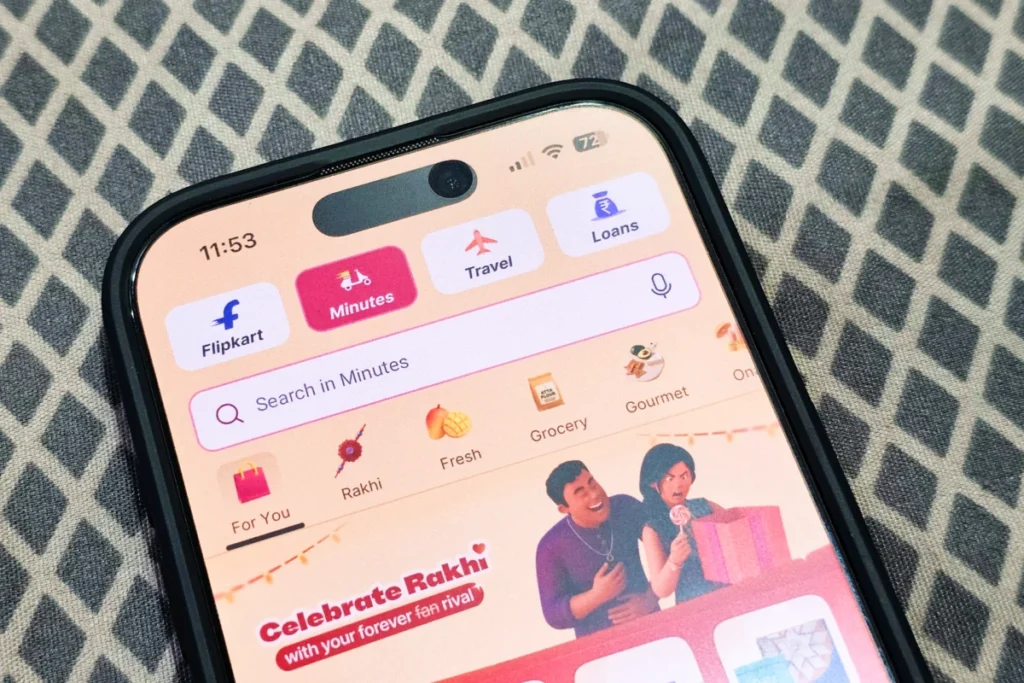
Flipkart’s quick-commerce arm, "Minutes," has transformed from a tentative experiment into a cornerstone of the company’s retail strategy. Launched in August 2024, the service has recorded meteoric growth, now facilitating between 1.1 million and 1.2 million orders per day. This marks a dramatic climb from the 390,000 to 400,000 daily orders recorded just last November.
This explosive growth is not accidental. It is the result of a deliberate, capital-intensive expansion of infrastructure. Flipkart has rapidly scaled its "micro-fulfillment centers"—highly localized, small-scale warehouses strategically positioned in dense urban corridors to facilitate rapid dispatch. According to industry insiders, the company has grown its network from 340 facilities a year ago to over 1,000 today. With a current pace of adding roughly 100 new centers every month, Flipkart has set a clear, ambitious target: reaching 1,500 fulfillment hubs by the end of 2026.
Chronology of a Revolution: From Grofers to the Modern Sprint
To understand the current battle, one must look at the timeline of the quick-commerce phenomenon in India. The seeds of this movement were sown long before the "10-minute" marketing taglines became ubiquitous.
- 2013: The roots of Blinkit are established under the name Grofers, an online grocery delivery platform that would eventually pivot to become one of the nation’s most formidable quick-commerce players.
- 2020: As the COVID-19 pandemic necessitated contactless, rapid delivery, Swiggy launched "Instamart," marking the entry of a major food-delivery incumbent into the grocery space.
- 2021: Zepto arrives on the scene, positioning itself as a pure-play quick-commerce entity. Its arrival accelerated the "10-minute delivery" narrative, forcing competitors to rethink their logistics.
- 2021 (Late): Grofers officially rebrands as Blinkit, signaling a permanent shift toward the instant-delivery model.
- 2024: Flipkart launches "Minutes," entering the fray as a latecomer, but leveraging its massive existing user base and capital reserves to gain immediate traction.
The Competitive Landscape: Measuring the Giants
While Flipkart’s rise is impressive, it faces a market that has already been carved out by specialized players. According to data from the market intelligence firm Datum, the hierarchy of the sector remains clear, though the margins are tightening:
- Blinkit: Retains the crown with an estimated 3.4 million to 3.6 million daily orders.
- Zepto: Maintains a firm second place with 2.4 million to 2.6 million daily orders.
- Swiggy Instamart: While facing stiff competition from Flipkart, it remains a pillar of the sector with roughly 1.4 million daily orders.
Flipkart’s trajectory has brought it within striking distance of Instamart, effectively becoming the fourth major force in a market that many previously thought was already "closed" to new entrants.
Swiggy’s scale remains significant, boasting over 14 million monthly transacting users and a footprint spanning 1,200 dark stores across 130 cities. Critically, Swiggy has also begun to demonstrate the viability of the business model, noting that over 45% of its dark-store network is now contribution-margin positive, signaling a move toward long-term sustainability rather than just growth at any cost.
The Strategic Advantage of Ecosystems
What sets Flipkart apart from the pure-play startups is the sheer size of its existing ecosystem. As Satish Meena, an adviser at Datum Intelligence, observes, Flipkart has spent years and billions of dollars acquiring a loyal customer base.
"Flipkart is already a serious player," Meena says. "Once you open 1,000 dark stores and are doing a million orders per day, it is serious enough."
This "ready-made audience" allows Flipkart to convert existing e-commerce shoppers into quick-commerce users with far lower customer acquisition costs than a standalone app. Furthermore, internal data suggests that the service is creating a "stickiness" among users; repeat buyers account for 65% to 70% of the monthly transaction volume. Simultaneously, the average transaction per customer has surged by 50% to 60% over the past year, with average order values settling between ₹400 and ₹500.
Amazon’s Counter-Move: A Global Giant Awakens
Flipkart is not the only global juggernaut pivoting toward speed. Amazon, the Seattle-based e-commerce behemoth, is actively scaling its "Amazon Now" service in India. During a visit to the country in June, Amazon CEO Andy Jassy highlighted the service as the company’s fastest-growing business unit in the region.
Amazon’s strategy mirrors that of its competitors: building a network of over 1,000 micro-fulfillment centers across 300 cities. By leveraging its vast supply chain and existing logistics infrastructure, Amazon is attempting to weave quick commerce into the fabric of its broader platform, aiming to provide a seamless transition from long-haul deliveries to "in-minutes" fulfillment.
Implications: The Death of the "Scheduled" Delivery
The rise of quick commerce is not merely a logistical shift; it is a fundamental change in consumer behavior that carries profound implications for the future of retail.
1. Consumer Expectations
The most significant impact of this competition is the permanent elevation of consumer expectations. As experts point out, there is no "going back" to the days of waiting 24 hours for basic household staples. Once a consumer experiences the convenience of 10-minute delivery, scheduled grocery shopping begins to feel like a relic of the past.
2. The Defensive Necessity
For incumbents like Amazon and Flipkart, the push into quick commerce is as much defensive as it is offensive. If these giants failed to adapt, they risked losing high-frequency, daily-use transactions—which form the bedrock of customer loyalty—to the likes of Zepto and Blinkit. By entering the space, they ensure that their platforms remain the "default" for all shopping needs.
3. Economic Sustainability
The industry is currently in a "blitz-scaling" phase, but the long-term question remains: can the unit economics of 10-minute delivery support profitability? As Swiggy’s recent disclosures suggest, the path to profitability involves optimizing dark-store locations, reducing waste, and increasing the basket size of orders—a goal Flipkart is pursuing by adding premium, artisanal, and gourmet products to its catalog.
Official Stances and Industry Silence
Despite the intense scrutiny surrounding this corporate arms race, the major players have remained tight-lipped regarding specific future operations. Flipkart, Amazon, Swiggy, Zepto, and Blinkit’s parent company, Eternal, all declined to provide formal comments on their internal growth metrics or future strategic investments.
This silence is perhaps a testament to the intensity of the competition. In a market where speed is the primary differentiator, companies are keeping their logistical playbooks closely guarded.
Conclusion: A New Baseline for Retail
The battle for India’s quick-commerce market is no longer just about who can deliver a bag of groceries the fastest; it is about who can best integrate instant fulfillment into the daily lives of over a billion people. With Flipkart’s rapid scaling, Amazon’s global might, and the entrenched presence of Swiggy, Blinkit, and Zepto, the Indian consumer is the ultimate beneficiary of this high-speed competition. As the infrastructure grows and the delivery times continue to shrink, one thing is certain: the era of "waiting" for online orders is rapidly coming to an end.