For decades, the scientific consensus regarding the Arctic and high-altitude cryospheres has been dominated by a singular, alarming narrative: permafrost, the vast "frozen basement" of the Earth, is a ticking carbon bomb. As global temperatures climb, the thawing of this ancient, organic-rich soil triggers microbial activity that releases sequestered methane and carbon dioxide (CO₂) into the atmosphere, potentially accelerating global warming in a dangerous feedback loop.
However, a groundbreaking study recently published in the journal Nature has introduced a vital layer of complexity to this narrative. A collaborative team of researchers from Umeå University in Sweden and East China Normal University has identified an unexpected, natural counterbalance to these emissions: chemical weathering. As permafrost degrades, it exposes previously buried minerals to water and atmospheric gases, initiating a geological process that actively scrubs CO₂ from the air.
This discovery suggests that the carbon cycle in thawing landscapes is far more dynamic—and perhaps more resilient—than previously estimated, challenging the simplistic view that permafrost degradation is exclusively a source of greenhouse gas emissions.
The Mechanics of the Cycle: From Decay to Mineralization
To understand why this finding is so significant, one must first look at the traditional model of carbon release. Permafrost contains massive stores of organic matter—remnants of plants and animals that have been locked away for millennia. When the "seal" of ice melts, this matter is thawed and becomes accessible to microorganisms. These microbes consume the carbon and "exhale" it as CO₂ or methane.
The new research reveals that this biological process is running in parallel with a geological one. As the landscape thaws, the ground shifts and cracks, exposing fresh, unweathered rock surfaces that were previously insulated by ice. When meltwater infiltrates these fractured landscapes, it reacts with these minerals. This chemical weathering process consumes CO₂ from the atmosphere, transforming it into dissolved inorganic carbon that is eventually transported by rivers toward the oceans.
Chronology of the Discovery
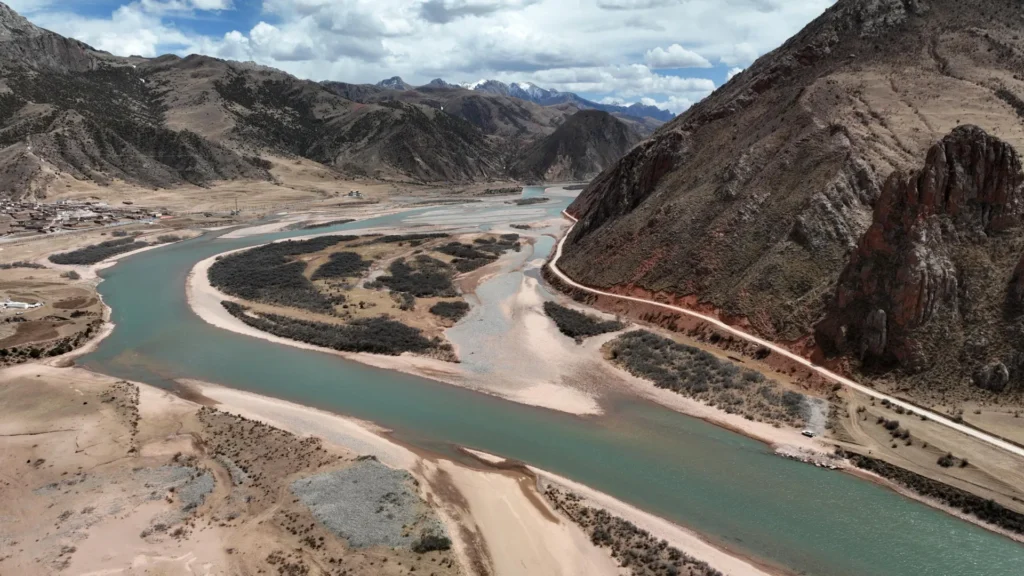
The path to this realization involved a multi-year investigation into the Qinghai-Tibet Plateau—a region often referred to as the "Third Pole" due to its massive stores of ice and its sensitivity to warming.
- 2019–2021: Researchers conducted extensive field campaigns across 50 distinct river catchments on the Plateau. By utilizing isotopic tracers, they were able to differentiate between carbon derived from biological decay (the "old" organic carbon) and carbon involved in rock weathering.
- 2022: Data synthesis began, integrating geochemical modeling with the field measurements of dissolved inorganic carbon in river systems.
- 2023: The team identified a strong correlation: as permafrost cover decreased, the efficiency of rock weathering increased, creating a measurable "sink" that partially canceled out the biological "source" of emissions.
- 2024: The results were peer-reviewed and finalized, leading to the landmark publication in Nature, forcing climate modelers to reconsider the role of geological sequestration in the cryosphere.
Supporting Data: Quantifying the Counterbalance
The data gathered from the Qinghai-Tibet Plateau provides a sobering but enlightening look at how much carbon is actually being offset. Across the 50 rivers surveyed, the research team found that rock weathering accounts for an average offset of 35 percent of the total CO₂ emissions produced by riverine organic carbon decay.
Key Statistical Highlights:
- The Threshold Effect: In areas with continuous, stable permafrost, the offsetting effect is minimal, as the rock surfaces remain shielded.
- The "Patchy" Advantage: In regions with discontinuous or isolated permafrost—areas that have already experienced significant degradation—the weathering-driven carbon uptake was observed to exceed 100 percent of river CO₂ emissions in certain catchments.
- The Mineral Influence: The intensity of the uptake is heavily dependent on the lithology (rock type) of the region. Carbonate-rich areas showed higher rates of CO₂ consumption compared to silicate-dominated zones, highlighting that geological composition plays a critical role in how a landscape responds to warming.
These figures are not merely academic; they represent a significant "missing piece" in the carbon accounting used by the Intergovernmental Panel on Climate Change (IPCC) and other global climate monitoring bodies.
Official Responses and Expert Perspectives
The research has sent ripples through the biogeochemistry community, prompting a re-evaluation of how we predict the future of the Earth’s "frozen" zones.
Liwei Zhang, a lead biogeochemist at East China Normal University, notes the paradigm shift: "We found that river CO₂ emissions decline while carbon uptake through rock weathering increases as permafrost cover decreases. In some catchments where permafrost has become patchier, weathering-driven carbon uptake was large enough to offset or even exceed river CO₂ emissions."
Jan Karlsson, a professor at the Department of Ecology, Environment and Geoscience at Umeå University, emphasizes that this is not a panacea for climate change. "Our findings show that biological and geological carbon cycles are tightly linked," Karlsson stated. "To understand whether thawing permafrost ultimately amplifies or dampens climate warming, we need to consider both the carbon released from ancient soils and the carbon consumed through rock weathering."
A Word of Caution
The researchers are quick to temper optimism with scientific rigor. They warn that rock weathering is not a "permanent solution" to human-induced climate change. Furthermore, the process is highly complex; while some chemical reactions consume CO₂, others—depending on the specific mineralogy of the rocks—can actually release carbon. The net impact of these geological shifts remains highly sensitive to local environmental variables.
Implications for Future Climate Modeling
The most profound implication of this study is the call for a "systems-thinking" approach to climate science. For too long, the biological carbon cycle (microbes, plants, and soil organic matter) has been treated in isolation from the geological carbon cycle (weathering, sedimentation, and volcanic degassing).
Reforming Global Models
Current global climate models often rely on generalized assumptions about permafrost. They track the "thaw-and-release" mechanism but frequently omit the "thaw-and-weather" mechanism. If these models are to provide accurate projections for the year 2100 and beyond, they must incorporate:
- High-Resolution Lithology Mapping: Understanding which minerals are being exposed as ice recedes.
- Hydrological Coupling: Modeling how meltwater interacts with bedrock to facilitate chemical reactions.
- Geochemical Feedback Loops: Integrating how the acceleration of chemical weathering might change the pH and nutrient composition of Arctic river systems, potentially affecting downstream aquatic ecosystems.
The Bigger Picture: Policy and Adaptation
For policymakers, this study suggests that the "ticking time bomb" narrative, while fundamentally grounded in truth, may be slightly overestimated in specific regions. However, this does not grant a reprieve from the necessity of reducing carbon emissions. Chemical weathering is a slow, geological process; it cannot keep pace with the rapid, anthropogenic injection of CO₂ into the atmosphere.
Instead, the study offers a more precise tool for environmental management. By identifying "hotspots" of carbon uptake, scientists can better predict which regions might show resilience to warming and which remain at high risk of net-positive emissions.
Conclusion: A More Nuanced Cryosphere
The discovery by the Umeå-East China Normal University team serves as a reminder that the Earth is a self-regulating system of immense complexity. While the warming of our planet is undoubtedly altering the cryosphere in ways that threaten global stability, the planet’s geological systems are engaging in a silent, constant struggle to mitigate the damage.
As we look toward the future, the research underscores a vital lesson: nature is not a static background for human activity, but a dynamic, interactive partner in the carbon cycle. By broadening our scientific lens to include the subtle, ancient processes of rock weathering, we gain not only a more accurate picture of our climate future but also a deeper appreciation for the intricate, planetary-scale mechanisms that have governed the Earth’s atmosphere for millions of years.
The thawing permafrost of the Qinghai-Tibet Plateau and the Arctic regions remains a critical area of concern, but thanks to this new research, we now have a more comprehensive map of the battlefront between carbon release and carbon sequestration. The path forward requires us to integrate these geological insights into our climate strategies, ensuring that our efforts to protect the planet are based on the full, complex truth of how it functions.