

For entrepreneurs across the globe, the United States represents the pinnacle of market opportunity. Whether you are a digital nomad, a tech founder in Europe, or an established business owner in Asia looking to secure a foothold in the American economy, the process of formalizing a U.S. presence often begins in the high-desert plains of Wyoming. Known for its business-friendly climate and robust asset protection laws, a Wyoming Limited Liability Company (LLC) has become the gold standard for international founders.
The appeal lies in simplicity. The state’s requirements for formation are remarkably streamlined, fitting onto a single state form. This guide explores the mechanics, the legal implications, and the strategic advantages of launching your business via the "Equality State."
Main Facts: The Anatomy of a Wyoming LLC
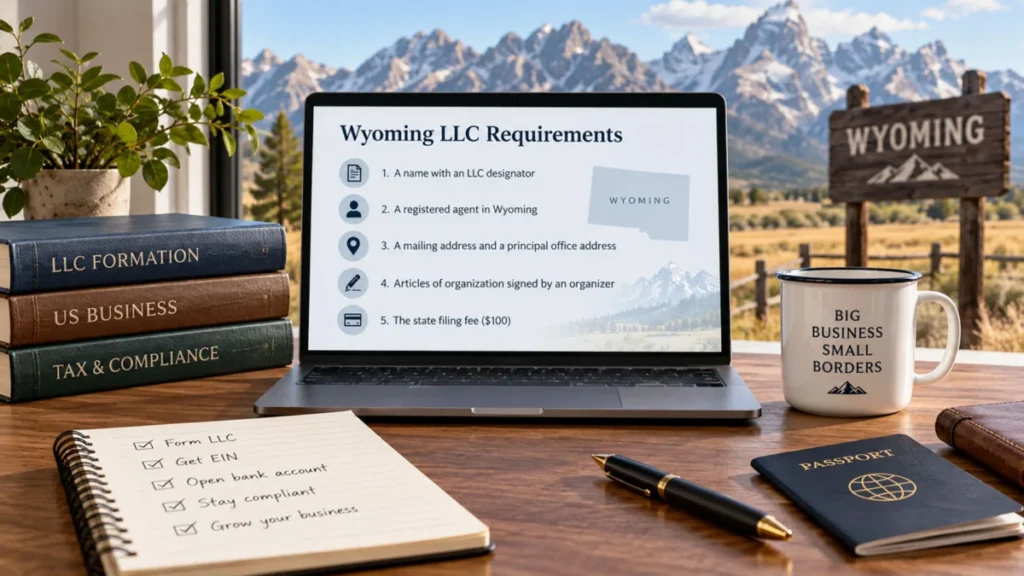
At its core, the Wyoming LLC is a flexible, private entity that offers a shield of liability protection while minimizing administrative friction. For an international applicant, the barrier to entry is intentionally low. To form an LLC in Wyoming, the state requires only a handful of specific items:
- A Compliant Name: The business name must include an LLC designator (e.g., "LLC," "L.L.C.," or "Limited Liability Company").
- Registered Agent: You must appoint a registered agent with a physical address within Wyoming. This entity is responsible for receiving legal documents and service of process on behalf of your company.
- Dual Addresses: The state requires both a principal office address and a mailing address.
- Articles of Organization: A document signed by an organizer that outlines the existence of the company.
- Filing Fee: A modest state fee payable upon submission.
Crucially, the state form is designed to be inclusive. It does not inquire about the citizenship or residency status of the owners. Furthermore, it does not require the disclosure of member names on public filings. This structural privacy allows founders to maintain discretion while ensuring their business is fully compliant with state law.
Chronology: The Lifecycle of Your Business Entity
Establishing a business is a multi-stage process that extends well beyond the initial filing. Understanding the timeline is essential for maintaining good standing and avoiding costly regulatory hurdles.
Phase 1: Formation (The State Level)
The process begins with the filing of the Articles of Organization with the Wyoming Secretary of State. Once the state reviews and accepts these documents, the LLC is officially born. At this stage, your focus shifts to internal governance. While Wyoming does not require you to file an "Operating Agreement" with the state, this document is the backbone of your company. It defines how decisions are made, how profits are distributed, and how the company handles disputes. Banks and potential investors will almost certainly request to see this document, so it should be drafted with professional care immediately following formation.
Phase 2: Federal Integration (The IRS)
Once the company exists, it must be recognized by the Internal Revenue Service (IRS). This is achieved through the acquisition of an Employer Identification Number (EIN). This nine-digit number acts as a Social Security number for your business. For international founders, the application process depends heavily on whether you have a U.S. Social Security Number (SSN) or an Individual Taxpayer Identification Number (ITIN). If you do not possess either, the process involves filing Form SS-4 via fax or mail, designating "Foreign" in the appropriate fields.
Phase 3: Annual Compliance
The life of an LLC is marked by annual obligations. In Wyoming, you must file an Annual Report by the first day of the company’s anniversary month. This report is accompanied by a license tax—usually $60 or a calculated percentage of assets held within the state, whichever is higher. Failure to pay this tax within 60 days of the due date puts your company at risk of administrative dissolution, which would void your liability protection.
Supporting Data: Navigating Federal Tax Obligations
For the international entrepreneur, the primary concern is often federal tax reporting. The IRS maintains strict oversight of entities with foreign ownership.
The Impact of Form 5472
If your Wyoming LLC is a "disregarded entity" (wholly owned by a single foreign person), the IRS treats the company as a corporation for reporting purposes. This triggers the requirement to file Form 5472. This form details transactions between the foreign owner and the U.S. company, such as capital contributions, loans, or service payments.
The penalty for failing to file this form on time is significant: a minimum of $25,000 per violation. Because of these stakes, it is highly recommended that founders engage a cross-border tax professional to ensure that the pro forma Form 1120 and its accompanying Form 5472 are filed correctly and on time (typically April 15, unless an extension is filed).
The Beneficial Ownership Rule
A common point of confusion for international founders is the FinCEN Beneficial Ownership Information (BOI) reporting rule. As of current regulations, many entities created in the United States are subject to these filings. However, staying updated on FinCEN’s evolving guidance is critical, as compliance requirements are subject to legislative updates.
Official Perspectives: The Wyoming Advantage
Why Wyoming? The state has cultivated a reputation as a business sanctuary. Unlike many other jurisdictions, Wyoming imposes no state income tax. This creates a highly favorable environment for companies that operate primarily through digital channels or hold intangible assets.
The state government’s philosophy is one of non-interference. By not requiring member names on the public record, Wyoming protects the privacy of business owners. This, combined with the state’s long-standing history of robust business courts, makes it an attractive jurisdiction for founders who prioritize legal stability and personal privacy.
Implications: Strategic Considerations for the Founder
Starting a business in the U.S. as a non-resident is a significant step, but it is not without its complexities. The implications of your structure ripple through your banking, tax, and legal standing.
The Banking Hurdle
While forming an LLC is straightforward, opening a business bank account as a foreign national can be challenging. Most U.S. banks require an in-person visit or a specific, pre-approved nexus within the United States. Your EIN confirmation letter (CP 575) and a well-drafted Operating Agreement are your most important assets when approaching financial institutions. Be prepared for rigorous Know-Your-Customer (KYC) checks, as banks are the primary gatekeepers of the American financial system.
Professional Assistance
Because the consequences of errors—such as a late Form 5472 or a missed annual report—are severe, many founders opt for specialized formation services. Organizations like CORPBOLT have built their business model around bridging the gap for international founders. By providing registered agent services, U.S. business addresses, and assistance with EIN applications, these services mitigate the friction that often prevents international entrepreneurs from accessing the U.S. market.
A Global Perspective
The decision to form a Wyoming LLC is more than a simple legal filing; it is an investment in your business’s credibility. Having a U.S.-based entity provides a level of legitimacy that appeals to American clients and partners. It signals that your business is prepared to operate within the U.S. regulatory framework, adheres to international accounting standards, and is committed to long-term growth.
As the global economy becomes increasingly interconnected, the "Wyoming model" offers a blueprint for how a small, landlocked state can serve as the engine for global entrepreneurship. By maintaining clear records, respecting the deadlines of the IRS, and utilizing the legal protections provided by the state, international founders can navigate the American landscape with confidence, turning a simple filing into a lasting business success.



