Gemstones, with their captivating allure and inherent value, have long been the subject of fascination and rigorous scientific scrutiny. For centuries, gemmologists relied on a combination of keen observation and practical tests to ascertain the identity and authenticity of these precious treasures. However, the dawn of a powerful scientific methodology – spectroscopy – has fundamentally transformed the field, offering unprecedented insights into the very essence of a gemstone. This article delves into the historical journey, diverse applications, and profound significance of spectroscopy in modern gemmology, exploring how the measurement of light absorption and emission has become an indispensable tool for professionals worldwide.
Spectroscopy, at its core, is the study of how matter interacts with electromagnetic radiation. In the realm of gemstones, this translates to observing and measuring the absorption and emission of light across various wavelengths. This seemingly simple principle unlocks a wealth of information, acting as a unique fingerprint for each gemstone, revealing its identity, origin, and even the presence of treatments or synthetic origins.
The Dawn of Light’s Secrets: A Historical Perspective
The scientific foundation for spectroscopy’s application in gemmology can be traced back to the groundbreaking observations of luminaries like Sir Isaac Newton. In 1672, Newton famously demonstrated that white light could be dispersed into its constituent colours – a spectrum – using a prism. This revelation laid the groundwork for understanding the fundamental nature of light and its interaction with matter.
The early 19th century witnessed a crucial advancement with Joseph Fraunhofer’s development of the spectroscope. By incorporating a narrow slit to precisely control light entry and a diffraction grating to spread the spectral colours, Fraunhofer was able to observe the spectrum of daylight with remarkable clarity. His pivotal discovery was the presence of dark lines within this spectrum. These lines, now understood as representing specific wavelengths of light absorbed by chemical elements in the sun’s atmosphere, provided the first tangible evidence that elements leave distinct spectral signatures. This principle, initially applied to astronomical observation, would soon find its way into the meticulous world of gemmology, aiding in the calibration and interpretation of spectrographic readings.
Spectroscopy’s Ascent in the Gemmological Arsenal
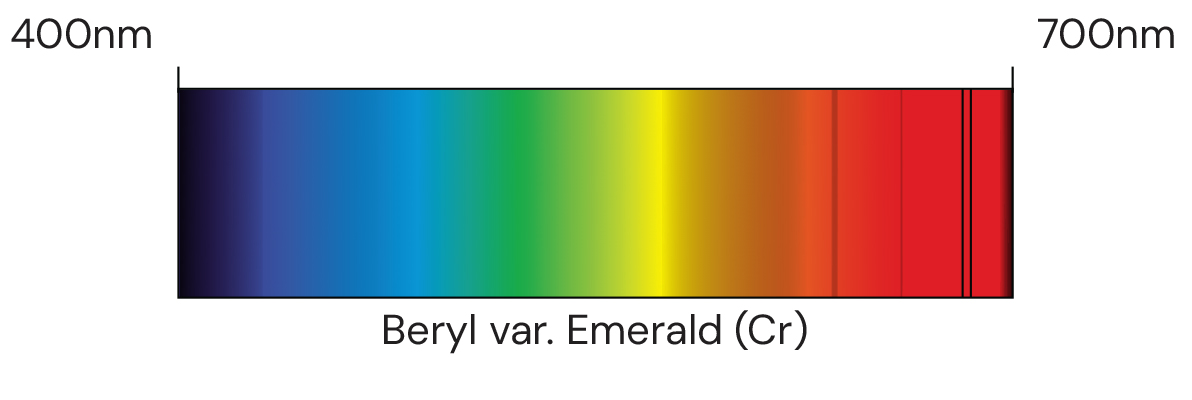
The true integration of spectroscopy into gemmology began to blossom in the latter half of the 19th century. By the 1860s, researchers were actively recording the absorption spectra of various gemstones. Pioneering work by A.H. Church, documented in his seminal book "Precious Stones," featured early spectral analyses of gemstones like zircon and almandine. These initial studies demonstrated the potential of spectral patterns to differentiate between mineral species.
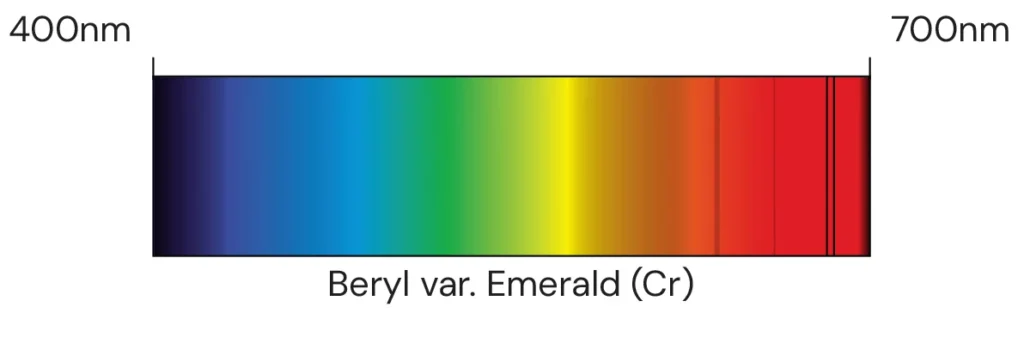
The early 20th century saw a significant leap in the practical application of this technique with the development of the hand-held spectroscope. By the 1930s, instruments like those developed at the Gem Testing Laboratory in London had become integral to the gemmologist’s toolkit. These hand-held spectroscopes, alongside established instruments like the refractometer and microscope, elevated the science of gem identification to new heights. The reason for their indispensability lies in the unique nature of absorption and emission bands. In many gemstones, the precise positions, widths, and intensities of these spectral features are remarkably consistent and serve as reliable indicators of a gemstone’s identity. Furthermore, these spectral fingerprints can often reveal subtle clues about a stone’s origin – whether it is natural or synthetic – and even indicate the presence of colour treatments.
Beyond Visible Light: Expanding the Spectroscopic Horizon
While the early advancements in spectroscopy focused on the visible light spectrum, technological progress soon unlocked the potential of other forms of electromagnetic radiation. The interaction of infrared (IR) radiation with materials, for instance, was recognized in the early 1900s, but the development and commercial availability of sophisticated IR spectrometers only materialized in the 1940s. Similarly, the Raman effect, discovered in the late 1920s, which involves the inelastic scattering of light, could not be effectively harnessed until the advent of lasers in the 1960s. These developments broadened the scope of spectroscopic analysis, allowing gemmologists to probe the intricate molecular structures and elemental compositions of gemstones with unprecedented detail.
A Spectrum of Techniques: Exploring Modern Spectroscopic Methods
Today, gemmologists employ a diverse array of spectroscopic techniques, each offering unique advantages in the identification and characterization of gemstones.
FTIR (Fourier Transform Infrared) Spectroscopy: Unveiling Molecular Signatures
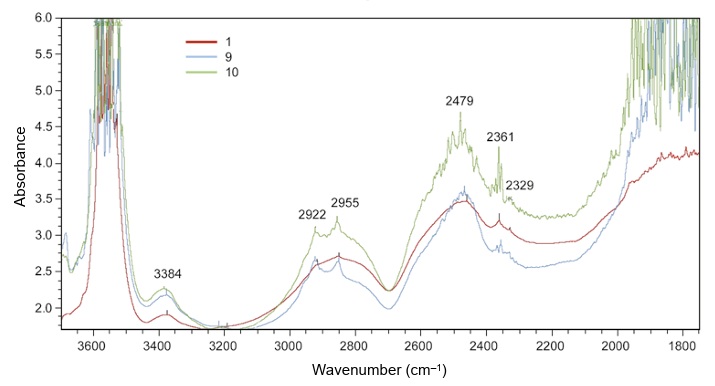
Fourier Transform Infrared (FTIR) spectroscopy stands as a cornerstone in modern gemmology. This technique measures the absorption of infrared radiation across a broad range of wavelengths, typically expressed in wavenumbers (the reciprocal of wavelength, indicating the number of waves per centimeter). The infrared spectrum of a gemstone provides a detailed molecular fingerprint, revealing the presence of specific chemical bonds and functional groups within its structure.
FTIR analysis is invaluable for several key applications:
- Gem Material Identification: The unique absorption patterns generated by FTIR can definitively identify a wide range of gem materials, distinguishing between similar-looking stones.
- Natural vs. Synthetic Differentiation: Subtle differences in molecular structure and impurity levels between natural and synthetic gemstones often manifest as distinct absorption bands, allowing for reliable differentiation. For example, the presence or absence of specific elements like nitrogen in diamonds, or the way they are incorporated, creates characteristic FTIR spectra.
- Detection of Treatments and Coatings: FTIR can effectively identify the presence of surface coatings or internal fillings, which are often used to enhance the appearance of gemstones. For instance, the resin impregnation of jadeite, a treatment that can be challenging to detect with conventional methods, typically leaves a distinctive FTIR signature.
- Diamond Typing: FTIR is crucial for classifying diamonds into different types (e.g., Type I and Type II) based on their nitrogen content and aggregation state. This is particularly important for distinguishing between natural diamonds and certain types of synthetic diamonds, which often have significantly lower nitrogen concentrations. A naturally colored blue diamond, for instance, is almost always Type IIb, characterized by the presence of boron and the absence of detectable nitrogen. Conversely, a near-white Type I diamond, containing substantial amounts of nitrogen, is more likely to be natural, as most comparable synthetic diamonds contain much less.
UV-Vis-NIR Spectroscopy: Illuminating Color and Origin
Ultraviolet-Visible-Near Infrared (UV-Vis-NIR) spectroscopy probes the electromagnetic spectrum from short-wave ultraviolet light through the visible range and into the near-infrared. This technique is particularly adept at identifying the chromophores responsible for a gemstone’s color and can provide insights into its origin.
Key applications of UV-Vis-NIR spectroscopy include:
- Color Cause Identification: The absorption bands in the UV-Vis-NIR spectrum directly correlate with the electronic transitions within the gemstone’s crystal lattice, which are responsible for its perceived color. For example, specific absorption bands in diamonds can reveal the presence of impurities like nitrogen or nickel, which are responsible for their color.
- Natural vs. Synthetic Diamond Differentiation: Certain absorption bands are more commonly associated with natural or synthetic diamonds. For instance, an absorption at 415 nm caused by nitrogen aggregates is a strong indicator of a natural diamond, while absorptions related to nickel (at 484 and 884 nm) or silicon (at 737 nm) are more likely to be found in synthetic diamonds.
- Gemstone Origin Determination: For colored gemstones like sapphires and emeralds, UV-Vis-NIR spectroscopy can help in distinguishing their geographical origin. For sapphires, the absorption patterns can differentiate between those originating from igneous or sedimentary rocks. For emeralds, the varying proportions of chromium and iron, which are characteristic of different mining localities, can be identified. Similarly, valuable Paraiba tourmalines, known for their vibrant blue-green hue, can be distinguished from less costly look-alike stones by detecting the presence of copper, a key element responsible for their unique color.
X-ray Diffractometry (XRD): Unraveling Atomic Architecture
While not strictly a spectroscopic technique in the same vein as light interaction, X-ray diffractometry (XRD) plays a complementary and crucial role in gemmological analysis, leveraging the interaction of X-rays with atomic structures. XRD works on the principle that X-rays are diffracted by the regular arrangement of atoms within a crystalline material, much like light waves are diffracted by a diffraction grating.
XRD is indispensable for:
- Mineral Species Identification: By measuring the precise angles at which X-rays are diffracted, gemmologists can determine the distances between atomic layers. Given that different elements have distinct atomic sizes and arrange themselves differently in various materials, this information provides a highly sensitive and definitive method for identifying mineral species. Even complex polycrystalline aggregates, including rocks, can be analyzed and their constituent mineral species identified.
- Crystal Structure Analysis: XRD allows for the investigation of the atomic structures and symmetry of single crystals. This is a fundamental step in the characterization of newly discovered minerals, such as the mineral taaffeite, which was initially identified as a cut gemstone.
- Elemental Analysis (through X-ray Fluorescence – XRF): X-rays possess sufficient energy to dislodge electrons from the inner shells of atoms. When an electron from an outer shell fills this vacancy, it emits an X-ray photon with an energy characteristic of that specific element. X-ray fluorescence (XRF) detectors record these emissions, providing a partial chemical analysis of a material. This technique is vital for:
- Identifying Stones and Coatings: XRF can quickly identify the elemental composition of a gemstone and any surface coatings.
- Natural vs. Synthetic Differentiation: The presence of elements like nickel or silicon in diamonds, which are more typical of synthetic stones, can be detected by XRF, aiding in differentiation.
- Trace Element Analysis: The precise proportions of trace elements such as chromium, vanadium, and iron can help distinguish between natural and synthetic rubies, offering crucial insights into their origin and authenticity.
Raman Spectroscopy: Probing Molecular Vibrations
Raman spectroscopy, a technique that emerged with the development of lasers, offers another powerful window into the molecular makeup of gemstones. In a Raman spectrometer, a focused laser beam interacts with a material. While most of the light is scattered elastically (at the same wavelength), a small fraction undergoes inelastic scattering, meaning its wavelength is altered. This alteration, known as the Raman shift, is directly related to the vibrational modes of the molecules within the gemstone.
Raman spectroscopy is employed for:
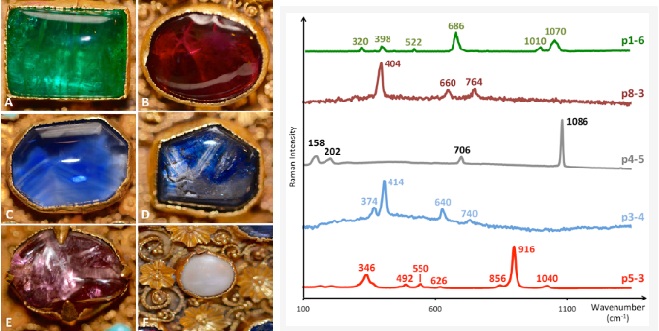
- Material Identification: The Raman spectrum, displayed as a series of characteristic peaks, acts as a unique fingerprint for a given material. By comparing these spectra to extensive databases, gemmologists can accurately identify gemstones. While generally not sufficient on its own to distinguish between natural and synthetic stones, it is a powerful identification tool.
- Inclusion Analysis: Sophisticated Raman instruments can analyze microscopic inclusions within gemstones, even if they are not directly at the surface. This provides invaluable information about the gemstone’s formation environment and geological history.
- Diamond Characterization: Raman spectroscopy is particularly useful for diamonds. The technique’s sensitivity is enhanced at low temperatures, and cooling diamonds with liquid nitrogen can improve the clarity and detail of their Raman spectra. This allows for the detection of defects in diamond structures at very low concentrations, which can serve as evidence of natural origin versus synthetic production or specific colour treatments, such as high-pressure, high-temperature (HPHT) treatments, which can be difficult to confirm by other methods.
Spectroscopy for the Professional Gemmologist: Precision and Provenance
The advanced spectroscopic techniques discussed above represent the cutting edge of gemmological analysis. While many methods are entirely non-destructive and require no sample preparation, some sophisticated instruments may employ methods that involve the removal of minuscule amounts of material from the gemstone’s surface. This might result in a shallow pit, comparable in diameter to a human hair. Such techniques are often justified by the significant price premium placed on natural gemstones and those originating from specific, highly valued localities. The vaporized material is then meticulously analyzed by a spectrometer to provide detailed elemental and isotopic analyses. Through careful comparison with comprehensive databases, these analyses can offer compelling evidence of a gemstone’s geographical origin, a critical factor in determining its value and provenance.
The Evolving Landscape: Staying Ahead of Synthesis and Treatment
The world of gemstone synthesis and treatment is in a constant state of evolution, with manufacturers continually developing more sophisticated methods to mimic natural stones. This ever-advancing landscape necessitates a parallel evolution in the analytical instruments employed by gemmologists. The demand for increasingly precise and sensitive tools, for both gemmological laboratories and on-site office use, is paramount.
Spectroscopy, with its rich history spanning over a century, has consistently proven its ability to adapt and innovate. As new challenges arise in the identification of novel synthetic materials and complex treatments, spectroscopy promises to continue its development, providing gemmologists with the essential tools needed to navigate the increasingly intricate world of precious stones and to uphold the integrity of the global gem trade.
Conclusion: The Enduring Power of Light Analysis
From the foundational discoveries of Newton and Fraunhofer to the sophisticated laser-based instruments of today, spectroscopy has evolved from a nascent scientific curiosity into an indispensable pillar of modern gemmology. Its ability to decipher the unique spectral signatures of gemstones, revealing their identity, origin, and even the subtle imprints of human intervention, has revolutionized the field. As technology continues to advance, and as gemstone synthesis and treatment methods become ever more complex, spectroscopy will undoubtedly remain at the forefront, ensuring that the inner light of every gemstone can be understood and appreciated with unparalleled scientific rigor.