
For over a century, the floor of the North Sea has served as a silent, liquid cemetery. Beneath the restless waves, thousands of steel hulks rest in the dark, their hulls slowly surrendering to the relentless corrosion of salt water and time. Among these is the German submarine UC-30, a vessel that vanished in April 1917 while retreating toward the safety of home. It never arrived.
For 27 crew members, the UC-30 became a tomb when it struck a British mine on April 19, 1917, detonating the 18 mines and six torpedoes packed within its cramped quarters. For nearly 100 years, the site remained a ghost of the Great War, forgotten by history until Danish diver Gert Normann Andersen located the wreckage in 2016. However, as modern science begins to peel back the layers of history, researchers are discovering that these wrecks are far from inert. They are, in fact, leaking toxic legacies into the modern marine ecosystem.
A Legacy of Conflict: The Strategic Importance of the North Sea
To understand the scope of the current environmental crisis, one must look back to the geopolitical landscape of the early 20th century. During World War I, the North Sea was not merely a body of water; it was the primary theater of economic and naval warfare. For both the British Empire and the German Empire, control of these shipping lanes meant the ability to choke the life out of the enemy’s economy.
Because Germany possessed a smaller surface fleet, it turned to the U-boat—a revolutionary and terrifying weapon designed to strike unseen. The strategy was simple: sink supply ships and starve the opposition. To combat this, both sides laid an unprecedented number of naval mines—an estimated 190,000 in total across the North Sea. The region also hosted the Battle of Jutland, the largest naval clash in history, which saw over 25 ships sent to the bottom and nearly 10,000 sailors lost. These immense wartime casualties left the seafloor scattered with a debris field that would define the environmental challenges of the 21st century.
The Science of Corrosion: Investigating the UC-30
The UC-30 has recently become a focal point of the NorthSeaWrecks research project, an initiative aimed at assessing the environmental impact of historical shipwrecks. Katrine Juul Andresen, a professor at the Department of Geoscience at Aarhus University, has been instrumental in spearheading this investigation.
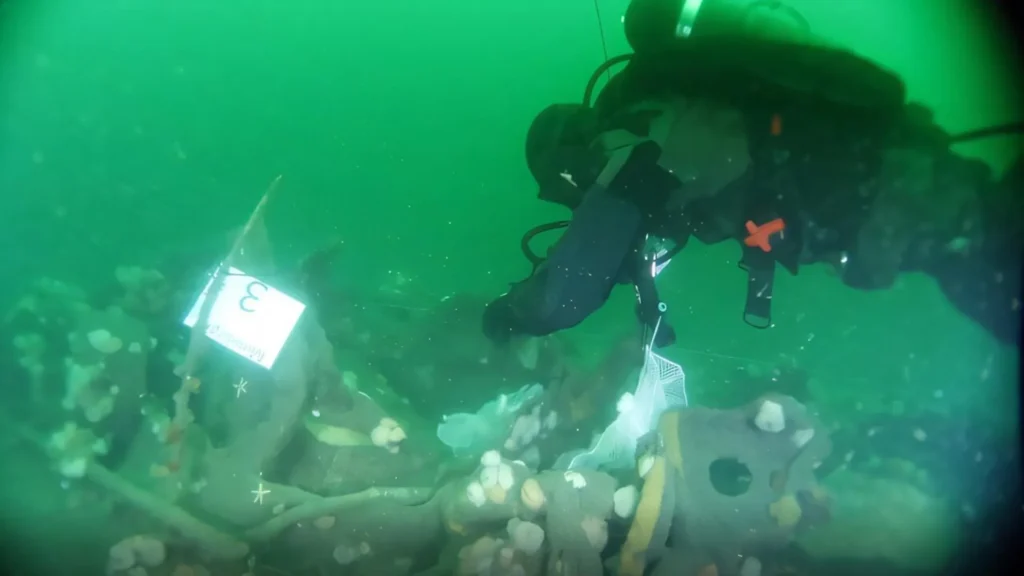
The methodology employed by Andresen and her team highlights the difficulty of studying deep-sea pollution. Because civilian diving is strictly prohibited on the wreck to protect its integrity and prevent accidental detonations, the team relied on the expertise of navy divers. These divers, following rigorous safety protocols, collected water and sediment samples from the wreck’s immediate vicinity, as well as biological samples from starfish and mussels colonizing the rusted steel.
The results of these samples were unambiguous: explosive material, specifically TNT, is leaching into the surrounding marine environment. "We found traces of TNT in the wildlife, the seabed, and the water column," Andresen reports. While the pollution is currently localized, the prognosis is concerning. As the structural integrity of the wreck continues to fail, more of the internal munitions will be exposed to seawater, accelerating the rate at which toxins are released into the food chain.
The Scale of the Crisis: 10,000 Wrecks and Counting
The UC-30 is far from an isolated case. In 2024, Andresen authored a comprehensive report for the Danish Environmental Protection Agency (DEPA) that cataloged the sheer magnitude of the threat. The study identified 10,127 shipwrecks in Danish waters alone. Perhaps most alarming is that approximately 15 percent of these vessels date from the periods of the two World Wars—eras defined by the heavy use of chemical and explosive armaments.
This report was commissioned as part of Denmark’s compliance with the EU Water Framework Directive, which mandates the protection and improvement of aquatic ecosystems. The sheer volume of hazardous material resting on the seabed presents a regulatory and technical nightmare. If 1,500 wrecks in Danish waters possess the potential to leak TNT or other chemical compounds, the task of remediation is orders of magnitude more complex than previously imagined.
The Dilemma of Remediation: The High Cost of Cleanup
Across the North Sea, nations are grappling with how to address this underwater ticking clock. Germany has taken the lead, committing significant financial resources to recover munitions from the Baltic Sea—much of which was dumped by Allied forces after WWII to prevent the weaponry from falling into unauthorized hands.
However, "cleaning up" a wreck is not as straightforward as dredging it. Katrine Juul Andresen notes that while Germany has successfully retrieved and neutralized some explosives, the cost is prohibitive. Furthermore, the very act of removal carries inherent risks. Simply detonating these munitions in situ is often touted as a solution, but modern science suggests this may be a double-edged sword.
"It depends on the area where the wreck and munitions lie," Andresen explains. "Currents and seabed morphology play a major role. In some cases, detonating them can do more harm than good." Underwater explosions can disperse contaminants over a wider area, potentially causing a greater ecological impact than the slow, steady leakage of a corroding mine.
Future Technologies: Robotics and Monitoring
As the limitations of conventional salvage become clear, researchers are turning to innovative technological solutions. Andresen is currently participating in the EU-funded REMARCO project, which explores safer, more precise methods for managing submerged munitions.
Among the most promising developments are autonomous seafloor robots. These machines can navigate the hazardous environment of a wreck site, mapping the precise location of munitions with a level of detail human divers cannot achieve. Beyond surveillance, some of these robots are being designed with the capability to pick up, retrieve, and neutralize individual items.
"We are trying to identify the most gentle solutions to the problem," says Andresen. "There is, unfortunately, no easy way to clean it up."
Strategic Implications and Environmental Policy
The findings of the NorthSeaWrecks project and the DEPA report have profound implications for environmental policy. The data suggest that authorities can no longer afford to treat shipwrecks as mere historical artifacts. They are active, degrading chemical hazards that require monitoring and, in high-risk cases, intervention.
However, total remediation is neither practical nor, in many cases, necessary. Research indicates that wrecks buried in sediment are far less dangerous than those exposed to the open water column. The sand acts as a natural barrier, trapping pollutants and preventing them from entering the food chain. Consequently, the focus is shifting toward a tiered management strategy:
- Mapping and Assessment: Using robots and sensors to identify which wrecks pose the highest risk of chemical leaching.
- Prioritization: Distinguishing between wrecks that are safely encapsulated in sediment and those that are actively shedding toxic materials into the water.
- Targeted Intervention: Applying high-cost, high-tech removal techniques only where the environmental threat to the marine ecosystem is documented as severe.
Conclusion: A Delicate Balance
The story of the UC-30 is a microcosm of a much larger, global challenge. As we move further from the conflicts of the 20th century, the physical evidence of those wars is not disappearing; it is changing form. The steel that once formed the hulls of dreadnoughts and submarines is returning to the ocean, but in the process, it is leaving behind a toxic fingerprint.
The challenge for the coming decades will be to strike a balance between preserving the historical significance of these sites and protecting the marine environments that sustain us. Through the work of scientists like Katrine Juul Andresen and the integration of robotics, we are finally beginning to understand the magnitude of the task. We may not be able to clear the seafloor of every remnant of the World Wars, but with diligent monitoring and innovative technology, we can ensure that the shadows of the past do not poison the future of our oceans.