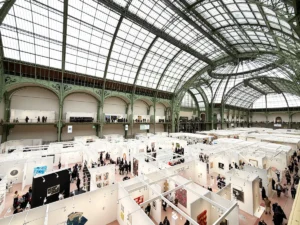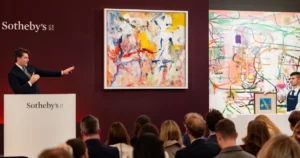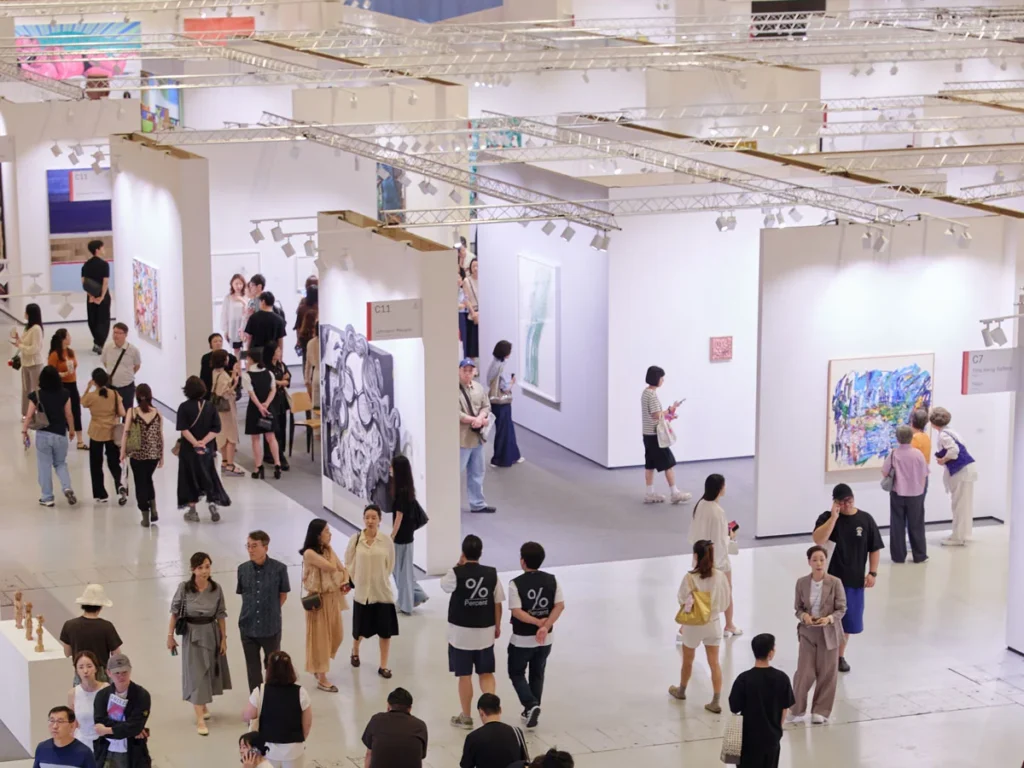
As the global art world turns its eyes toward East Asia this September, the narrative surrounding Seoul has shifted. The frenetic energy of the "boom years"—characterized by aggressive expansion and speculative fervor—has given way to a more measured, sophisticated, and arguably more sustainable phase. With Frieze Seoul returning for its landmark fifth edition and the Korea International Art Fair (KIAF) celebrating its 25th anniversary, the South Korean capital is no longer just the "new frontier"; it is a maturing hub undergoing a significant structural recalibration.
Main Facts: A Market in Transition
The 2024–2025 season marks a pivotal moment for Seoul. While the initial "gold rush" sparked by the arrival of major international fairs has cooled, the underlying infrastructure of the market is strengthening. Key developments include:
- A Shift in Collector Behavior: Speculative buying has largely vanished, replaced by a more "conscientious" collector base that prioritizes long-term value and personal taste over social media trends.
- Market Bifurcation: A clear divide has emerged between the "old guard," who continue to acquire blue-chip works exceeding $1 million, and a burgeoning younger generation focusing on ultra-contemporary works priced below $10,000.
- Geographic and Structural Evolution: Frieze Seoul and KIAF, previously held under one roof at the COEX convention center, will soon diverge due to renovations, with Frieze moving to the iconic Zaha Hadid-designed Dongdaemun Design Plaza (DDP) in 2025.
- Institutional Growth: Beyond the commercial fairs, Seoul is expanding its cultural footprint with new museums, including the city’s first photography museum (PhotoSeMA) and a high-profile partnership with the Centre Pompidou.
Chronology: From Hyper-Growth to Market Correction
To understand Seoul’s current state, one must look at the rapid trajectory of the last five years.
2021–2022: The "Gold Rush" Years
Following the global pandemic, South Korea emerged as a primary destination for international galleries. The debut of Frieze Seoul in 2022 acted as a catalyst, drawing thousands of international collectors and leading to record-breaking sales. During this period, the "easy flow of money" was driven by low interest rates and a post-COVID appetite for tangible assets.
2023: The Reality Check
By 2023, the global economic slowdown began to affect the peninsula. High interest rates, currency volatility, and a cooling secondary market led to a "wait-and-see" approach among mid-level collectors. While international interest remained high, some of the speculative "flipping" of emerging artists began to subside.
2024–2025: The Maturation Phase
The current period is defined by "The Seoul Calibration." While some international galleries (such as Peres Projects and König) have closed their physical outposts in the city, others, like Gladstone Gallery and Meyer Riegger, are expanding. This period is characterized by a "survival of the fittest" among galleries and a deepening of the relationship between the commercial market and local institutions.

Supporting Data: Resilience Amidst Global Headwinds
Despite the perception of a "slowdown," the data suggests that South Korea’s art market remains resilient compared to global averages.
According to the Art Basel and UBS Art Market Report, the global art market saw a modest recovery of 4% in 2025 after two consecutive years of decline. In contrast, South Korea outperformed the global average with a growth rate of 6%. However, this growth is not evenly distributed.
The Sales Gap
Dealers report that while the volume of transactions is steady, the "secondary market" for mid-career artists has become increasingly difficult to navigate. Works that would have sold instantly in 2021 now require significantly more effort to move. Conversely, the demand for Dansaekhwa (Korean monochrome painting) artists from the 1970s remains robust, serving as a "safe haven" for established wealth.
Regional Dominance
The 2024 exhibitor list for Frieze Seoul highlights the fair’s regional pivot. Over 70% of the 133 exhibitors are based in the Asia-Pacific region, and roughly 50 enterprises maintain permanent spaces in Seoul. This suggests that while the fair may be attracting fewer "jet-set" collectors from the US compared to its debut, it has successfully cemented itself as the primary ecosystem for Asian art trade.
Official Responses: Voices from the Front Lines
The sentiment among industry leaders is one of cautious optimism, emphasizing that a "healthier" market is not necessarily one that grows at breakneck speed.
Jason Haam, owner of the eponymous Seoul gallery, notes that the fading of the initial hype is a natural evolution. "The easy flow of money has certainly stopped," Haam told ARTnews. "But the market is healthier and more mature. The collectors who remain tend to be genuinely passionate about art and are more likely to continue collecting over the long term."

Sunghoon Lee, Chairman of the Galleries Association of Korea (which organizes KIAF), points to the increased sophistication of the local audience. "Today’s collectors are generally more informed, curious, and confident in their own tastes," Lee observed. This confidence is manifesting in a move away from "defaulting" to Western blue-chip names in favor of contemporary Asian artists.
Patrick Lee, Director of Frieze Seoul, highlights the shift from mere consumption to patronage. "What is particularly encouraging is the level of engagement beyond collecting itself. Many collectors are contributing through patronage, education, and support for artists and institutions," Lee stated.
However, not all perspectives are purely celebratory. Timmy Kim, a Seoul-based adviser and curator, warns that the Western model of museum patronage—such as gala dinners and public fundraising—does not always translate perfectly to Korean culture. "We have many hidden collectors in the Korean market who don’t want to expose themselves," Kim explained, though he admits the younger generation is becoming more public with their engagement.
Implications: What Lies Ahead for "KIAFrieze"?
The "maturation" of the Seoul market has several long-term implications for the city’s status as a global art hub.
1. The Regional Hub Rivalry
For years, the industry speculated whether Seoul would overtake Hong Kong as the primary art hub in Asia. The current consensus suggests a more nuanced reality: Seoul is becoming the regional "center of gravity" for contemporary Asian practices and institutional depth, while Hong Kong maintains its status as a high-volume financial and auction hub. The localization of Frieze Seoul—with its heavy Asia-Pacific exhibitor list—solidifies its role as the essential meeting point for the regional ecosystem.
2. The Infrastructure Challenge
The physical separation of Frieze and KIAF in 2025 represents a logistical hurdle. For the past four years, the "synergy" of having both fairs at COEX allowed collectors to move seamlessly between established international works and local Korean galleries. The move of Frieze to the Dongdaemun Design Plaza (DDP) will test the "stickiness" of the audience. Will collectors be willing to shuttle between Gangnam and Dongdaemun, or will the market fragment?

3. The Rise of Ultra-Contemporary Korean Talent
The "calibration" has forced a focus on quality over quantity. As collectors become more selective, they are looking closer to home. The success of younger Korean artists like Haneyl Choi and Heemin Chung suggests that the next phase of the Seoul market will be driven by domestic talent that can command international attention.
4. Institutional Stability
The opening of the Centre Pompidou outpost in 2025 and the planned 2027 opening of the Songhyeon Cultural Center (to house the Lee Kun-hee collection) will provide a permanent anchor for the city. These institutions will help buffer the market against the cyclical nature of art fairs, ensuring that Seoul remains a destination for "art pilgrims" year-round, not just for one week in September.
Conclusion
The "hype" may be over, but the work has just begun. Seoul’s transition from a speculative hotspot to a mature market is a sign of strength, not weakness. While the secondary market faces a correction and some international galleries have retreated, the deepening of institutional roots and the refinement of the collector base suggest that Seoul has successfully secured its place on the permanent international art calendar. The coming years will be defined not by how fast the market grows, but by how deeply it integrates into the global cultural fabric.