The year 2026 marks a watershed moment for the storied Swiss watchmaker, Baume & Mercier. As the horological world observes a significant shift in the brand’s trajectory—transitioning from the stewardship of the Richemont Group to the ownership of the Damiani Group—the company finds itself at a unique professional crossroads. While corporate transitions often invite uncertainty, they also provide a canvas for reinvention. Amidst this period of strategic recalibration, Baume & Mercier has signaled its future direction through a renewed commitment to its heritage, epitomized by the launch of the Joia collection.
At the pinnacle of this new lineup stands the Joia 10850, a timepiece that serves as a bridge between the brand’s storied past and its modern ambitions. By blending mid-century cocktail watch aesthetics with 21st-century manufacturing precision, the brand is attempting to prove that "what is old is relevant again."
Main Facts: The Joia 10850 Refined
The Baume & Mercier Joia 10850 is a sophisticated 28mm timepiece that deviates from the standard, more accessible models in the broader Joia collection. While the entry-level Joia models—typically priced around $1,500 USD—focus on minimalist, cosmopolitan daily wear, the 10850 reference elevates the series into the realm of luxury jewelry.

Technical Specifications:
- Case Material: Polished stainless steel.
- Dimensions: 28mm diameter, 7.2mm thickness.
- Movement: Swiss-made Ronda caliber 751 quartz movement.
- Crystal: Flat, anti-reflective (AR) coated sapphire.
- Water Resistance: 50 meters (5 ATM).
- Aesthetic Details: 40 round-cut diamonds set into the bezel; satin-finish dial.
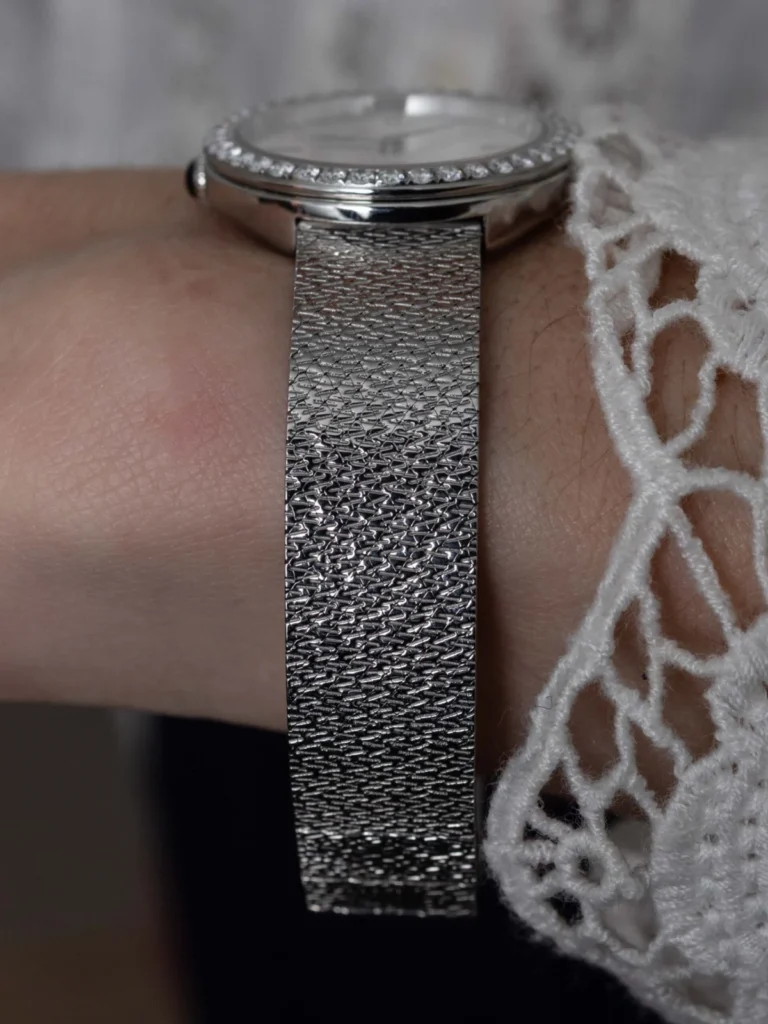
- Bracelet: Integrated steel bracelet with quick-release spring bars, designed to mimic the aesthetic of classic, welded-link vintage bracelets.
- Retail Price: $4,400 USD.
The 10850 stands out for its high-contrast design. The juxtaposition of the matte, highly legible dial—accented by only four Roman numeral hour markers—against the brilliance of the 40 diamonds creates an effect that is simultaneously understated and opulent.
Chronology: A Transition of Ownership
The arrival of the Joia collection coincides with one of the most significant corporate realignments in the Swiss watch industry this decade.

- Early 2026: Official announcements confirmed the acquisition of Baume & Mercier by the Damiani Group, moving the brand away from its long-standing home within the Richemont portfolio.
- Spring 2026: Internal restructuring began, focusing on streamlining the brand’s identity to emphasize its "vintage-modern" design philosophy.
- Mid-2026: The Joia collection was introduced as the first major creative output under the guidance of the new management team.
- July 2026: Market release of the premium Joia 10850 model, marking the brand’s attempt to capture the high-end cocktail watch market segment.
This transition period has been described by industry insiders as a "semi-limbo" phase, where the brand has been afforded the breathing room to evaluate which parts of its extensive archives should be resurrected. The Joia line is the first tangible result of this historical audit.
Supporting Data: Why the 10850 Matters
To understand the significance of the Joia 10850, one must look at the historical context of women’s horology. During the mid-20th century, watchmakers often treated women’s timepieces as extensions of couture. Dials were textured to match the fabric of evening gowns, and bracelets were designed to function as pieces of jewelry rather than merely utilitarian tools.
The Joia 10850 replicates this sentiment with its "satin-style" dial and its meticulously engineered bracelet. Despite the bracelet’s appearance as a single, cohesive surface—reminiscent of vintage "welded" styles—it is composed of multiple small, adjustable links. This offers the wearer the best of both worlds: the vintage aesthetic of a solid band and the modern comfort of an adjustable, ergonomic fit.

Furthermore, the price point of $4,400 USD places the 10850 in a strategic "sweet spot." While other Richemont-affiliated brands, such as Piaget, have long dominated the high-end jewelry watch space, they often demand significantly higher premiums for precious metal construction. By utilizing stainless steel, Baume & Mercier has produced a piece that offers the visual impact of a high-jewelry watch while remaining accessible to a broader demographic of collectors who value craftsmanship over raw material value.
Official Perspectives and Industry Sentiment
When discussing the development of the Joia 10850, representatives from Baume & Mercier emphasize the importance of "aesthetic continuity." The brand has faced pressure to modernize, but management remains steadfast in the belief that the brand’s core identity lies in its ability to produce timeless, elegant pieces that do not rely on passing trends.
The watch community has responded with cautious optimism. Critics have noted that while the quartz movement (Ronda 751) is a utilitarian choice, it is a pragmatic one that allows for the 7.2mm ultra-slim profile. In the current market, where thinness is increasingly synonymous with elegance in women’s watches, the choice of a high-quality quartz engine is seen as a necessary trade-off to achieve the watch’s refined silhouette.

"The Joia 10850 is a study in balance," notes one industry analyst. "By keeping the movement simple and the case dimensions petite, they have allowed the dial and the diamond-set bezel to take center stage. It is a bold move to launch such a distinctively ‘retro’ piece while the rest of the industry is obsessed with oversized sports watches."
Implications: The Future of the Brand
The introduction of the Joia 10850 is a microcosm of the brand’s broader strategy under the Damiani Group. The implications for the coming years are clear:
- Double-Down on Heritage: Expect to see more releases that draw from the 1950s and 60s, a period when Baume & Mercier was at its stylistic peak.
- Focus on Value Propositions: By positioning the 10850 against much more expensive competitors, the brand is positioning itself as a "luxury-accessible" alternative. This could be a winning strategy as luxury consumers become increasingly value-conscious in the face of broader economic shifts.
- Modernizing the Distribution of Retro: While the designs are retro, the manufacturing (such as the quick-release spring bars and the adjustable link system) is firmly rooted in modern convenience. The brand is betting that today’s consumer wants the look of the past but refuses to sacrifice the ease of use afforded by modern technology.
As the brand navigates its first year under new leadership, the Joia 10850 serves as a manifesto of sorts. It declares that Baume & Mercier is not interested in chasing the aggressive, tech-heavy trends that dominate the current watch industry. Instead, it is doubling down on the art of the cocktail watch—a niche that is often overlooked but deeply rewarding for those who value elegance and historical resonance.

Whether this strategy will resonate with the modern woman remains to be seen, but the early reception suggests that there is a significant appetite for a watch that feels like an heirloom from day one. In an era of disposable fashion and rapidly changing trends, the Baume & Mercier Joia 10850 offers something increasingly rare: a return to grace, proportion, and timeless style. The transition to the Damiani Group may have brought uncertainty, but if the Joia 10850 is any indication, the future of the brand is in very capable hands.