

In a season defined by intense competition for blue-chip estates, Christie’s has emerged victorious in the pursuit of the collection of the late Herbert Lust. The eccentric banker, scholar, and prolific art collector, who passed away in May at the age of 99, left behind a sprawling assembly of Modernist and Surrealist masterpieces that had become the subject of a fierce tug-of-war between the world’s two largest auction houses.
The announcement marks the conclusion of a high-profile summer negotiation period. As reported by ARTnews, both Christie’s and Sotheby’s were "duking it out" for the rights to represent the estate, which includes approximately 300 works with a combined valuation estimated at $60 million. Ultimately, Christie’s, in collaboration with the Fine Art Group, secured the consignment. The auction house plans to debut the collection during its marquee November sales in New York, with subsequent offerings scheduled for London and Paris.
Main Facts: A $50 Million Windfall for Christie’s
The acquisition of the Lust collection is a significant coup for Christie’s, particularly given the current climate of the global art market, where high-quality provenance and "fresh-to-market" works are increasingly coveted. The auction house expects the total proceeds from the various sales to exceed $50 million.
The centerpiece of the collection is undoubtedly Alberto Giacometti’s Figure, demie grandeur (no. 2). The 47-inch bronze, conceived and cast in 1949, carries an aggressive estimate of $20 million to $30 million. This work is not merely a financial asset; it represents the deep personal and intellectual connection between the collector and the artist. Lust met Giacometti while studying in Paris in the late 1940s, sparking a lifelong obsession that saw Lust evolve from a young student into a leading scholar of Giacometti’s graphic works.
Beyond the Giacometti bronze, the collection features a diverse array of 20th-century masters. Highlights include:
- Frank Stella: Les Indes Galantes (1962), estimated at $7 million to $10 million.
- Yves Tanguy: Qui répondra?, estimated at $2 million to $3 million.
- Hans Bellmer: Jointure de boules (La Poupée), estimated at $1.5 million to $2.5 million.
- Robert Indiana: LOVE Wall, estimated at $800,000 to $1.2 million.
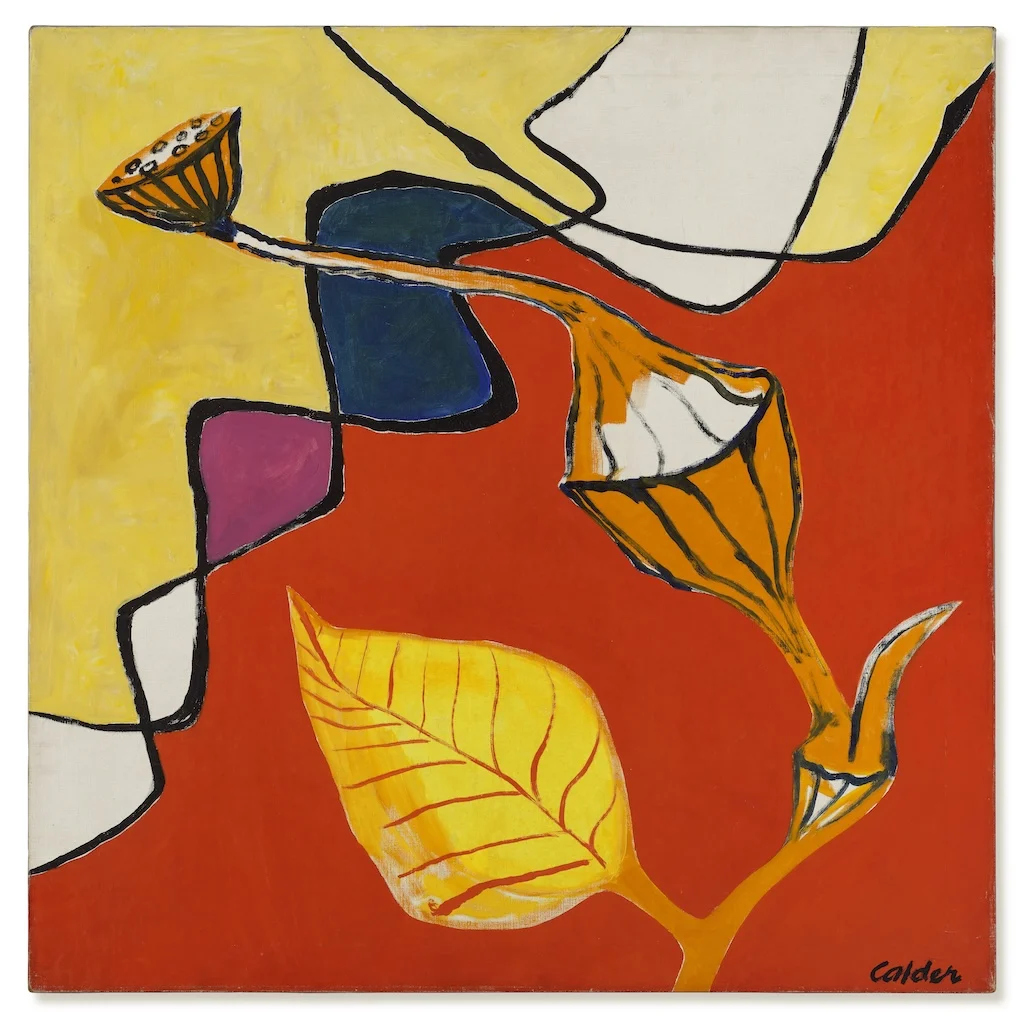
- Alexander Calder: Pomegranate Pods, estimated at $500,000 to $700,000.
Chronology: From the Sorbonne to the Boardroom
To understand the weight of this collection, one must trace the nearly century-long journey of Herbert Lust. His path to becoming one of the most respected collectors of his era began not in the financial district, but in the lecture halls of the Sorbonne.
The Formative Paris Years (1949–1950s)
In 1949, at the age of 22, Lust arrived in Paris on a Fulbright scholarship to study comparative literature. It was during this period that he met Alberto Giacometti. This was a pivotal year for the artist; Giacometti was just beginning to achieve the skeletal, elongated aesthetic that would define his legacy. Lust’s friendship with Giacometti was foundational, providing him with an insider’s view of the Post-War Parisian art scene.
The Banker and the Scholar (1960s–1990s)
While Lust built a successful career as a banker—a profession that provided the capital necessary for his acquisitions—he never abandoned his scholarly roots. Unlike many "trophy hunters" in the art world, Lust was deeply involved in the academic documentation of the artists he loved. He authored the definitive catalogue raisonné of Giacometti’s graphic work and a similar volume for the Italian artist Enrico Baj. He also became a leading authority on the Surrealist Hans Bellmer.

The Late Years and Strategic Dispersal (2000–2024)
By the time of his death in May 2024, Lust’s collection had reached massive proportions. Even after donating hundreds of works to major institutions, his residences in Greenwich, Connecticut, and Manhattan remained filled with over 1,000 objects. The summer of 2024 saw the "battle of the auction houses," as specialists from Christie’s and Sotheby’s vied for the remaining 300 primary works held by the estate.
Supporting Data: Analyzing the Key Lots
The Lust collection is notable for its depth in specific movements, particularly Surrealism and early Post-War abstraction.
The Giacometti Influence
The $20–$30 million estimate for Figure, demie grandeur (no. 2) reflects the rarity of 1940s Giacometti casts. Because Lust purchased many of these works directly or shortly after their creation, the provenance is impeccable. The collection also includes a 1946 painting, Chaise jaune dans l’atelier, estimated at $400,000 to $600,000, showcasing Lust’s interest in the artist’s multi-disciplinary approach.
The Frank Stella Rarity
Frank Stella’s Les Indes Galantes (1962) is a significant inclusion. According to Christie’s, this work is one of only four large-scale pieces from this specific series created that year. With the other three currently housed in museum collections, this auction represents a rare opportunity for private acquisition. The painting has not appeared on the public market in nearly a quarter-century.
The Bellmer Market
The sale of Hans Bellmer’s Jointure de boules (La Poupée) is expected to be a watershed moment for the artist’s market. Lust famously remarked that he could buy "50 great Bellmers for the price of one great Magritte." This strategy allowed him to corner the market on Bellmer’s most important works. Christie’s asserts that Jointure de boules is the artist’s most significant construction from the 1930s still in private hands. The auction house is projecting a new world auction record for Bellmer when the hammer falls.
Official Responses and Strategic Partnerships
The victory for Christie’s is being framed as a result of a sophisticated, multi-national strategy. Christie’s is handling the estate in partnership with the Fine Art Group, a global art advisory firm. This collaboration suggests a complex financial arrangement, likely involving guarantees to the estate to secure the consignment.
In statements regarding the collection, Christie’s specialists have emphasized the "connoisseurship" of Herbert Lust. "Herbert Lust was not just a collector; he was a participant in the history of the art he gathered," a representative noted. "His collection reflects a lifetime of intellectual curiosity and personal friendships with the giants of 20th-century art."
The loss is a notable sting for Sotheby’s, which had spent years cultivating a relationship with Lust. In 2017, Sotheby’s successfully sold 27 works by Robert Indiana from Lust’s holdings. In 2019, they produced a short film featuring Lust in his Greenwich home, an effort clearly intended to solidify their position as the preferred house for his eventual estate. However, the final decision by the estate’s executors favored the proposal put forward by Christie’s and the Fine Art Group.

Implications: The Legacy of the Scholar-Collector
The dispersal of the Lust collection carries several broader implications for the art market and the legacy of 20th-century collecting.
1. The Resilience of Surrealism
The aggressive estimates for the Tanguy and Bellmer works suggest a continued resurgence in the Surrealist market. As prices for mainstream Impressionist and Modern works reach a plateau, collectors are increasingly looking toward the "intellectual" wing of Surrealism—areas where Herbert Lust was a pioneer.
2. The Shift in Estate Planning
Lust’s approach to his legacy was twofold: institutional philanthropy and strategic liquidation. Before his passing, he donated roughly 200 Giacometti works to the Tel Aviv Museum of Art and over 70 photographs to the Hirshhorn Museum and Sculpture Garden in Washington, D.C. This ensured his name would remain in the public sphere while the remaining "high-value" assets were left to be sold to provide liquidity for his heirs or charitable foundations.
3. A Litmus Test for the November Season
The performance of the Lust collection will be a primary indicator of the market’s health this November. In a period of economic uncertainty, "pedigreed" collections—those built over decades with a clear narrative and scholarly backing—historically perform better than speculative contemporary art. The Lust Giacometti, in particular, will be watched as a barometer for the "ultra-high-end" segment of the market.
4. The End of an Era
Herbert Lust represented a vanishing breed of collector: the "eccentric banker" who lived among his treasures and knew the artists personally. His Greenwich home was famously described as being so densely packed with art that it felt more like a warehouse of genius than a suburban residence. As these 300 works move from his private sanctuary to the auction block, it marks the final chapter of a collection built on the intersection of post-war finance and avant-garde intellectualism.
The November auctions will serve as a final tribute to Lust’s discerning eye. While Sotheby’s may have held the "inside track" for years, the gavel now belongs to Christie’s, setting the stage for one of the most anticipated estate sales of the decade.



