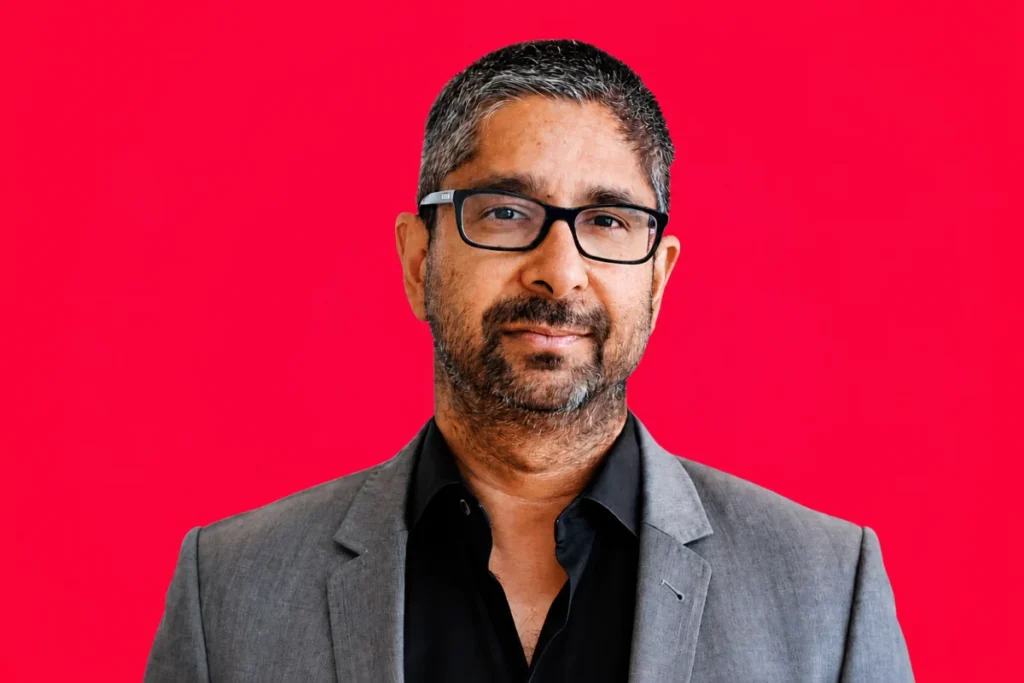
In the rarified world of Silicon Valley venture capital, few figures loom as large over the intersection of biology and computation as Vijay Pande. For over a decade, Pande served as the face of Andreessen Horowitz’s (a16z) foray into the life sciences, transforming a firm that once explicitly avoided healthcare into a titan managing nearly $4 billion in assets. However, in June of last year, Pande executed a pivot that sent shockwaves through the industry: he walked away from the institutional scale of a16z to launch VZVC, a boutique, hyper-concentrated firm co-founded with investor Zach Werner.
This shift marks more than a change of business card; it represents a fundamental re-evaluation of how venture capital should interact with the burgeoning field of AI-driven drug discovery. By eschewing the "spray and pray" model of modern VC in favor of a handful of deep-conviction bets, Pande is testing a hypothesis: that in the complex, walled-off world of biological data, high-touch, AI-augmented human insight is more valuable than capital alone.
The Evolution of an Academic-Turned-Investor
To understand Pande’s current philosophy, one must look at his roots. Long before he was managing billions, he was a Stanford chemistry professor best known for pioneering Folding@home. The project was a landmark in distributed computing, leveraging the idle processing power of millions of home PCs to simulate protein folding, a process essential to understanding diseases like Alzheimer’s and cancer.
When Marc Andreessen and Ben Horowitz recruited Pande to launch their bio-practice, they were betting on a thesis that biology could be treated as a branch of information technology. Over the next twelve years, that bet proved prescient. Pande successfully bridged the gap between the rigid, often skeptical world of academic medicine and the fast-paced, high-risk world of Silicon Valley software investment. He became a primary architect of a new category of "bio-tech" that prioritized data-driven discovery over traditional, fortuitous clinical trial processes.
Chronology: From Folding@home to VZVC
- 2000–2012: Pande builds Folding@home at Stanford, establishing the foundation for modern computational biology and protein folding simulations.
- 2012: Andreessen Horowitz breaks its "no healthcare" rule, hiring Pande to establish their inaugural bio-practice.
- 2012–2023: Pande scales the practice, overseeing investments in transformative companies like Genesis Therapeutics and Insitro, ultimately managing a $4 billion portfolio.
- June 2023: Pande leaves a16z to co-found VZVC with Zach Werner, signaling a return to a more focused, lean, and highly autonomous investment model.
- Present: VZVC begins its operational phase, utilizing custom-built AI agents to manage deal flow and due diligence without the need for traditional junior staff.
The Engineering of Biology: Beyond Discovery
Pande posits that the field of medicine is undergoing a paradigm shift: moving from a "science of discovery"—which relies on serendipity—to a "science of engineering."
"For a lot of the way drugs have been developed, there was very much a fortuitous aspect to it," Pande explains. "What’s shifted is that AI and machine learning allow computers to wrap their understanding around something incredibly complicated. We are now able to determine the exact targets for specific diseases, manufacture those drugs, and optimize the clinical trials, which remain the most expensive and volatile part of the process."
The current failure rate for drugs moving from phase one to phase three of clinical trials hovers at roughly 80%. Pande attributes this systemic failure not to poor science, but to the reliance on animal models, which he argues are notoriously poor predictors of human biological responses. He believes that while AI models are not infallible, they represent a significantly higher fidelity bridge to human outcomes than mice or other traditional models. Once an AI model surpasses that predictive threshold, the economic and human impact could be transformative.
The Conundrum of Walled-Off Data
One of the most profound tensions in AI-driven biotech is the nature of the data itself. Unlike the consumer internet, where AI models can scrape billions of lines of text and images to train foundation models, biological data is siloed. It is private, protected, and often proprietary.
"It’s a place where you don’t have any of this data that people can just all train the same thing on," Pande notes. "Your data can’t be distilled from one model to another. It’s a really interesting play from a pure AI sense."
This creates a paradox: how can we realize the promise of AI in medicine if the data remains trapped in corporate or academic "walled gardens"? Pande sees the solution in the development of "biological atlases"—foundation models that function similarly to open-source Large Language Models (LLMs). As these models mature, Pande expects a shift toward broader data accessibility, which will allow AI to act as a "specialist in everything," effectively synthesizing oncology, endocrinology, and other disparate disciplines to see patterns that human clinicians—operating in their own departmental silos—simply cannot perceive.
VZVC: A New Blueprint for Venture Capital
The structure of VZVC reflects Pande’s desire to step away from the administrative bloat of traditional firms. With only Pande and Werner at the helm, the firm relies on proprietary AI agents to handle day-to-day operations, eliminating the need for a traditional army of associates.
The firm’s strategy is explicitly concentrated. While a typical venture fund might aim for 30 investments a year, VZVC targets roughly five. "Adding a company at a typical fund is like adding a Facebook friend—something you do pretty quickly," Pande explains. "For Zach and me, it’s more like wanting to have another child. This is a big deal for us."
This model is not just about time management; it is a signal to the market. By keeping the portfolio small, VZVC can offer an unprecedented level of hands-on involvement, acting more like a co-founder than a passive financier. Pande cites firms like Valor Equity Partners and Thrive Capital as inspirations for this approach, emphasizing that the goal is not to win "hot" competitive rounds, but to build lasting, high-integrity partnerships that span a decade or more.
Implications for the Future of Healthcare
Despite his optimism, Pande is careful to temper the current hype cycle. "The thing that always gets tricky is when there’s this call that AI is going to cure everything," he warns. "The reason for hesitance there is not because of any doubt about AI—it’s about doubt of the data. When the data is simply not there, then AI can’t magically solve that problem."
Furthermore, Pande emphasizes that the most brilliant technology in the world is useless without a coherent go-to-market strategy. "I tell my founders, especially the ones coming from the science side, that the go-to-market part is at least as hard, if not harder, than the technology side."
As medicine moves toward "precision" or "personalized" care—where treatments are tailored to the individual rather than the population average—the intersection of biology and AI will only grow more critical. By pivoting to VZVC, Pande is positioning himself not just as a financier, but as a curator of this future. He is looking for founders who prioritize integrity and long-term vision over short-term wins. In his view, the next generation of medical breakthroughs will not come from massive, disconnected conglomerates, but from small, high-intensity teams capable of navigating the complex, data-rich landscape of human biology with the help of increasingly sophisticated AI tools.
Ultimately, Pande’s journey from the academic lab to the pinnacle of venture capital, and now to his own bespoke firm, mirrors the very industry he seeks to transform: it is a transition from the chaotic, discovery-based origins of the past to a highly engineered, precision-focused future.