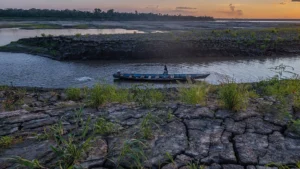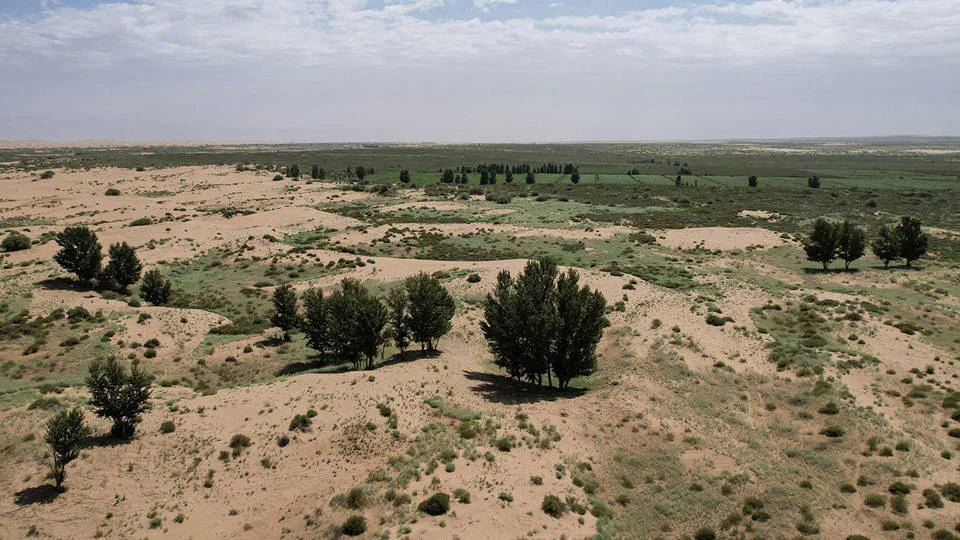
As delegates from across the globe convene in Ulaanbaatar, Mongolia, for the 17th Conference of the Parties (COP17) to the UN Convention to Combat Desertification (UNCCD), the stakes could not be higher. The theme of this year’s summit, "Restoring Land. Restoring Hope," serves as a poignant reminder that the health of our soil is inextricably linked to the survival of our civilization.
For too long, land degradation—the loss of the biological and economic productivity of land—has been treated as a peripheral environmental concern. Today, however, that narrative is shifting. With land degradation claiming four football fields of healthy terrain every single second, and the global economy suffering a $1 trillion annual drain as a result, the international community is finally beginning to recognize that we are facing a planetary emergency. Despite the daunting projections—that up to 95% of the world’s land could be degraded by 2050—there is a palpable sense of renewed optimism. For the first time, political will, international cooperation, and financial innovation are converging to suggest that we may finally be turning the tide.
The Cost of Inaction: A Planetary Crisis
To understand the urgency at COP17, one must look at the data. Land degradation is not merely about empty fields; it is about the collapse of the foundations of human life. When soil loses its ability to function, the ripple effects are immediate: food insecurity, water scarcity, mass migration, and an increased vulnerability to climate shocks.
Current assessments suggest that the annual loss of land is equivalent to the size of two Spains. If current trends continue, the cascading impact of drought will touch more than 75% of the global population by mid-century. This is not just an ecological issue; it is a threat to global stability and economic prosperity. The $1 trillion in annual losses represents lost agricultural productivity, increased disaster recovery costs, and the erosion of natural capital that provides essential ecosystem services, such as carbon sequestration and water filtration.
Chronology of a Global Pivot
The journey toward the current momentum in Ulaanbaatar has been a decades-long evolution.
- 1992: The Rio Earth Summit: This seminal event birthed the "Rio Conventions," establishing the UNFCCC (climate), the CBD (biodiversity), and the UNCCD (desertification). For thirty years, these agendas functioned in silos.
- 2011: The Bonn Challenge: A landmark global effort launched to restore 350 million hectares of degraded and deforested landscapes by 2030, marking the first real shift toward large-scale, quantifiable restoration.
- 2024: COP16 in Riyadh: A watershed moment that acted as the largest and most inclusive summit in UNCCD history. It gave birth to the Riyadh Action Agenda, the first comprehensive global framework dedicated specifically to land, mobilizing over $12 billion in initial commitments.
- 2025–2026: The Era of Synergy: With the "Belém Joint Statement" and the "Antalya Dialogue," the international community has formally acknowledged that climate, biodiversity, and land are a single, interconnected crisis. 2026 is poised to be the year of convergence, as the three Rio Conventions hold back-to-back COPs, forcing a unified, integrated approach to planetary governance.
Five Pillars of the New Restoration Momentum
The optimism surrounding COP17 is anchored in five distinct, verifiable shifts in how the world approaches land health.
1. Inclusive Multilateralism and the Riyadh Legacy
The days of top-down, exclusionary environmental policy are ending. COP16 in Riyadh proved that land restoration is a "big tent" issue. By integrating gender equality, land tenure rights, and food security into the core of the UNCCD agenda, the summit expanded the stakeholder base to include more than 100 public and private partners. The resulting Riyadh Action Agenda provides a concrete roadmap that countries are already adopting into national development plans.
2. The Convergence of the Rio Conventions
Perhaps the most significant intellectual shift is the realization that one cannot solve climate change without addressing soil health, and one cannot protect biodiversity without restoring degraded land. The silos are crumbling. Initiatives like the "Water-Energy-Food-Ecosystem Nexus" and "Just-Transition Frameworks" are now standardizing the way governments draft environmental policies. By aligning the three Rio Conventions, the global community is reducing bureaucratic friction and maximizing the impact of limited funding.
3. Emerging Economies as Global Leaders
A remarkable transformation has occurred in the geography of leadership. Since 2013, every biennial UNCCD summit has been hosted by a developing or emerging economy. This is not just symbolic; it is a reflection of where the most effective, large-scale innovation is happening.
- Ethiopia’s Green Legacy Initiative: A massive reforestation program demonstrating the scale of national mobilization.
- Pakistan’s Ten Billion Tree Tsunami: A testament to the power of state-led ecological restoration.
- Saudi Arabia’s Green Initiative: Providing the financial and logistical backbone for regional restoration.
- China’s Three-North Shelterbelt Program: The world’s most ambitious attempt to halt desertification, providing a blueprint for others to follow.
4. Regional Scaling: From National Parks to Continental Corridors
We have moved past the era of isolated, small-scale restoration projects. Today, the focus is on regional and continental connectivity. The Middle East Green Initiative is a prime example, aiming to plant 50 billion trees and restore 200 million hectares. Similarly, the Great Green Wall in Africa and Initiative 20×20 in Latin America illustrate a new reality: restoration is now a cross-border, transnational strategy designed to restore ecosystems at a scale that can actually influence global weather patterns and regional biodiversity.
5. The Financial Revolution: Turning Soil into an Asset
The most critical hurdle has always been capital. After years of chronic underinvestment, the financial sector is finally waking up to the "natural capital" opportunity. With multilateral development banks providing a record $163 billion in climate finance in 2025, a portion of these funds is being diverted to land restoration and drought resilience.
More importantly, the structure of finance is changing. We are moving from pure philanthropy to market-based mechanisms. Initiatives like Luxembourg’s Drought Resilience Investment Facility (DRIF) are building markets for resilience. Through the use of thematic bonds, resilience credits, and private-sector partnerships like Business4Land, investors are beginning to treat healthy land not as a cost center, but as a productive, high-yield asset.
Official Responses and Strategic Implications
Global leaders at COP17 have emphasized that the "cost of delay" is becoming the most expensive policy choice. The UNCCD Executive Secretary has noted that while the tools for restoration are now on the table, the speed of implementation remains the primary concern.
The implications of this shift are profound for the global economy. By restoring land, nations are effectively hedging against the risks of supply chain volatility, climate-induced migration, and agricultural collapse. A "restored earth" is a more stable trading partner and a more secure investment environment.
Conclusion: The Turning Point
The question facing the delegates in Ulaanbaatar is no longer technical; it is procedural. We have the data to understand the problem, the regional initiatives to implement the solutions, and the financial mechanisms to fund the transition. The "Riyadh Action Agenda" and the forthcoming "Land & Soil Breakthroughs" signal that we are moving from the phase of "ambitious discourse" into "systemic implementation."
As the global community looks toward the triple-summit convergence of 2026, the progress made at COP17 will be viewed as the foundation of a new, sustainable era. The earth is proving remarkably resilient, but its ability to recover is finite. If the current momentum is sustained, we may look back at this decade not as the time when we watched the soil disappear, but as the era when we collectively decided to restore the very ground beneath our feet. The path forward is clear: integrate, invest, and implement. The survival of our global landscape—and the hope that depends on it—now rests on the speed at which we act.