

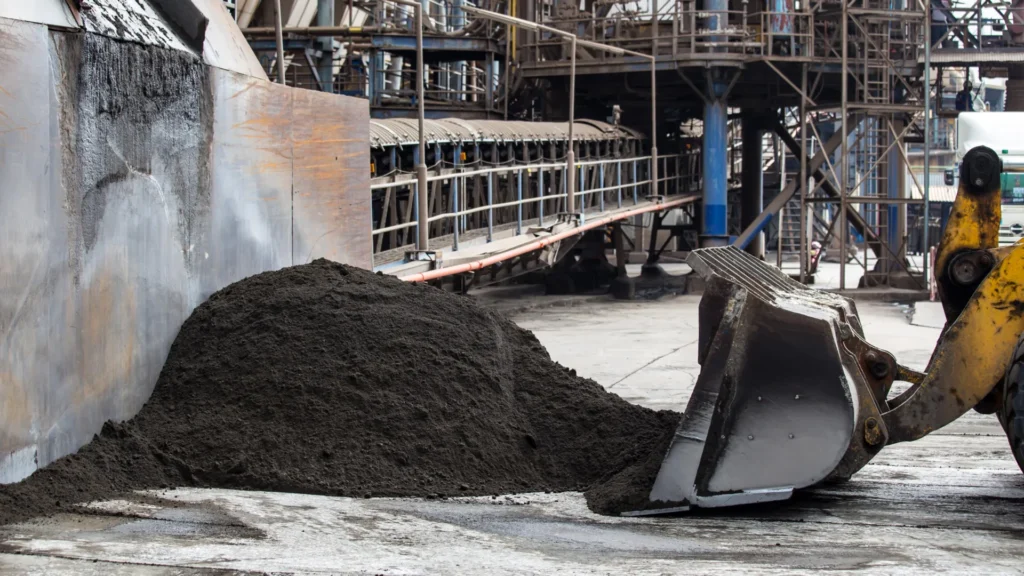
In the shadow of industrial expansion lies a silent, growing crisis: the vast, toxic mountains of coal ash, red mud, and mine tailings that scar landscapes worldwide. For decades, these materials have been categorized as liabilities—environmental hazards to be sequestered, managed, and hidden. However, a groundbreaking $3.3 million initiative led by the Worcester Polytechnic Institute (WPI) is flipping the script on waste management. By looking to the natural world’s most efficient builders—diatoms, sea sponges, and plants—researchers aim to transform these industrial burdens into a treasure trove of critical minerals and high-value materials.
Funded by the National Science Foundation’s (NSF) prestigious Growing Convergence Research program, this five-year, two-phase project represents a paradigm shift in industrial ecology. The team, spearheaded by Mingjiang Tao, an associate professor in WPI’s Department of Civil, Environmental, and Architectural Engineering, seeks to pioneer a "whole-material" approach that abandons the energy-intensive, chemical-heavy methods of the past in favor of elegant, bio-inspired chemistry.
The Hidden Economic and Strategic Imperative
The motivation behind this project is as much about national security and economic independence as it is about environmental stewardship. Industrial waste streams are not merely piles of dirt; they are untapped reservoirs of the 21st century’s most vital commodities.
The Silicon Paradox
Silicon is the bedrock of modern civilization. From the semiconductor chips powering our smartphones to the glass in our windows and the concrete in our bridges, silicon-derived materials are ubiquitous. Yet, the traditional methods of extracting and refining silicon are notoriously "dirty," requiring extreme temperatures and massive chemical inputs. Simultaneously, industries produce billions of tons of silicon-rich waste, such as metallurgical slag and concrete debris, which are currently consigned to landfills and holding ponds.
The Rare Earth Opportunity
Beyond silicon, these waste streams contain concentrated deposits of Rare Earth Elements (REEs) and other critical minerals essential for the green energy transition. The data is staggering: one recent study suggests that U.S. coal ash landfills contain approximately 11 million tons of REEs. At current market valuations, this equates to roughly $8.4 billion—a sum nearly eight times the size of the nation’s entire current raw domestic reserves.
"Recovering critical minerals is only part of the opportunity," says Mingjiang Tao. "We want to develop a process that uses as much of each waste stream as possible, separating strategically important elements while converting the remaining material into useful products. That whole-material approach could fundamentally change how industries manage waste and obtain essential resources."
Chronology of the Initiative: From Theory to Application
The project is structured as a multi-year, two-phase scientific journey designed to move from molecular discovery to industrial-scale viability.
- Phase I (The Discovery Phase): The initial years are dedicated to basic research, leveraging artificial intelligence and computational chemistry to map out how biological molecules interact with industrial waste. Researchers will focus on "biosilicification"—the process by which organisms naturally form complex silica structures.
- Phase II (The Scaling Phase): Following the discovery of effective biomolecules, the project will pivot toward practical engineering. The team will assess whether these biological methods can be scaled to handle the sheer volume of waste generated by modern industry.
- Ongoing Collaboration: The project is a cross-institutional powerhouse. While WPI holds the lead, the initiative incorporates experts from George Mason University, the University of California San Diego, the University of Massachusetts Amherst, and the University at Buffalo.
Bio-Inspired Engineering: Looking to Nature’s Architects
How does one extract minerals from a pile of industrial slag without the use of harsh acids or high-heat furnaces? The answer lies in the ocean.
The Diatom Blueprint
Diatoms—single-celled algae—are masters of materials science. They build intricate, glass-like cell walls (frustules) by extracting dissolved silicon from seawater, a process they perform at ambient temperatures and pressures. By studying the biological scaffolds these organisms use, the WPI-led team hopes to synthesize biomolecules that can perform similar "heavy lifting" on industrial waste.
Geochemistry and Optimization
Professor Carrick Eggleston, a co-principal investigator with deep expertise in geochemistry, is spearheading the effort to optimize these reactions. His work focuses on the delicate dance of silicate dissolution, repolymerization, and carbonation. By understanding the chemical pathways at a molecular level, the team aims to create reaction environments that are not only more sustainable but more precise than traditional metallurgical processes.
Bio-Enabled Metallurgy
Professor Yan Wang, a pioneer in battery recycling and sustainable manufacturing, will lead the development of bioengineered methods for recovering REEs. His work addresses the "reconstruction" aspect of the project—ensuring that after the critical minerals are harvested, the remaining material is not just "cleaner" but is converted into marketable goods. This effectively turns the landfill into a factory.
The Role of AI and Computational Modeling
The sheer complexity of biological and geochemical interactions makes traditional "trial-and-error" laboratory research too slow. To accelerate the timeline, the project integrates advanced Artificial Intelligence (AI) and computational modeling.
By feeding existing data on chemical reactions and biological structures into machine-learning algorithms, the researchers can predict which synthetic biomolecules will be most effective at binding to specific minerals. This "computational screening" acts as a filter, allowing the scientists to focus their physical experiments on only the most promising candidates. This fusion of data science and material science is the hallmark of the NSF’s "Convergence" approach, proving that the solution to environmental problems requires the integration of disparate fields.
Official Responses and Stakeholder Implications
The implications of this research extend far beyond the laboratory. For policymakers, the project offers a blueprint for domestic supply chain resilience. By mining our own waste piles, the U.S. could potentially reduce its reliance on foreign sources for rare earth elements, effectively decoupling domestic manufacturing from volatile international markets.
"This effort brings together sustainability, biotechnology, materials science, data science, and artificial intelligence," the WPI team noted in their project summary. By connecting researchers with industry partners, the team aims to build an entirely new ecosystem. If successful, the technologies developed could incentivize the remediation of abandoned industrial sites, turning environmental eyesores into economic assets.
Furthermore, the project serves as a training ground for the next generation of scientists. Graduate and undergraduate students at WPI and partner institutions are gaining hands-on experience, bridging the gap between theoretical environmentalism and practical industrial engineering. These students are being prepared to lead a future workforce that views "waste" not as an endpoint, but as a beginning.
Conclusion: A New Era of Circularity
The "whole-material" philosophy championed by Mingjiang Tao and his colleagues represents a departure from the linear "take-make-waste" model that has dominated the industrial age. By mimicking the circular efficiency of biological systems, we can begin to close the loop on resource extraction.
The success of this project would be a victory on multiple fronts. It promises a lower environmental footprint for the materials we use daily, a bolstered national supply of essential technology minerals, and a scalable, economically viable method to clean up the toxic legacies of the past century. As the researchers embark on this five-year endeavor, they carry with them the hope of a world where industrial waste is no longer a burden to be managed, but a resource to be harvested—a vision where we finally learn to build our future using the debris of our past.



