
By Resource World Editorial Staff
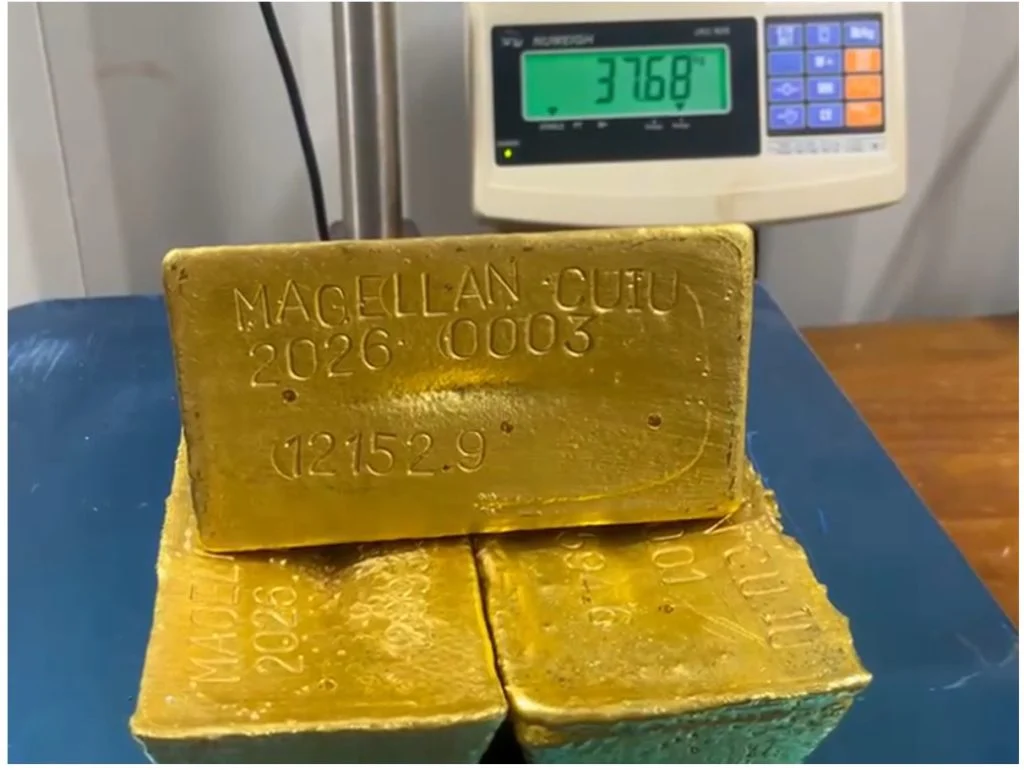
In a transformative moment for both the company and the regional mining landscape of Brazil, Cabral Gold Inc. [CBR-TSXV; CBGZF-OTC] has officially transitioned from an explorer to a producer. The company announced the successful completion of the first gold pour at its Phase 1.0 Cuiu Cuiu mine, located in the prolific Tapajós region of Pará State. This milestone marks the culmination of a rapid, three-year development trajectory that has brought the project from the conceptual stage in 2023 to active gold production in mid-2026.
Main Facts: A New Chapter in the Tapajós
The announcement confirms that Cabral Gold has successfully navigated the complexities of mine construction in northern Brazil. The primary focus of the Phase 1.0 operation is the extraction and processing of near-surface gold-in-oxide blankets, a strategy designed to generate immediate cash flow while minimizing the need for dilutive equity financings.
During the commissioning phase, the facility produced approximately 1,130 ounces of gold. This output serves as a proof-of-concept for the mine’s processing circuit, which consists of both dry and wet sections. While the dry circuit was finalized in July 2026, the wet circuit commissioning has moved at an accelerated pace, tracking well ahead of the company’s original timeline.
Following the news, market reaction was swift and positive. Cabral Gold shares saw a notable uptick, climbing 5.4%, or $0.08, to close at $1.56. The stock continues to show volatility consistent with junior producers, trading within a 52-week range between $0.38 and $1.57.
Chronology: From Concept to Pour
The rapid development of the Cuiu Cuiu project is a case study in focused project management. The following timeline outlines the accelerated growth Cabral Gold has achieved:
- 2023: Cabral Gold moves the Cuiu Cuiu project from the conceptual design phase to active project planning. The leadership team prioritizes a phased development strategy, beginning with oxide material to ensure early cash flow.
- Early 2026: Construction activities reach peak intensity. The project team works to maintain a strict budget and timeline to avoid the common pitfalls of junior mining development.
- July 2026: The dry circuit at the Cuiu Cuiu mine is successfully commissioned, setting the stage for the introduction of ore.
- August 2026: The wet circuit commissioning moves ahead of schedule. The team executes the first gold pour, successfully yielding 1,130 ounces.
- Late 2026 (Projected): Cabral aims to achieve a steady-state stacking rate of 3,000 tonnes per day and reach formal commercial production status.
- 2027 (Outlook): The company expects to provide comprehensive production guidance following the completion of the current ramp-up phase.
Supporting Data: The Geological Foundation
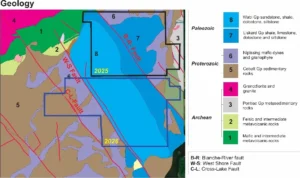
Cabral Gold maintains a 100% interest in the Cuiu Cuiu gold district, an area historically significant for its artisanal gold production, which the company is now modernizing through systematic exploration and development.
The project’s resource profile is robust, defined by three primary gold deposits that underpin the current Phase 1.0 operation and support the long-term Phase 2 hard-rock expansion. According to NI 43-101-compliant data, the resource is categorized as follows:
Indicated Resources
- Fresh Basement Material: 12.29 million tonnes at 1.14 g/t gold (450,200 ounces).
- Oxide Material: 11.11 million tonnes at 0.48 g/t gold (171,883 ounces).
Inferred Resources
- Fresh Basement Material: 13.63 million tonnes at 1.04 g/t gold (455,100 ounces).
- Oxide Material: 12.22 million tonnes at 0.39 g/t gold (151,608 ounces).
Beyond the defined deposits, the Cuiu Cuiu district remains highly prospective, containing 43 distinct targets peripheral to the known ore bodies. This massive exploration upside suggests that the current mine life is likely just the beginning of a much larger industrial footprint.
Strategic Context and Industry Positioning
Cuiu Cuiu’s location in the Tapajós region places it in a strategic corridor of mineral wealth. Notably, the project is situated adjacent to G Mining Ventures Corp.’s [GMIN-TSXV; GMINF-OTCQB] TZ project, which holds approximately 2.0 million ounces of gold and is expected to become one of Brazil’s top-tier gold operations.
By operating in such a well-endowed region, Cabral benefits from established logistical pathways and a local workforce familiar with mining practices. However, Cabral has differentiated its strategy by focusing on a lower-cost, modular approach for Phase 1.0, which acts as a "de-risking" mechanism for the more capital-intensive Phase 2.
Official Responses: Leadership Perspective
The transition to producer status was met with significant pride by the Cabral Gold executive team. John Sestan, Vice-President of Project Development at Cabral, emphasized the efficiency of the team’s execution.
"It has been a privilege to lead our team of professionals taking the project from concept stage in 2023 to the first gold pour in under three years," Sestan stated in the press release. He further elaborated on the strategic importance of the phased approach: "Our Phase 1.0 project, which processes gold-in-oxide material, has been shaped by continuous improvement and optimization while holding a very tight schedule to first production and cash flow."
Looking forward, Sestan hinted that the current infrastructure is only the foundation for future growth. "The completed Phase 1.0 operation includes several low-cost, readily available expansion opportunities that we are assessing. It also provides an operating base, along with valuable local project development and construction experience, that should simplify and de-risk the planned expansion into the significant hard rock Phase 2 component of our development strategy."
Implications: What This Means for Shareholders
The successful transition to production marks a critical turning point for Cabral Gold. For shareholders, the implications are three-fold:
- Cash Flow Stability: By targeting 3,000 tonnes per day, Cabral moves away from the "dilution cycle" that plagues many junior exploration firms. The ability to fund future exploration and development through internal cash flow is a major competitive advantage.
- Valuation Re-rating: Historically, the "junior explorer to producer" transition is the period where a company sees the most significant shift in market valuation. With the first gold pour now a reality, the market has empirical evidence of the company’s ability to execute, which may lead to a re-rating of the stock price as the company nears full commercial production.
- Risk Mitigation for Phase 2: The "hard rock" or Phase 2 of the development strategy represents the bulk of the project’s long-term value. By building the infrastructure and developing the workforce through the oxide phase, the company has effectively "de-risked" the technical and operational challenges associated with the larger underground or deeper open-pit mining phases.
Conclusion: A New Era
As Cabral Gold ramps up operations toward the end of 2026, the company stands as a testament to the potential of the Tapajós region. With a defined resource base, a proven processing circuit, and a clear path toward commercial production, Cabral has cemented its place in the Brazilian mining sector. The coming months will be critical as the company stabilizes its stacking operations and prepares to issue its first formal production guidance for 2027—a signal to the market that Cabral Gold has truly arrived.
Disclaimer: Resource World Magazine Inc. has prepared this editorial for general information purposes only and should not be considered a solicitation to buy or sell securities in the companies discussed herein. The information provided has been derived from sources believed to be reliable but cannot be guaranteed. This editorial does not take into account the reader’s investment criteria, investment expertise, financial condition, or financial goals of individual recipients and other concerns such as jurisdictional and/or legal restrictions that may exist for certain persons. Recipients should rely on their own due diligence and seek their own professional advice before investing.