In the storied annals of Hollywood show business, a golden rule persists: never work with children or animals. For British actor Callum Turner, however, this adage has become more of a stylistic signature than a warning. The Masters of the Air star has once again embraced the unpredictable charm of canine co-stars, anchoring the latest campaign for Louis Vuitton’s Spring 2027 Trunk collection.
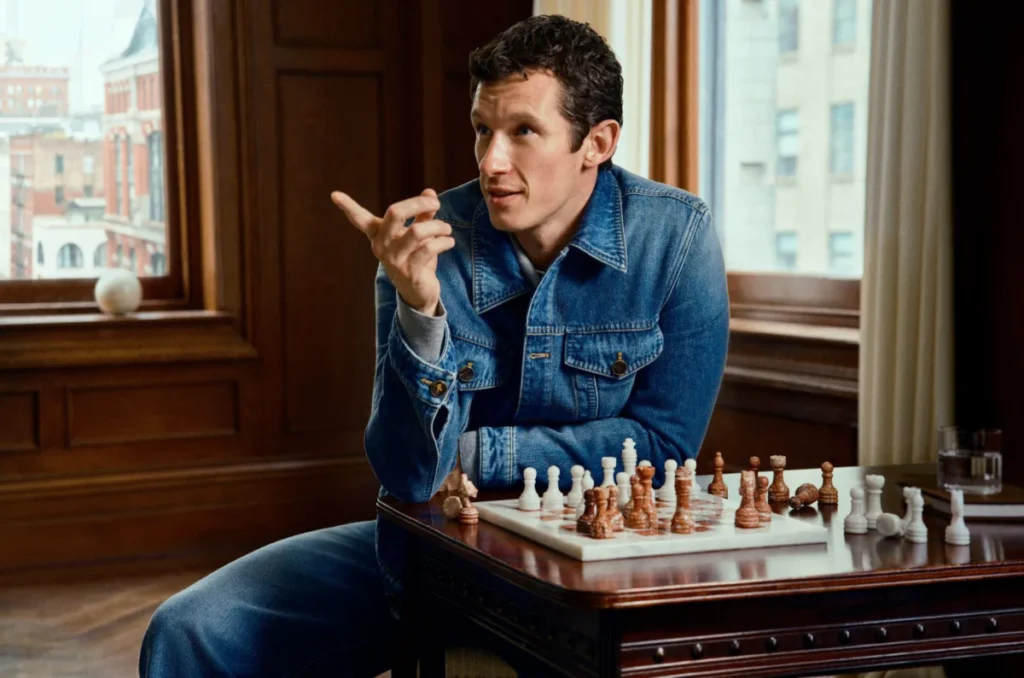
Photographed in the bustling, cinematic backdrop of New York City by renowned photographer Gregory Harris, the campaign marks a sophisticated evolution of Turner’s partnership with the French fashion powerhouse. While previous advertisements saw him navigating a pack of dogs, this new iteration finds him in a more intimate—and perhaps more intellectual—standoff with a Rhodesian ridgeback, capturing a moment of quiet, tongue-in-cheek rivalry over a chessboard.
The Aesthetic of the Trunk Collection
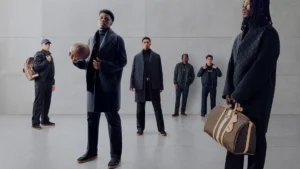
The Spring 2027 Trunk collection, designed under the creative direction of Pharrell Williams, serves as a masterclass in modern dandyism. The capsule collection focuses on wardrobe essentials that bridge the gap between everyday utility and high-fashion expression.
In the accompanying short film, viewers see Turner transitioning through the mundane moments of a gentleman’s life—perfecting a putt, reading the morning paper, enjoying a midafternoon tea, and pausing for a grooming refresh. Each scenario is designed to highlight the versatility of the garments.
"Each piece reflects Louis Vuitton’s staunch dandyism ideals, allowing for an ultimate embodiment of self, or of a scripted character," the brand stated in an official press release. This philosophy speaks to the core of Pharrell Williams’ tenure at the house: the idea that luxury should not be a costume, but an extension of the wearer’s persona.
A Chronology of a Rising Star
Callum Turner’s trajectory from London’s youth culture to the global stage of luxury advertising is a narrative of steady, calculated ascent.

- Early Beginnings (2010s): Before his transition to A-list acting, Turner cut his teeth in the fashion industry, working as a model in his teens and gaining a grounding in retail as a sales assistant at the iconic Dover Street Market in London. This experience provided him with an insider’s view of brand identity and garment construction.
- The Breakthrough (2020–2023): Following acclaimed roles in projects like Fantastic Beasts, Turner solidified his reputation as a versatile talent. His ability to project an effortless, "old-world" charm made him a natural fit for legacy houses.
- The Vuitton Era (2024–Present): Turner was officially named a brand ambassador for Louis Vuitton in 2024. This partnership has since evolved from standard print media to complex, narrative-driven short films that leverage his acting prowess.
- The Current Campaign (2027): The Spring 2027 Trunk campaign marks a maturation of this relationship, signaling a move toward character-driven storytelling in fashion marketing.
Supporting Data: The Power of Brand Ambassadors
The reliance on high-profile ambassadors like Turner is a cornerstone of the LVMH group’s broader market strategy. While the luxury sector faced a 5% decline in sales in the fashion and leather goods category during the third quarter of 2026, the strategy of utilizing celebrities who possess "organic" connections to the brand remains a critical tool for maintaining consumer engagement.
Turner’s appeal lies in his authenticity. Unlike ambassadors who are perceived as distant icons, Turner is frequently spotted by the press in domestic settings, often walking his own dog—a Labrador-Rottweiler named Golo—with his wife, the global pop superstar Dua Lipa. This "relatable luxury" creates a bridge between the aspirational nature of a Louis Vuitton trunk and the tangible, lived-in reality of the consumer.
The Intersection of Luxury and Lifestyle
Turner’s professional portfolio extends far beyond his association with Louis Vuitton. He has served as a face for luxury houses including Burberry and Montblanc, and was recently appointed as a global ambassador for Johnnie Walker Blue Label. This indicates a strategic positioning of Turner as a "lifestyle" authority—a man who represents a specific, curated standard of living that encompasses fashion, spirits, and high-end entertainment.
His upcoming career milestones further cement this status. Turner is set to lead the highly anticipated Apple TV+ series adaptation of William Gibson’s seminal science fiction novel Neuromancer. Furthermore, he is slated to star in the baseball drama The Comebacker, a project that carries significant weight due to his co-star, Tom Hanks. These roles suggest a shift toward more complex, "prestige" projects, which in turn elevates the cachet of the brands he represents.
Official Responses and Strategic Implications
Louis Vuitton’s decision to emphasize "dandyism" in their latest campaign is a strategic pivot. By framing the collection as a tool for the "embodiment of self," the brand is attempting to insulate itself from the volatility of fashion trends.
In a volatile economic climate, the "Trunk" collection—a nod to the brand’s history in travel and craftsmanship—serves as a reminder of the house’s permanence. By placing Turner, a man known for his rugged, classic style, at the center of this narrative, Vuitton is essentially arguing that their pieces are not merely products, but investments in one’s personal identity.

"Callum represents a specific type of modern masculinity," noted an industry analyst. "He is equally comfortable in the high-stakes environment of a blockbuster set as he is in the quiet, mundane moments of a private life. For a brand like Louis Vuitton, that dichotomy is gold."
Looking Ahead: The Future of Fashion Storytelling
As the fashion industry continues to grapple with the digital age, the "narrative campaign" has become the gold standard. The Louis Vuitton Spring 2027 campaign demonstrates that consumers are no longer satisfied with static imagery. They demand a story—a reason to connect with the brand beyond the mere utility of a bag or a suit.
The interaction between Turner and his Rhodesian ridgeback is a masterstroke in this regard. It injects warmth and humor into a brand that is often viewed as monolithic and untouchable. By humanizing the campaign, Louis Vuitton successfully lowers the barrier to entry, inviting the consumer to participate in the "dandy" lifestyle—even if they aren’t playing chess with a prize-winning dog in a Manhattan loft.
For Callum Turner, the campaign is another chapter in a career that defies the "actor-as-model" stigma. He has managed to integrate his fashion work into his broader professional identity, ensuring that whether he is on the screen or in a glossy editorial, the persona remains consistent: polished, composed, and undeniably stylish.
As the industry looks toward the next season, the success of this campaign will likely dictate a shift in how luxury houses approach celebrity partnerships. Expect to see more "narrative-heavy" advertisements that focus on the quiet, character-driven moments of the wearer’s life, rather than the loud, ostentatious displays of wealth that defined previous decades. In the world of Louis Vuitton and Callum Turner, the message is clear: the true luxury is in the character of the man, not just the label on his sleeve.