

Between 2.5 and 2 billion years ago, Earth underwent a metamorphosis of unparalleled magnitude. As oxygen began its slow, volatile accumulation in the atmosphere—a process known as the Great Oxygenation Event—the planet transitioned from a microbial wasteland to a world capable of fostering complex life. For decades, geologists have pointed to a specific "isotopic signature" preserved in ancient rocks as the smoking gun for a global, synchronized disruption of the Earth’s carbon cycle during this era.
However, a groundbreaking study led by researchers at the California Institute of Technology (Caltech) is challenging this orthodoxy. By analyzing gas trapped in microscopic pockets within 2-billion-year-old rocks from Russia’s Zaonega Formation, the team has proposed a radical new explanation: the signals once thought to represent a planet-wide environmental shift may, in fact, be the byproduct of localized volcanic and biological phenomena.
The Shunga-Francevillian Event: A Global Paradigm?
For generations, the geological record has been interpreted through the lens of the "Shunga-Francevillian event." This term refers to a distinctive, anomalous carbon-isotope signature found in rock formations in both Karelia, Russia, and the Francevillian Basin in Gabon.
Carbon isotopes—atoms of carbon with varying numbers of neutrons—act as the planet’s memory. Because biological processes prefer lighter isotopes over heavier ones, the ratio of these isotopes trapped in ancient marine sediments serves as a proxy for the history of life and the environment. When researchers found an unusual spike in these ratios in both Russia and Gabon, they concluded that Earth’s carbon cycle had become globally unbalanced, likely due to the massive burial of microbial organic matter as oxygen levels first surged.
This interpretation solidified the idea that the Paleoproterozoic era was defined by a synchronized, planetary-scale upheaval. But for Nivedita Thiagarajan, a senior scientific researcher at Caltech, the evidence—while compelling—required a closer look.
A Chronology of Discovery: From Drill Cores to Gas Pockets
The journey to re-evaluating these ancient rocks began with the physical act of "time travel" via drill cores—cylindrical samples of rock extracted from deep beneath the Earth’s surface.
The Russian Connection
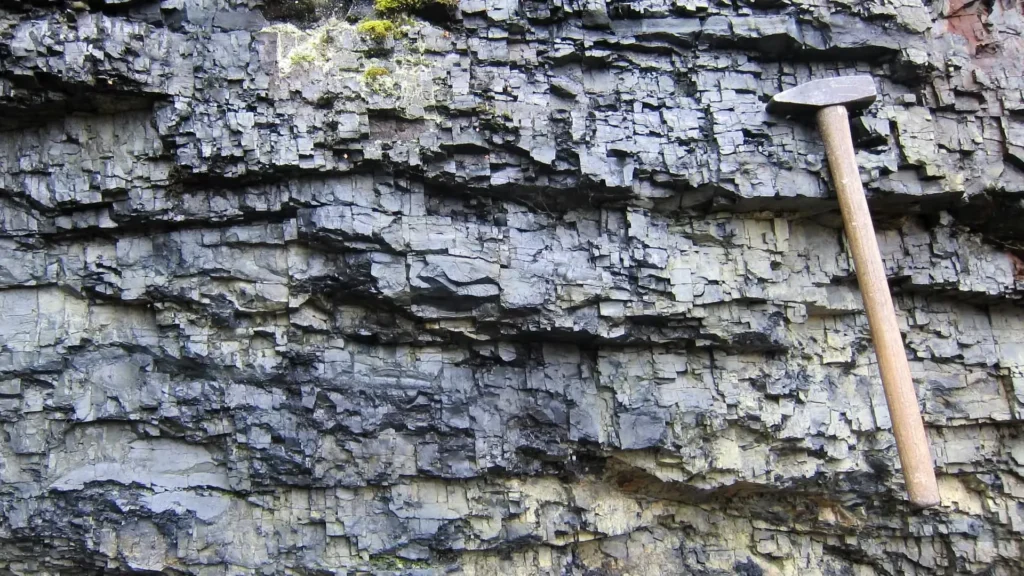
The Zaonega Formation in Karelia is one of the oldest known fossil oil fields on the planet. For years, scientists have scrutinized these samples, assuming they held the key to understanding how the early atmosphere reacted to the influx of oxygen. The current research effort gained momentum when Aivo Lepland, a researcher at the Geological Survey of Norway (NGU), brought a collection of previously uninterpreted isotope measurements from the Zaonega rocks to Caltech during his sabbatical.
The Analytical Framework
At Caltech, Thiagarajan and John Eiler, the Robert P. Sharp Professor of Geology and Geochemistry, had already been pioneering new methods for measuring isotope ratios in natural gases. Their work provided a broader framework for understanding the thermogenic formation of natural gas—how organic matter breaks down under heat to create hydrocarbons.
By merging their expertise, the researchers began to see the Shunga-Francevillian signal not as a global climate anomaly, but as a local geological reaction to heat.
Supporting Data: The Case for Localized Heating
The research team’s findings, published in the journal Geology, provide a compelling physical mechanism for the carbon anomalies. The study suggests that about 2 billion years ago, a massive sheet of magma forced its way through marine sediments in the Zaonega region.
Thermal Gradients and Microbial Consumption
The heat generated by this intrusion was immense. As the magma moved through the prehistoric seafloor, it cooked the surrounding organic-rich sediments, effectively "cracking" the kerogen—the source material for natural gas—into hydrocarbons like methane and propane.
Evidence for this "thermogenic" process is etched into the rocks. The researchers identified a clear thermal gradient:
- Near the Intrusion: Temperatures reached approximately 350 degrees Celsius.
- At the Surface: Roughly 300 meters higher, temperatures dropped to 72 degrees Celsius, near an ancient seafloor asphalt spill.
This heat-driven process released methane, which migrated upward through the sediment layers. Microbes living near the seafloor, acting as an ecological filter, consumed this methane. The biomass generated by these methane-munching microbes carried a signature of light carbon isotopes—the very signature that geologists had previously attributed to a global, atmospheric-driven event.
Official Responses and Scientific Discourse
The scientific community is currently weighing the implications of this study. The research directly questions the status of the Zaonega Formation as a "reference site" for global environmental change.
"One major debate centers on an unusual carbon-isotope signal that has often been interpreted as evidence of a worldwide environmental change," says Thiagarajan. "We found that the carbon-isotope signal at this key site can be explained by local phenomena that occurred in a several-hundred-square-kilometer sedimentary basin rather than across the entire globe."
Aivo Lepland adds, "Earth, in a way, went crazy during that time interval when oxygen appeared in the atmosphere. What we are trying to assess are the causes and consequences of Earth oxygenation. This information is archived in the rocks, so, in order to study what happened, you have to study rocks."
While the team acknowledges that they cannot definitively rule out contributions from other, larger processes, the strength of their thermal model suggests that the "global" signature may be a case of geological coincidence mistaken for a planetary trend.
Implications: Rewriting the History of Oxygenation
If the isotopic signals in Karelia are indeed the result of localized volcanic heating, the foundation upon which we interpret the early Earth’s carbon cycle begins to shift. It suggests that geologists must be more cautious when using local drill sites to make generalizations about the state of the atmosphere billions of years ago.
The Next Frontier: Gabon
The study does not stop at the Russian border. The team is already looking toward the Francevillian Basin in Gabon to see if the same localized process can explain the anomalies found there.
The GOE-DEEP project, co-funded by the International Continental Scientific Drilling Program, is the primary vehicle for this next phase. In the summer of 2025, Lepland coordinated an extensive drilling campaign in Gabon. The resulting cores, which arrived at the NGU in February, are currently being prepared for analysis by an international consortium representing 18 countries.
"Now we can really put things together by doing a similar type of study on the Gabonese rocks to compare the two sites," Lepland notes. "This is how science moves forward."
A Changing Perspective on Earth’s "Infancy"
The study, titled “Paleoproterozoic thermogenic hydrocarbon generation, Zaonega Formation, Russia,” serves as a reminder that the Earth’s geological record is not always a straightforward book to read. It is often a complex, overlapping narrative where local, intense events can mimic the appearance of global shifts.
By identifying the role of magma, methane, and microbial metabolism, the Caltech-led team has provided a more nuanced understanding of the Paleoproterozoic. If the Shunga-Francevillian event is eventually reclassified as a series of local occurrences, it will change how researchers model the rise of oxygen—and by extension, the timing and conditions that allowed complex life to finally emerge half a billion years later.
As the research team prepares to delve into the Gabonese samples, the geological community waits to see if the "global" signal will hold up under scrutiny or if it will dissolve into a collection of fascinating, localized stories of fire, gas, and life from the deep past. Regardless of the outcome, the methodology established by Thiagarajan, Eiler, and Lepland sets a new standard for precision in the study of deep-time Earth history.



